On this page
- The Peace Memorial Park and Atomic Bomb Museum
- Glover Garden and the European Legacy
- Dejima Wharf and the Dutch Trading Post
- Nagasaki’s Food Scene: Champon, Kakuni Manju, and Castella
- Inasayama and the Night View
- Chinatown, Temples, and the Sofukuji Walk
- Day Trip or Overnight?
- Getting to Nagasaki in 2026
- Getting Around Nagasaki
- 2026 Budget Reality
- Frequently Asked Questions
💰 Click here to see Japan Budget Breakdown
💰 Prices updated: October, 2026. Budget figures are estimates — always verify before travel.
Exchange Rate: $1 USD = ¥157.00
Daily Budget (per person)
Shoestring: ¥8,000 – ¥15,000 ($50.96 – $95.54)
Mid-range: ¥18,000 – ¥35,000 ($114.65 – $222.93)
Comfortable: ¥45,000 – ¥80,000 ($286.62 – $509.55)
Accommodation (per night)
Hostel/guesthouse: ¥2,500 – ¥6,000 ($15.92 – $38.22)
Mid-range hotel: ¥10,000 – ¥20,000 ($63.69 – $127.39)
Food (per meal)
Budget meal: ¥800.00 ($5.10)
Mid-range meal: ¥2,500.00 ($15.92)
Upscale meal: ¥20,000.00 ($127.39)
Transport
Single metro/bus trip: ¥250.00 ($1.59)
Monthly transport pass: ¥30,000.00 ($191.08)
Nagasaki has always been worth more than a half-day stop, but in 2026 it finally feels like travellers are catching on. With overtourism pressure pushing people away from Kyoto’s most crowded corridors and Tokyo’s golden route feeling exhausted, Nagasaki is picking up visitors who want depth — history, architecture, food, and harbour views — without fighting through shoulder-to-shoulder crowds. The city rewards those who actually stay. Here is everything worth doing, eating, and seeing.
The Peace Memorial Park and Atomic Bomb Museum
Nagasaki’s Peace Park sits at the hypocentre of the atomic bomb dropped on August 9, 1945. The black pillar marking the exact spot is understated to the point of shock — a thin stone column rising from a quiet square, surrounded by donation statues from countries around the world. The scale of what happened here hits differently when you realise the industrial neighbourhood around you was, at 11:02 a.m. on that day, completely gone.
The Nagasaki Atomic Bomb Museum (長崎原爆資料館) sits a short walk downhill from the park. Plan at least 90 minutes inside. The exhibits move chronologically — from the pre-war city, through the bombing itself, through the medical aftermath, and into the ongoing global disarmament conversation. Melted glass bottles, stopped clocks, and scorched roof tiles line the cases. The heat-fused rosary beads belonging to a schoolgirl, sealed in a small display cabinet, stop most visitors cold.
The museum is not a difficult place to visit — it is a necessary one. Admission is ¥200 for adults. The adjacent Nagasaki National Peace Memorial Hall for the Atomic Bomb Victims is free and worth the extra 20 minutes. Both are open daily except the third Wednesday of December. Tram stop: Matsuyamamachi, Line 1 or Line 3.

Glover Garden and the European Legacy
Nagasaki’s hillside district of Minami-Yamate holds the most concentrated collection of Western-style Meiji-era buildings in Japan. Glover Garden (グラバー園) is the headline attraction — a landscaped open-air site containing nine preserved Western-style residences, most dating from the 1860s to 1880s. The centrepiece is the Thomas Glover residence, the oldest Western-style wooden house in Japan, built in 1863. Glover was a Scottish merchant whose influence on Japanese industry — Mitsubishi shipbuilding included — is hard to overstate.
The garden sits on a steep hillside above the harbour, and the outdoor escalators that carry you up give way to a series of terraced paths between the houses. On a clear day the view across Nagasaki Port is genuinely beautiful — cruise ships anchored in the distance, the city rising in tiers on both sides. The garden covers the stories well without being heavy-handed about it.
Admission is ¥620 for adults. Allow 60 to 90 minutes. Just outside the main gate, the Oura Cathedral (大浦天主堂), a Gothic-style Catholic church completed in 1864, is a UNESCO World Heritage site. It is one of the oldest Western-style buildings in Japan and directly connected to the hidden Christian communities who survived two centuries of religious prohibition in the region. Admission is ¥1,000. Both attractions sit a 10-minute walk from the Oura Tenshudo-Shita tram stop.
Dejima Wharf and the Dutch Trading Post
Dejima (出島) is one of the most historically significant pieces of ground in Japan — and it looks nothing like you might expect. For over 200 years during Japan’s period of isolation (sakoku), this small artificial island in Nagasaki Harbour was the only place where foreign trade with the West was permitted. Dutch traders lived here, cut off from the mainland by a single gate, and through this narrow channel flowed Western science, medicine, botany, and technology into a country officially closed to the outside world.

The island was gradually absorbed into the city as land reclamation expanded the harbour over the 19th century. Since the 1990s, a major reconstruction project has been rebuilding Dejima to its Edo-period appearance. As of 2026, roughly 25 reconstructed buildings stand on the site, including the head merchant’s residence, the warehouses, and the stone wharf gate. The interior exhibits explain the mechanics of the trade system clearly and without jargon.
Admission is ¥520 for adults. Right next to the historical site, the modern Dejima Wharf dining and shopping complex sits along the waterfront — it is a good spot for lunch with a harbour view, though the restaurants are mid-range tourist-oriented rather than exceptional. Tram stop: Dejima, Line 1.
Nagasaki’s Food Scene: Champon, Kakuni Manju, and Castella
Nagasaki’s cuisine reflects the same multicultural crossroads as its history. Three dishes define the city, and none of them taste quite right anywhere else in Japan.
Champon
Champon (ちゃんぽん) is Nagasaki’s signature noodle dish — thick, springy noodles in a rich pork-and-seafood broth loaded with vegetables, squid, prawns, and sliced pork. It originated in the late 19th century as a cheap, filling meal for Chinese students in Nagasaki. The broth is thicker and milkier than ramen, with a clean pork sweetness underneath. The best version in the city is widely considered to be at Shikairō (四海楼) in Higashiyama-te, where champon was invented. Expect to pay around ¥1,100 to ¥1,400 per bowl. Lines form quickly after 11:30 a.m.
Kakuni Manju
Kakuni manju (角煮まんじゅう) — a soft steamed bun filled with a single thick slab of melt-apart braised pork belly — arrived in Nagasaki via Chinese trade and settled in permanently. The pork is braised for hours in soy, mirin, and sugar until it falls apart with the slightest pressure. The best ones are sold warm from street stalls near Chinatown and in the covered arcade near Hamanomachi. Iwasaki Honpo is a reliable name. One bun runs ¥350 to ¥450.

Castella Cake
Nagasaki castella (カステラ) is a dense, honey-sweetened sponge cake introduced by Portuguese traders in the 16th century, adapted over centuries into something distinctly Japanese. The texture is somewhere between a pound cake and a genoise — slightly sticky on the bottom from a layer of sugar crystals, fine-grained and moist through the middle. The best shops in town are Fukusaya (福砂屋), established in 1624, and Shōshiken (松翁軒). A standard box (approximately 5 slices) costs ¥900 to ¥1,500 depending on the shop and size.
Inasayama and the Night View
Nagasaki’s night view from the top of Inasayama (稲佐山, 333 metres) is listed alongside Kobe’s Rokko and Hakodate’s Goryokaku in Japan’s canonical top-three night views. What makes the Nagasaki version distinctive is the topography — the city fills a narrow valley that runs down to a deep natural harbour, and at night it reads as a single glowing shape surrounded by black hillside. The harbour water holds the reflections. On clear nights the effect is almost surreal.
The summit is accessible by ropeway from the Ropeway-mae bus stop, roughly a 15-minute bus ride from Nagasaki Station. The ropeway runs until 10 p.m. most nights (last ride down at 9:50 p.m.). Round-trip fare is ¥1,250 for adults. The observation deck at the top is uncovered, so dress for the wind — even in summer, 333 metres of elevation above a coastal city gets cold after dark.
Alternatively, there is a road to the summit and a small car park, though without a rental car this is only practical by taxi (approximately ¥2,000 to ¥2,500 from the city centre one way). The ropeway is by far the preferred option for most visitors.

Chinatown, Temples, and the Sofukuji Walk
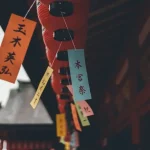
Nagasaki’s Chinatown (新地中華街, Shinchi Chukagai) is one of Japan’s three main Chinatowns, alongside Yokohama and Kobe. It is compact — a single main street about 250 metres long — but genuinely active rather than purely touristic. The lantern festival in February (Nagasaki Lantern Festival / 長崎ランタンフェスティバル) transforms the entire central neighbourhood into a spectacle of red and gold that runs for 15 days and draws visitors from across Japan. In 2026, the festival runs from late January into mid-February — specific dates follow the Chinese lunar calendar.
From Chinatown, a 10-minute walk south brings you to Sofukuji Temple (崇福寺), a Fujianese-style Chinese Buddhist temple founded in 1629. The vermilion gate at the entrance, the heavy incense smoke drifting through the courtyards, and the massive iron cauldron that was used to make gruel for famine victims in the 1680s create a very different atmosphere from Japanese Buddhist temples. Admission is ¥300. The walk between Chinatown and Sofukuji passes through one of the most atmospheric back-street sections of central Nagasaki — older low-rise buildings, cat-occupied stairways, and small neighbourhood shrines tucked into stone walls.
Further east, Kofukuji Temple (興福寺) is another Chinese-style Buddhist temple worth a stop. It is free to enter and less visited than Sofukuji, which means you are likely to have the courtyard largely to yourself on most mornings.
Day Trip or Overnight?
The honest answer: Nagasaki does not work as a day trip from anywhere except Fukuoka, and even then it is a long one.
From Fukuoka (Hakata), the Nishikyushu Shinkansen connects to Nagasaki via Takeo-Onsen in around 100 minutes total (including a transfer). That makes a full day trip viable — leave Hakata by 8:00 a.m., spend the day in the city, return by 8:00 p.m. But you will feel the time pressure. One overnight stay makes an enormous difference.

From Osaka or Kyoto, the journey is a minimum of 4 hours by Shinkansen plus transfer. Overnight is the only sensible option. Most visitors pair Nagasaki with one or two nights in Fukuoka and one or two in Nagasaki as part of a Kyushu leg.
For how long to stay: two nights allows you to cover the Peace Park, Glover Garden, Dejima, Chinatown, the night view, and have a decent meal or two. Three nights lets you breathe and possibly day-trip to Shimabara Peninsula or the Goto Islands. One night is workable if you are disciplined with your time — Peace Park in the morning, Glover Garden and Oura Cathedral in the afternoon, night view in the evening.
Getting to Nagasaki in 2026
The Nishikyushu Shinkansen (西九州新幹線), which opened in September 2022, continues operating between Takeo-Onsen and Nagasaki in 2026. The full seamless connection to Hakata (Fukuoka) still requires a transfer — passengers take a limited express from Hakata to Takeo-Onsen (around 60 minutes), then switch to the Kamome Shinkansen for the remaining 23 minutes to Nagasaki. As of 2026, the full high-speed link between Shin-Tosu and Takeo-Onsen remains under construction with no confirmed completion date, so budget the transfer time.
- Hakata to Nagasaki by rail: Approximately ¥4,900 unreserved, ¥5,600 reserved. Total journey time: around 1 hour 50 minutes with connection.
- Japan Rail Pass: Covers the Kamome Shinkansen and the limited express to Takeo-Onsen. Current 7-day pass pricing from 2024 applies in 2026 — check JR’s official site for the most recent figures as these have been revised upward since 2023.
- By bus: Highway buses connect Fukuoka (Tenjin Bus Terminal) to Nagasaki in around 2 hours. Cost is approximately ¥2,600 to ¥3,000 one way — significantly cheaper than rail and a viable option if you book ahead.
- By air: Nagasaki Airport is served by domestic flights from Tokyo (Haneda and羽田), Osaka (Itami), and Okinawa. The airport is connected to the city by airport bus in around 45 minutes (¥900). ANA and JAL operate the main routes; budget carrier Peach operates seasonal services from select airports.

Getting Around Nagasaki
Nagasaki’s tram network (路面電車) is the backbone of city transport and one of the most useful urban tram systems in Japan. Four lines cover the main tourist corridor — Peace Park, Dejima, Chinatown, Hamanomachi shopping, and the Glover Garden/Oura Cathedral area are all reachable by tram. A single ride costs ¥140 regardless of distance. The one-day tram pass (¥600) pays for itself after five journeys and is sold at major hotels, tourist information centres, and Nagasaki Station.
IC cards (Suica, ICOCA, Nimoca) work on the trams. Tap on when boarding, tap off when alighting — the trams have readers at both ends.
For the Peace Park area and Sofukuji, the tram gets you very close. For Inasayama, a bus is needed. For Glover Garden, the tram stops nearby but the hill walk from the stop is steep — the site’s outdoor escalators make the ascent easier once you are inside the gate.
The city centre is compact enough that walking between Chinatown, Dejima, and the Hamanomachi arcade takes under 15 minutes. Nagasaki is hillier than it looks on a map — the waterfront and main shopping streets are flat, but venturing into the residential districts above requires some climbing.
2026 Budget Reality
Nagasaki is noticeably more affordable than Kyoto or Tokyo for accommodation and food. The weak yen environment that reshaped Japan travel costs in 2024 and 2025 has stabilised somewhat in 2026, but Nagasaki still represents strong value compared to the main hubs.
Accommodation
- Budget: Hostel dorm beds ¥3,000–¥4,500 per night. Business hotels near Nagasaki Station from ¥7,000–¥9,000 per night (single room).
- Mid-range: Comfortable business hotels and small boutique properties ¥10,000–¥18,000 per night. Harbour-view rooms at this tier are genuinely good value.
- Comfortable: The ANA Crowne Plaza and similar full-service hotels ¥20,000–¥35,000 per night. Nagasaki lacks the ultra-luxury ryokan concentration of, say, Beppu or Kinosaki, so the top tier here is international hotel rather than traditional inn.

Food
- Budget: Champon or sara udon at a local restaurant ¥900–¥1,200. Kakuni manju from a street stall ¥350–¥450. Convenience store meals ¥500–¥700.
- Mid-range: Sit-down lunch at a harbour restaurant or set meal at a champon specialist ¥1,200–¥2,500.
- Comfortable: Kaiseki dinner or seafood course meal ¥6,000–¥15,000 per person.
Attractions
- Atomic Bomb Museum: ¥200
- Glover Garden: ¥620
- Oura Cathedral: ¥1,000
- Dejima: ¥520
- Sofukuji Temple: ¥300
- Inasayama Ropeway (return): ¥1,250
- Total for all major sites: Approximately ¥3,890 — one of the cheapest full itineraries of any major Japanese city.
Frequently Asked Questions
How many days do you need in Nagasaki?
Two nights and two full days is the minimum to cover the main highlights comfortably — Peace Park, Glover Garden, Dejima, Chinatown, and the night view. Three nights allows you to slow down, explore the back streets properly, and possibly take a short trip to the surrounding area. One night is tight but manageable with an early start.
Is Nagasaki worth visiting compared to other Kyushu cities?
Yes — Nagasaki offers something no other Kyushu city does: a layered history that includes atomic bomb history, Dutch and Portuguese colonial trade, Japanese Christianity, and Chinese cultural influence all within walking distance. Fukuoka is better for food variety; Beppu is better for onsen. Nagasaki is uniquely itself.
Can you visit Nagasaki as a day trip from Fukuoka?
Technically yes, but it makes for a rushed day. The rail journey takes around 1 hour 50 minutes each way with the Nishikyushu Shinkansen connection. You can cover the Peace Park and Glover Garden in a single day, but you will miss the night view and the city’s slower pleasures. One overnight stay is strongly recommended.

What is the best time of year to visit Nagasaki?
October and November offer the best combination of mild temperatures (18–24°C), low humidity, and clear skies for the night view. Late January to mid-February is spectacular if the Nagasaki Lantern Festival aligns with your trip. Summer (July–August) is hot and humid at 30–35°C but the August 9 Peace Ceremony draws visitors from around the world and is a profound experience.
Does the Japan Rail Pass cover the Nishikyushu Shinkansen to Nagasaki?
Yes, as of 2026 the standard Japan Rail Pass covers both the limited express from Hakata to Takeo-Onsen and the Kamome Shinkansen from Takeo-Onsen to Nagasaki. Seat reservations are recommended on busy periods but not always required. Confirm current pass terms on the JR official site before travel, as coverage rules have been updated since 2023.
📷 Featured image by Sora Sagano on Unsplash.