On this page
- Is the JR Pass Still Worth It in 2026?
- City Subway Passes That Actually Pay for Themselves
- IC Cards in 2026 — Why Your Phone Is Now Your Transit Card
- Highway Buses — The Cheapest Way Between Cities Nobody Talks About
- Domestic Flights for Long Hauls — When Flying Beats the Shinkansen on Price
- The Seishun 18 Kippu and Regional Passes — Slow Travel, Big Savings
- Rental Cars for Rural Japan — When Trains Simply Don’t Go There
- Cycling in Kyoto — Skip the Bus, Rent a Bike
- 2026 Budget Reality — What Transportation Actually Costs
- Common Mistakes That Drain Your Transit Budget
- Frequently Asked Questions
Japan‘s public transport is genuinely world-class, but “world-class” also means world-class pricing if you don’t plan ahead. In 2026, with the yen still sitting at levels that make Japan cheaper for many Western visitors than it was five years ago, the trap isn’t the exchange rate — it’s buying the wrong pass, jumping in taxis after midnight, or assuming the Japan Rail Pass is always the smart move. It isn’t. Transportation is typically the second-largest expense after accommodation on any Japan trip, and the gap between a traveler who plans their transit and one who doesn’t can easily be ¥30,000–¥50,000 on a two-week itinerary. This guide covers every realistic option, with honest math.
Is the JR Pass Still Worth It in 2026?
The Japan Rail Pass gets more press than almost any other Japan travel topic, and since the significant price increase of October 2023, it also generates more debate. In 2026, the prices remain at their post-2023 levels: a 7-day Ordinary pass costs ¥50,000, a 14-day pass costs ¥80,000, and a 21-day pass costs ¥100,000. These are not small amounts, and whether the pass saves you money depends entirely on your itinerary.
The pass covers most JR Group trains — Shinkansen, limited express, express, rapid, and local — plus some JR buses and the JR Miyajima ferry. The key word is “most.” The fastest Shinkansen services, the Nozomi on the Tokaido/Sanyo Shinkansen and the Mizuho on the Sanyo/Kyushu Shinkansen, are not covered. You’re limited to Hikari, Sakura, and Kodama services. An add-on ticket to ride the Nozomi from Tokyo to Shin-Osaka runs around ¥4,960 — which is the opposite of budget travel.
To check if the pass is worth it for your specific trip, use Japan Transit Planner at transit.navitime.com/en/ or Jorudan at japan.jorudan.co.jp/english/ to price out every individual journey you plan to take. A straightforward Tokyo–Kyoto–Hiroshima–Tokyo itinerary within 7 days usually crosses the ¥50,000 threshold. A trip that stays mostly in Tokyo or Osaka does not.
Eligibility requires a non-Japanese passport and a “Temporary Visitor” visa stamp. You can buy an exchange order online via japanrailpass.net/en/ before leaving home, or purchase directly at major JR stations and airports after arrival. Buying in Japan is typically slightly cheaper than pre-purchasing an exchange order abroad. Since late 2023, JR Pass holders can use automatic ticket gates — insert the pass, walk through, retrieve it on the other side. Seat reservations for Shinkansen are free with the pass and highly recommended during Golden Week, Obon, and the end-of-year holidays.
City Subway Passes That Actually Pay for Themselves
Tokyo and Osaka both have subway day passes designed specifically for tourists, and both are genuinely worth buying if you’re sightseeing at a reasonable pace.
Tokyo Subway Ticket
Tokyo’s subway is split between two operators: Tokyo Metro and Toei Subway. The Tokyo Subway Ticket covers unlimited rides on both networks. Single fares start at around ¥180–¥210 and rise with distance, so four or five rides in a day pushes past the pass price quickly. The pass is sold only to foreign tourists and comes in three versions:
- 24-hour Ticket: ¥800 (adult)
- 48-hour Ticket: ¥1,200 (adult)
- 72-hour Ticket: ¥1,500 (adult)
Buy them at major stations, Narita and Haneda airports, Bic Camera, Laox stores, and some hotels. Tokyo Metro’s official site is tokyometro.jp/en/ and Toei Subway is at kotsu.metro.tokyo.jp/eng/.

Osaka Subway Options
Osaka Metro operates the main city network, with single fares starting at around ¥180–¥210. The Enjoy Eco Card covers unlimited rides on Osaka Metro and city buses. It costs ¥820 on weekdays and just ¥620 on weekends and public holidays. If you’re spending a weekend day hopping between neighborhoods and attractions, three or four rides covers the weekend price entirely. Buy it from ticket machines at any Osaka Metro station.
For a day packed with paid attractions, the Osaka Amazing Pass is a different beast. At ¥3,300 for one day or ¥4,000 for two days, it covers unlimited rides on Osaka Metro plus several private railways including Hankyu, Hanshin, Keihan, Kintetsu, and Nankai — and free entry to over 40 tourist attractions. If you’re planning Osaka Castle, the Umeda Sky Building observation deck, and a few other sights in the same day, the math works out fast. Find it at osakametro.co.jp/en/.
IC Cards in 2026 — Why Your Phone Is Now Your Transit Card
IC cards — Suica, Pasmo, and ICOCA — are rechargeable smart cards accepted on virtually every train, subway, and bus in Japan, and in convenience stores, vending machines, and many restaurants. They don’t give you discounts, but they eliminate the need to buy individual tickets at every machine, and fares paid with IC cards are often marginally cheaper than paper ticket equivalents.
Here’s the 2026 reality: getting a standard physical IC card as a tourist is still difficult. The suspension of anonymous physical Suica and Pasmo cards for tourists — caused by semiconductor shortages — that began in 2023 remains largely in place. What’s available instead:
- Welcome Suica (JR East): Costs ¥1,000 with ¥500 pre-loaded. Valid for 28 days. Non-refundable. Available at Narita, Haneda, and major JR East stations including Tokyo and Shinjuku. No deposit.
- Pasmo Passport (Pasmo Railway Association): Same structure — ¥1,000, ¥500 pre-loaded, 28 days, non-refundable. Available at airports and major private railway stations like Keisei Ueno.

For most tourists in 2026, Mobile Suica or Mobile Pasmo is the better option if your phone supports it. Add Mobile Suica directly to Apple Wallet on an iPhone, or use the Mobile Suica app on Android. Mobile Pasmo works the same way. Neither requires a deposit, you top up via credit card in the app, there’s no expiration as long as the card is used periodically, and you can’t lose it. ICOCA also has a mobile version, though currently Android only via the Mobile ICOCA app.
All major IC cards are interoperable nationwide — your Tokyo-issued Suica works on Osaka Metro, on Kyoto buses, and on trains in Hiroshima. The official JR East page for Welcome Suica is at jreast.co.jp/multi/en/welcomesuica/ and Pasmo Passport information is at pasmo.co.jp/visitors/en/.
Highway Buses — The Cheapest Way Between Cities Nobody Talks About
If you’re not in a rush, highway buses are the most underrated transport option in Japan. The price difference compared to the Shinkansen is enormous. A Tokyo–Osaka Shinkansen ticket costs around ¥14,000–¥15,000 one way. A highway bus on the same route typically runs ¥3,000–¥8,000, depending on the seat type, time of departure, and how far ahead you book. That’s a saving of nearly ¥10,000 on a single journey.
The overnight bus is where the budget math gets particularly interesting. Depart Tokyo around 23:00, arrive Osaka around 07:30. You’ve saved the cost of a night’s accommodation on top of the transport difference — easily ¥5,000–¥10,000 more depending on where you would have stayed. Comfortable reclining seats on the better overnight routes make this genuinely manageable for most travelers, not just gap-year backpackers.

Willer Express is the most tourist-friendly operator, with full English booking at willerexpress.com/en/ and a range of seat types from standard reclining up to semi-private cocoon-style options. Japan Bus Online at japanbusonline.com/ aggregates multiple operators including JR Bus and Kosoku Bus for price comparisons. Book as far in advance as possible — the cheapest seats on popular routes like Tokyo–Osaka and Tokyo–Kyoto sell out weeks ahead during Golden Week and summer holidays.
For budget-conscious travelers who don’t have a JR Pass and aren’t flying, the highway bus should be the first thing you check before any long-distance journey.
Domestic Flights for Long Hauls — When Flying Beats the Shinkansen on Price
Japan is longer than most people realize. Tokyo to Sapporo in Hokkaido is about 830 kilometres. Tokyo to Naha in Okinawa is around 1,550 kilometres. The Shinkansen doesn’t reach Okinawa at all, and even to Hokkaido, a flight is often faster and cheaper.
Full-service carriers ANA and JAL both offer special tourist fares specifically for foreign visitors traveling within Japan. The ANA Japan Explorer Pass offers fixed-price segments between ¥5,500 and ¥11,000 per flight, depending on the route. The JAL Japan Explorer Pass is structured similarly. Both must be purchased outside Japan before arrival — book via ana.co.jp/en/jp/guide/travel/plan/fare/explorer/ for ANA and jal.co.jp/jp/en/world/japan_explorer_pass/ for JAL.
Low-cost carriers Peach Aviation and Jetstar Japan are the other option. During sales or with enough lead time, one-way fares from Tokyo Narita to Sapporo or Okinawa can drop to ¥3,000–¥7,000. The trade-off is typical LCC baggage fees, no free meals, and fees for seat selection — factor those into your real cost before comparing against the ANA or JAL tourist passes.
Use Google Flights or Skyscanner to compare real-time prices across all carriers. For Hokkaido, Kyushu, and Okinawa especially, a flight is often the most logical choice for both time and budget.

The Seishun 18 Kippu and Regional Passes — Slow Travel, Big Savings
The Seishun 18 Kippu is one of the most famous budget passes in Japan, and also one of the most misunderstood. It costs approximately ¥12,000 for 5 days of travel (¥2,400 per day) on JR local and rapid trains throughout the entire country. That price point is extraordinary. The catch: no Shinkansen, no limited express trains. Every journey involves local trains with multiple transfers, and Tokyo to Osaka by local train takes around 8–9 hours instead of 2.5. It’s a pass for people who enjoy the journey itself — and the scenery from a slow regional train rattling through rural Shizuoka or the Japanese Alps in autumn is genuinely something.
The 18 Kippu is only sold during three windows aligned with Japanese school holidays: spring (around late February to April), summer (July to September), and winter (December to January). Check JR’s official site for exact sale dates each year. Up to 5 people can use it together on a single day, which works out extremely well for groups.
For more structured regional travel, JR’s regional passes are practical alternatives to the national JR Pass:
- JR Kansai Area Pass: Covers Osaka, Kyoto, Nara, Kobe, and Himeji on JR lines. Good for a Kansai-focused itinerary.
- JR Tokyo Wide Pass: Covers Tokyo and surrounding areas including Nikko, Kawaguchiko, and the Izu Peninsula on specific limited express routes.
Check the specific JR regional websites — JR East at jreast.co.jp and JR West at westjr.co.jp/global/en/ — for current passes, pricing, and included routes. These are frequently updated.
Rental Cars for Rural Japan — When Trains Simply Don’t Go There

Rural Japan is some of the most beautiful landscape in the country — the Hokkaido interior, the Tohoku coast, the Noto Peninsula in Ishikawa, the mountain roads of Shikoku. Public transport in these areas ranges from infrequent to nonexistent. A rental car isn’t a luxury here; it’s the only realistic option for seeing what you came to see.
Before anything else: foreign visitors need an International Driving Permit (IDP) from their home country. Get this before you leave. Japanese rental companies will not accept a foreign driving license alone (with the exception of some Swiss, German, and a few other European licenses under specific bilateral agreements — verify yours in advance). Bring your home country license alongside the IDP.
Costs in 2026 for a standard compact car run ¥5,000–¥15,000 per day depending on the company, season, and model. Basic insurance is typically included but full coverage — specifically the Non-Operation Charge (NOC) waiver that covers the rental company’s lost revenue while a damaged car is off the road — costs an additional ¥1,000–¥2,000 per day and is worth every yen. Regular gasoline currently sits at around ¥170–¥180 per litre.
Japan’s toll road network is extensive and expensive. Tokyo to Kyoto by expressway can exceed ¥10,000 one-way in tolls. Rent an ETC (Electronic Toll Collection) card with the car — the rental fee is typically ¥330–¥550 — and check whether a regional ETC pass (Tohoku Expressway Pass, Kyushu Expressway Pass, etc.) applies to your route. These offer unlimited toll road use for a fixed period and can produce major savings on multi-day road trips.
Major rental companies are Toyota Rent-a-Car, Nissan Rent-a-Car, Nippon Rent-a-Car, and Times Car Rental. For groups of three or four people splitting costs, car rental often works out cheaper per person than Shinkansen tickets, especially once you factor in the freedom to reach places buses and trains don’t serve.

Cycling in Kyoto — Skip the Bus, Rent a Bike
Kyoto’s city buses are famously overcrowded, especially on the routes to Arashiyama, Fushimi Inari, and Gion. A single bus ride costs ¥230–¥260. A full-day bicycle rental costs ¥1,000–¥2,000 for a standard city bike or ¥2,000–¥3,000 for an electric-assist model. Three or four bus rides in a day and the bike already pays for itself — plus you’re not standing in a packed bus inching through narrow streets when the morning light is hitting the vermilion torii gates of Fushimi Inari and the mountain path still feels like it belongs to you alone.
KCTP (Kyoto Cycling Tour Project) operates multiple rental locations and typically includes maps with recommended routes — their site is kctp.net/en/. Other shops cluster near JR Kyoto Station, Gion, and Arashiyama. A passport copy or small deposit may be required.
The rules are simple: ride on the left, use lights at night, and use designated bicycle parking areas (typically ¥150–¥200 for a few hours). Illegally parked bikes get impounded, and the retrieval process is slow and annoying. Cycling on busy sidewalks is generally prohibited.
Kyoto’s terrain is mostly flat in the central areas, making it genuinely accessible even for occasional cyclists. The exception is the road up to Kurama or deeper into the hills — for those, the electric-assist bikes earn their higher price.
2026 Budget Reality — What Transportation Actually Costs
Here’s a clear breakdown of what to budget for transportation in Japan in 2026, based on realistic daily and per-journey costs:
Budget Traveler (slow travel, buses, IC card for cities)
- Highway bus Tokyo–Osaka (one-way): ¥3,000–¥5,000
- Osaka Metro Enjoy Eco Card (weekend): ¥620/day
- Tokyo Subway Ticket (48-hour): ¥1,200
- Kyoto bike rental (full day): ¥1,000–¥2,000
- Seishun 18 Kippu (per day): ¥2,400
- LCC domestic flight (booked early): ¥3,000–¥7,000
Mid-Range Traveler (Shinkansen for major routes, subway passes for cities)

- Tokyo–Kyoto Shinkansen (Hikari, one-way): approx. ¥14,000
- JR 7-day Pass (if itinerary justifies it): ¥50,000
- Osaka Amazing Pass (1-day): ¥3,300
- ANA/JAL Japan Explorer Pass per segment: ¥5,500–¥11,000
- Regional JR passes (varies by area): ¥2,000–¥8,000
Comfortable Traveler (Green Car Shinkansen, taxis where needed, rental car)
- Shinkansen Green Car (Tokyo–Osaka): approx. ¥19,000+
- Tokyo taxi (airport to central hotel): ¥6,000–¥10,000+
- Rental car per day (compact): ¥5,000–¥15,000
- JR 14-day Green Car Pass: significantly above ¥80,000
Common Mistakes That Drain Your Transit Budget
Even well-prepared travelers leave Japan having spent more than they needed to on transport. These are the most common traps:
- Buying the JR Pass without doing the math. At ¥50,000 for 7 days, you need substantial Shinkansen use to break even. Many itineraries — especially those focused on Tokyo or Osaka alone — don’t come close.
- Taking taxis from airports. The taxi from Narita to central Tokyo can easily top ¥20,000. The Narita Express or Keisei Skyliner, which connects Narita to Ueno in about 41 minutes for around ¥2,470, is the obvious alternative. Haneda is cheaper by taxi due to proximity, but the Tokyo Monorail and Keikyu Line still cost a fraction of the price.
- Paying for the Nozomi add-on. If you have a JR Pass, the Nozomi surcharge from Tokyo to Shin-Osaka is around ¥4,960. That fee alone is nearly enough for one day of the Seishun 18 Kippu. The Hikari takes about 15–20 minutes longer and the difference is rarely worth ¥4,960.
- Not topping up your IC card before rural travel. Some rural areas and smaller stations don’t have easy top-up machines. Arrive with enough balance, or use Mobile Suica where you can top up instantly from your phone anywhere.
- Forgetting the late-night taxi surcharge. Taxis in Japan apply a 20–30% surcharge between 22:00 and 05:00. A ride that costs ¥1,500 at 21:00 costs ¥1,800–¥1,950 an hour later. After midnight, when trains have stopped and surcharges are active, the cost of a single taxi can surprise you.
- Overlooking highway buses for medium-distance routes. Many travelers default to the Shinkansen out of habit without checking the bus option. Willer Express’s website takes about two minutes to check, and the savings are frequently ¥8,000–¥12,000 per journey.

Frequently Asked Questions
Is the Japan Rail Pass worth buying in 2026?
It depends entirely on your itinerary. After the 2023 price increase, the 7-day pass at ¥50,000 only saves money if you’re making multiple long Shinkansen journeys — for example, Tokyo to Kyoto to Hiroshima and back within a week. Price out your individual trips on Jorudan or Navitime first, then compare. For city-focused trips, regional passes or individual tickets are almost always cheaper.
Can I still get a physical Suica or Pasmo card in 2026?
Standard anonymous physical IC cards for tourists remain largely unavailable due to ongoing semiconductor supply issues. Tourists can buy a Welcome Suica or Pasmo Passport (¥1,000, valid 28 days, non-refundable) at airports and major stations. The better solution for most visitors is Mobile Suica or Mobile Pasmo added directly to Apple Wallet or loaded via app on Android.
What is the cheapest way to travel between Tokyo and Osaka?
A highway bus through Willer Express or Japan Bus Online is consistently the cheapest option at ¥3,000–¥8,000 one-way. Overnight buses add extra value by replacing a night’s accommodation. If you need speed, the Hikari Shinkansen is around ¥14,000. Domestic flights via Peach or Jetstar Japan can occasionally match bus prices if booked well in advance, but Tokyo to Osaka is usually served better by ground transport.
Do I need an International Driving Permit to rent a car in Japan?
Yes — for most foreign nationalities, an International Driving Permit (IDP) is mandatory and must be obtained in your home country before departure. Japanese rental companies will not accept a foreign license alone. Bring both your IDP and your home country driving license. Some European nationalities may qualify under bilateral agreements — confirm with the Japanese embassy or rental company before your trip.
Are taxis in Japan expensive, and should I tip the driver?
Taxis in Japan are generally expensive compared to public transport. The base fare in Tokyo starts at around ¥500–¥700 for the first 1.0–1.2 km, with additional charges per 200–300 metres after that. A 20–30% late-night surcharge applies from 22:00 to 05:00. Do not tip — tipping is not customary in Japan at restaurants, hotels, or taxis, and drivers will not expect it.
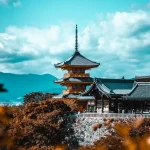
📷 Featured image by MARIOLA GROBELSKA on Unsplash.