On this page
- The Shinkansen Network and Japan Rail Pass Revolution
- Tokyo’s Multi-System Transit Maze and IC Card Evolution
- Regional City Transport Networks Beyond Tokyo
- Highway Buses and Overnight Travel Solutions
- Domestic Flights for Island-Hopping and Long Distances
- Taxis, Ride-Sharing Apps, and Urban Mobility
- Rental Cars for Rural Adventures and Hidden Japan
- Alternative Transport: Cycling, Ferries, and Local Solutions
- Budget Breakdown: What Transportation Really Costs in 2026
- Frequently Asked Questions
Japan’s transportation network remains the world’s most punctual and comprehensive, but navigating the maze of train lines, bus routes, and payment systems can overwhelm first-time visitors in 2026. With recent JR Pass price hikes, IC card availability issues, and new digital ticketing options, even seasoned Japan travelers need updated strategies to move efficiently across the archipelago.
The Shinkansen Network and Japan Rail Pass Revolution
The Shinkansen bullet train system forms Japan’s high-speed backbone, connecting major cities with trains that depart every 3-6 minutes during peak hours. The network spans from Hokkaido’s snow-covered landscapes to Kyushu’s volcanic peaks, with the newest Hokuriku Shinkansen extension to Kanazawa serving as a gateway to the Japan Alps.
Nine main Shinkansen lines operate across Japan. The Tokaido Shinkansen handles the Tokyo-Osaka corridor with Nozomi, Hikari, and Kodama services. Nozomi trains are fastest, stopping only at major stations, while Kodama services stop at every station. The Sanyo Shinkansen continues from Osaka to Hakata in Kyushu, where the Kyushu Shinkansen takes over for routes within Kyushu island.
The northern routes include the Tohoku Shinkansen to Sendai and Aomori, the Hokkaido Shinkansen crossing the Seikan Tunnel to Sapporo, and the branching Yamagata and Akita Shinkansen lines. The western Hokuriku Shinkansen serves Kanazawa and Toyama, while the Joetsu Shinkansen connects Tokyo with Niigata’s ski resorts.
Booking Shinkansen Tickets
JR Ticket Offices (Midori-no-Madoguchi) at major stations remain the most reliable booking method. English-speaking staff are available at tourist-heavy stations like Tokyo, Kyoto, and Shin-Osaka. Ticket machines now feature multilingual interfaces including English, Korean, and Chinese.
Smart-EX (smart-ex.jp) handles online reservations for Tokaido, Sanyo, and Kyushu Shinkansen lines. The system requires a credit card and delivers tickets to your mobile device. JR East’s online reservation system covers northern routes including Tohoku and Hokuriku lines.
Reserved seats cost approximately 500-800 JPY extra but guarantee seating during busy periods. Golden Week (late April to early May), Obon (mid-August), and New Year holidays see near-100% occupancy rates. Unreserved cars often fill completely during these periods.
Japan Rail Pass Changes in 2026
The October 2023 JR Pass price restructuring fundamentally altered its value proposition. Current prices stand at 50,000 JPY for 7 days, 80,000 JPY for 14 days, and 100,000 JPY for 21 days – representing increases of 67-70% over previous rates.
The game-changing addition is the Nozomi/Mizuho add-on ticket. JR Pass holders can now purchase special tickets for 4,960 JPY per journey to ride previously excluded Nozomi and Mizuho services. For Tokyo-Shin-Osaka, this compares favorably to the 15,380 JPY regular fare for a reserved Nozomi seat.
JR Pass holders now use automatic ticket gates by inserting their pass. The magnetic strip technology reads the pass validity and allows entry without staff interaction. Reserved seat tickets print automatically at machines when scanning your pass.
Purchase JR Pass exchange orders outside Japan through authorized sellers or the official website japanrailpass.net. Exchange locations in Japan include Narita Airport terminals, Haneda Airport, Tokyo Station, and major JR stations nationwide. The exchange process requires your passport with “Temporary Visitor” entry stamp.
Tokyo’s Multi-System Transit Maze and IC Card Evolution
Tokyo operates the world’s most complex urban rail network with 13 subway lines, 29 JR lines, and dozens of private railway lines serving 40 million passengers daily. Two separate subway systems – Tokyo Metro (9 lines) and Toei Subway (4 lines) – form the underground backbone, while JR East’s Yamanote Line provides the circular route connecting major districts.
Understanding line colors simplifies navigation. The Yamanote Line appears in bright green on all maps, while the Chuo Line uses orange. Tokyo Metro lines each have distinct colors – blue for Tozai, red for Marunouchi, purple for Hanzomon. Private railways like Keio, Odakyu, and Tokyu operate their own color schemes.

IC Card Situation in 2026
The semiconductor shortage that suspended physical IC card sales in 2023 continues affecting availability in 2026. JR East and Pasmo stopped selling regular Suica and Pasmo cards indefinitely, creating challenges for visitors seeking rechargeable transit cards.
Current physical card options include Welcome Suica at Narita and Haneda airports. This tourist-specific card costs 1,000 JPY with no deposit, remains valid for 28 days, and cannot be refunded. Pasmo Passport offers similar terms with a 500 JPY issuance fee.
Mobile IC cards represent the preferred 2026 solution. iPhone users add Suica or Pasmo directly through the Wallet app, enabling Apple Pay Express Transit. The setup requires no deposit and allows instant credit card top-ups. Android users need FeliCa-compatible phones, common in Japanese models but rare in international versions.
ICOCA cards remain available at JR West stations in Kansai region with a 500 JPY refundable deposit. These cards work throughout Japan’s transportation network and at convenience stores, vending machines, and participating shops.
Tokyo Subway Passes and Pricing
The Tokyo Subway Ticket covers both Metro and Toei systems at 800 JPY (24 hours), 1,200 JPY (48 hours), or 1,500 JPY (72 hours). Purchase locations include tourist information centers, major hotels, and airport arrivals areas. Foreign passport presentation is required.
Single journey fares range from 170-320 JPY on Tokyo Metro and 180-430 JPY on Toei Subway. Transfer penalties between systems add 70 JPY when using paper tickets but disappear with IC card usage, which calculates optimal routing automatically.
The Greater Tokyo Pass at 1,590 JPY covers Tokyo Metro, Toei, JR local lines, and private railways within Tokyo’s 23 wards for 24 hours. This pass suits travelers visiting multiple districts or taking JR lines to areas like Harajuku, Shibuya, or Tokyo Station.

Regional City Transport Networks Beyond Tokyo
Osaka’s transportation landscape centers on Osaka Metro’s nine color-coded subway lines connecting major districts. The Midosuji Line (red) runs north-south through central Osaka, while the Chuo Line (green) provides east-west connectivity. JR West’s Osaka Loop Line circles the city center, stopping at key stations like Osaka, Namba, and Tennoji.
Kansai’s integrated network extends beyond Osaka city limits. Keihan Railway connects Osaka with Kyoto via scenic routes along the Yodo River. Hankyu and Hanshin railways provide alternative Osaka-Kobe connections. The private Kintetsu network reaches Nara, Kyoto, and Mie Prefecture destinations.
Osaka Metro’s Enjoy Eco Card offers unlimited subway and city bus rides at 620 JPY on weekends/holidays or 820 JPY on weekdays. The card includes discounts at Osaka Castle, Aquarium Kaiyukan, and Sumiyoshi Taisha Shrine. Purchase locations include subway stations, tourist information centers, and hotels.
Kyoto’s Railway Web
Kyoto operates two subway lines – Karasuma (north-south) and Tozai (east-west) – supplemented by extensive private railway networks. Keihan Main Line serves eastern districts including Gion and Fushimi Inari. Hankyu Kyoto Line provides rapid connections to Osaka. The scenic Eizan Electric Railway (Eizan Densha) reaches mountain temples in northern Kyoto.
Kyoto City Bus operates comprehensive routes serving temples and attractions not accessible by rail. The 100-yen zone covers central Kyoto, while longer routes cost 230 JPY. Day passes at 600 JPY provide unlimited bus and subway usage within the city.
Keihan’s Kyoto Sightseeing Pass combines unlimited Keihan railway rides with temple admission discounts and shopping benefits. The one-day version costs 1,000 JPY, while two-day passes reach 1,500 JPY.
Hiroshima and Regional Networks
Hiroshima’s streetcar system represents Japan’s largest remaining urban tram network with eight routes covering the city center and extending to Miyajima ferry terminal. Single rides cost 220 JPY within the city or 280 JPY to Miyajima-guchi. Day passes provide unlimited rides for 600 JPY.

The Hiroshima-Miyajima World Heritage Route ticket combines streetcar transportation, JR ferry service to Miyajima Island, and return trips for 840 JPY. This represents significant savings over individual tickets totaling over 1,000 JPY.
Fukuoka’s subway system serves Kyushu’s largest city with three lines connecting Hakata Station, Tenjin shopping district, and Fukuoka Airport. The airport connection takes just 5 minutes from Hakata Station, making domestic flight connections extremely convenient.
Highway Buses and Overnight Travel Solutions
Japan’s highway bus network provides cost-effective long-distance travel with routes connecting every prefecture. Overnight buses excel for budget-conscious travelers willing to sacrifice speed for savings, with Tokyo-Osaka journeys taking 8-9 hours versus 3 hours by Shinkansen.
Willer Express dominates the highway bus market with distinctive pink buses and innovative seating configurations. Their “Relax” seats offer individual privacy shields, while “Cocoon” seats provide near-horizontal sleeping positions. Standard buses feature 4-across seating, while premium services offer 3-across layouts.
JR Bus operates the premium Granclass service on select routes with 2+1 seating, individual entertainment systems, and meal service. These buses cost 30-50% more than standard highway buses but offer airline-level comfort for overnight journeys.
Booking and Route Selection
Willer Express operates an English website (willerexpress.com) with seat selection maps and real-time availability. Booking 3-7 days in advance secures better seat selection and promotional fares. Payment accepts international credit cards.
Japan Bus Online (japanbusonline.com) aggregates multiple operators with English booking interface. The platform covers regional operators like Kansai Airport Express Bus, Kyushu Kyuko Bus, and Hokkaido Chuo Bus.
Popular routes include Tokyo-Osaka (3,500-8,000 JPY), Tokyo-Kyoto (4,000-9,000 JPY), and Tokyo-Hiroshima (7,000-12,000 JPY). Weekend and holiday surcharges add 500-1,000 JPY. Female-only buses operate on major routes for solo women travelers.

Bus Pass Options
Willer Express Japan Bus Pass provides unlimited rides within specified periods: 3 consecutive days (7,500 JPY), 5 days (12,500 JPY), or 7 days (15,000 JPY). The pass requires advance reservation for each journey and works best for multi-city itineraries covering long distances.
The pass becomes cost-effective after 2-3 long-distance journeys. Tokyo-Osaka-Hiroshima-Tokyo using individual tickets costs approximately 18,000 JPY, making the 7-day pass profitable for such routes.
Regional bus passes serve specific areas. The Hokkaido Bus Pass covers Sapporo, Otaru, Hakodate, and New Chitose Airport routes. The Kyushu Highway Bus Pass includes Fukuoka, Kumamoto, Kagoshima, and Beppu connections.
Domestic Flights for Island-Hopping and Long Distances
Japan’s domestic aviation network connects 90+ airports across the archipelago, making flights essential for reaching remote islands and covering distances where trains become impractical. The network excels for Tokyo-Okinawa, mainland-Hokkaido, and inter-island connections within Okinawa and Kagoshima prefectures.
ANA (All Nippon Airways) and JAL (Japan Airlines) dominate full-service operations with modern fleets, frequent schedules, and premium cabin options. Both airlines operate extensive domestic networks with focus on punctuality – on-time performance exceeds 90% system-wide.
Low-cost carriers transformed domestic aviation affordability. Peach Aviation operates from Kansai and connects Osaka with Sapporo, Sendai, Tokyo, and Okinawa destinations. Jetstar Japan serves Tokyo-Haneda and Tokyo-Narita routes to major cities. Spring Japan focuses on Tokyo-Hiroshima, Tokyo-Saga, and regional routes.
Tourist Fare Programs
ANA’s Experience Japan Fare offers special rates for international visitors. Tokyo-Sapporo sectors start from 7,700 JPY, compared to regular economy fares reaching 25,000 JPY during peak periods. The program requires purchasing outside Japan with international flight ticket proof.
JAL’s Japan Explorer Pass provides similar benefits with competitive sector pricing. Both programs allow unlimited domestic flight changes without penalties, crucial for flexible itineraries. Bookings require advance purchase, typically 7-14 days before travel.
Routes particularly suited for flights include Tokyo-Sapporo (1.5 hours vs 8 hours by train), Tokyo-Naha Okinawa (2.5 hours, no train option), and Osaka-Kagoshima (1.5 hours vs 6 hours). Inter-island flights within Okinawa Prefecture connect Naha with Ishigaki, Miyakojima, and smaller islands.
Airport Connections
Haneda Airport serves downtown Tokyo with monorail connections to JR Yamanote Line (17 minutes to Shimbashi) and Keikyu railway to Shinagawa (14 minutes). The airport handles most domestic flights and offers convenient city access.
Narita Airport, 60 kilometers from central Tokyo, serves primarily international flights but handles some domestic routes. The Skyliner express train reaches central Tokyo in 45 minutes, while local trains take 60-75 minutes.
Kansai Airport connects Osaka region with express trains reaching Namba in 45 minutes and Kyoto in 75 minutes. The airport island location requires either train or bus transportation to reach mainland destinations.
Taxis, Ride-Sharing Apps, and Urban Mobility
Taxis provide essential last-mile transportation when trains stop running or for reaching destinations poorly served by public transport. Japan’s taxi industry maintains high service standards with clean vehicles, courteous drivers, and reliable service, though costs significantly exceed public transportation.
Tokyo taxi fares begin at 500 JPY for initial 1.0-1.2 kilometers, then increment by approximately 100 JPY every 230-280 meters. Osaka base fares start at 600 JPY for 1.7 kilometers with similar incremental charges. Late-night surcharges add 20-30% between 22:00-05:00.
Payment methods evolved significantly since 2024. Cash remains universally accepted, while credit cards and IC cards gained broader adoption in major cities. Rural areas may still prefer cash payments.
Ride-Sharing Applications
GO (formerly JapanTaxi) leads the digital taxi market with English-language app interface and real-time vehicle tracking. The service operates in Tokyo, Osaka, Kyoto, and 45+ cities nationwide. Payment options include credit cards, with receipt emails provided automatically.

Uber operates in major cities but partners with licensed taxi companies rather than individual drivers due to Japanese regulations. The service costs match regular taxi fares without surge pricing, though availability varies by location and time.
S.RIDE serves Tokyo, Osaka, and Sendai with streamlined booking requiring minimal input. The app uses location detection for pickup and accepts various payment methods. DiDi operates in selected cities with competitive pricing and multilingual support.
When Taxis Make Sense
Taxis excel for early morning airport departures when trains don’t operate, late-night returns when last trains have departed, and reaching accommodations in residential areas. Tokyo’s last trains typically end between 24:00-00:30, creating gaps until first trains around 05:00.
Group travel often makes taxis cost-effective. Four passengers splitting a 2,000 JPY ride pay 500 JPY each, competitive with train fares plus convenience. Heavy luggage situations favor taxis over navigating subway stairs and transfers.
Premium taxi services include luxury vehicle options and English-speaking drivers. These services cost 20-50% more than standard taxis but provide enhanced communication for complex destinations or specific requirements.
Rental Cars for Rural Adventures and Hidden Japan
Rental cars unlock access to Japan’s rural treasures where public transportation becomes sporadic or nonexistent. Mountain onsen towns, coastal fishing villages, and remote hiking trailheads often require personal transportation for practical exploration.
International Driving Permit (IDP) requirements remain strict in 2026. The permit must follow the 1949 Geneva Convention format and be obtained in your home country before Japan arrival. Processing typically requires 2-8 weeks, making advance planning essential. Countries like Germany, Switzerland, and France have specific bilateral agreements requiring different procedures.
Major rental companies include Toyota Rent-a-Car, Nissan Rent-a-Car, Times Car Rental, and Nippon Rent-a-Car. All offer English-language websites with advance booking capabilities. Compact cars start around 5,000-8,000 JPY daily, while larger vehicles and luxury options reach 15,000+ JPY per day.

Essential Rental Car Features
GPS navigation systems now feature multilingual interfaces with English voice guidance. These systems excel at finding addresses using Japan’s complex block numbering system. Google Maps provides reliable alternative navigation, though offline map downloads help in areas with poor cellular coverage.
ETC (Electronic Toll Collection) cards eliminate expressway toll booth delays and sometimes provide discounts. Rental companies offer ETC cards for 330 JPY flat fees plus actual toll charges. Tokyo-Osaka expressway tolls reach approximately 7,000-8,000 JPY without discounts.
Insurance options include basic coverage with deductibles (typically 50,000-100,000 JPY) or comprehensive coverage eliminating deductibles. International visitors often choose comprehensive options for peace of mind, adding 1,000-3,000 JPY daily.
Ideal Rental Car Regions
Hokkaido’s vast landscapes and scattered attractions make rental cars nearly essential. Popular driving routes include the Furano-Biei flower field circuit, coastal drives along the Sea of Okhotsk, and national park access in Daisetsuzan. Winter driving requires snow tire experience and chains.
The Japanese Alps region benefits enormously from car access. Routes through Takayama, Shirakawa-go, and the Tateyama-Kurobe Alpine Route connect mountain villages and scenic valleys. Autumn foliage seasons create spectacular driving conditions.
Okinawa’s islands, Kyushu’s hot spring regions, and Shikoku’s pilgrimage routes all favor rental car exploration. These areas often have limited public transportation schedules that constrain sightseeing flexibility.
Avoid rental cars in major cities. Tokyo, Osaka, and Kyoto feature expensive parking (500-2,000 JPY per hour), complex traffic patterns, and excellent public transportation networks. Urban driving creates stress without benefits.
Alternative Transport: Cycling, Ferries, and Local Solutions
Japan’s alternative transportation modes provide unique perspectives and access to specialized destinations. These options complement the main transportation network and often deliver memorable experiences beyond simple mobility.
Cycling culture thrives in flat cities like Kyoto, where bicycle rentals enable temple-hopping at a personal pace. Standard city bikes rent for 1,000-1,500 JPY daily, while electric-assist bicycles cost 1,800-2,500 JPY but handle Kyoto’s gentle inclines effortlessly.

Kyoto’s cycling infrastructure includes designated bike lanes along major roads and bicycle parking areas near temples and attractions. Illegal parking results in fines and bike impoundment, so use only designated parking zones marked with bicycle symbols.
Ferry Networks and Island Access
Ferry services connect Japan’s inhabited islands with mainland ports. The Seto Inland Sea ferry network links Hiroshima, Okayama, and Kagawa prefectures with islands like Naoshima (contemporary art), Teshima, and Shodoshima (olive groves).
Overnight ferries operate long-distance routes including Tokyo-Shikoku, Tokyo-Kyushu, and Osaka-Kyushu. These services offer private cabins, restaurants, and onboard baths for unique travel experiences. Costs range from 5,000-15,000 JPY depending on cabin class and route.
The Okinawa island chain requires ferry connections for inter-island travel. Routes connect Naha with Kerama Islands (1 hour), Ishigaki with remote Iriomote Island (45 minutes), and various outer islands. Some routes operate only 2-3 times weekly, requiring careful schedule planning.
Regional Transportation Specialties
Hakone’s circular route combines multiple transportation modes: Odakyu railway from Tokyo, funicular railway up steep mountain slopes, cable car to Lake Ashi, and pirate ship ferry across the lake. The Hakone Free Pass covers all modes for seamless sightseeing.
Nikko’s temple and shrine complex requires bus connections from Nikko Station. World Heritage Site buses serve major temples, while local buses reach hiking trails and waterfalls. Day passes provide unlimited rides within the Nikko area.
Mt. Fuji access relies on seasonal bus routes from major stations. Climbing season (July-September) features direct buses from Tokyo to 5th stations on different climbing routes. Off-season access becomes more limited, with some routes suspended entirely.
Rope railways (ropeways) provide mountain access for hiking and sightseeing. Notable examples include Hakone Ropeway, Tateyama Ropeway in the Japanese Alps, and Gala Yuzawa Gondola for ski areas. These systems often integrate with railway networks for seamless mountain access.

Budget Breakdown: What Transportation Really Costs in 2026
Transportation represents a major expense category for Japan travel, often consuming 20-30% of total trip budgets. Understanding real costs helps optimize spending across different travel styles and regional preferences.
Budget Travel (Under 8,000 JPY Daily Transport)
Budget travelers rely heavily on local trains, buses, and walking. Tokyo daily transport costs 1,000-2,000 JPY using individual tickets or day passes. Osaka Metro day passes at 620-820 JPY enable comprehensive city exploration.
Long-distance budget options include highway buses (Tokyo-Osaka 3,500-5,000 JPY), local trains with multiple transfers (Tokyo-Osaka via local services 8,640 JPY taking 8+ hours), and advance-purchase discount flights (Tokyo-Sapporo 5,000-8,000 JPY).
Bicycle rentals in suitable cities like Kyoto (1,000-1,500 JPY daily) reduce transport costs while providing flexibility. Walking becomes primary transportation in concentrated areas like Tokyo’s Shibuya-Harajuku-Omotesando district.
Weekly budget transport examples: Tokyo base (7,000 JPY), day trip to Kamakura (1,200 JPY), Osaka move via highway bus (4,000 JPY), three Osaka days (2,500 JPY), Kyoto day trip (800 JPY), return to Tokyo via bus (4,000 JPY). Total: 19,500 JPY for seven days.
Mid-Range Travel (8,000-15,000 JPY Daily Transport)
Mid-range budgets accommodate occasional Shinkansen journeys, domestic flights for long distances, and convenient transport choices. A 7-day JR Pass at 50,000 JPY averages 7,143 JPY daily but enables unlimited JR network usage.
Mixed transportation strategies work effectively. Use Shinkansen for major moves (Tokyo-Kyoto-Osaka), local trains and subways for city exploration, and buses for specific destinations. Taxi usage remains limited to late-night or luggage-heavy situations.
Sample mid-range week: JR Pass activation (7,143 JPY daily equivalent), local transport in non-JR areas like Kyoto private railways (500 JPY daily), occasional taxi usage (1,000 JPY total), and domestic flight for distant regions (15,000 JPY). Weekly average: 10,000-12,000 JPY daily.
This budget level provides comfort and time savings while maintaining cost consciousness. Travelers avoid premium services but don’t sacrifice convenience for minimal savings.
Comfortable Travel (15,000+ JPY Daily Transport)
Comfortable budgets enable first-class travel, frequent taxi usage, and premium transportation options. Green Car Shinkansen seats add 4,000-6,000 JPY per journey but provide spacious seating, power outlets, and included refreshments.
Domestic flights become preferred long-distance options with flexible booking and premium cabin selection. ANA and JAL premium economy and business class seats provide superior comfort for 2+ hour flights.
Taxi usage increases significantly for convenience and comfort. Airport transfers via taxi (3,000-15,000 JPY depending on distance) eliminate train transfers with luggage. Evening taxi rides replace last train concerns.
Private transportation options include hired cars with drivers for sightseeing (30,000-50,000 JPY daily), premium train services like the Cassiopeia luxury sleeper, and helicopter services for unique experiences.
Regional Cost Variations
Tokyo transportation costs exceed national averages due to longer distances between destinations and premium service availability. Taxi fares particularly impact budgets, with cross-city rides reaching 3,000-5,000 JPY.
Rural areas often require rental cars, adding 6,000-12,000 JPY daily including fuel and tolls. However, rural public transport costs remain low when available, with local bus day passes typically under 1,000 JPY.
Okinawa’s transportation costs vary dramatically by island. Naha city transport remains affordable with monorail day passes at 800 JPY. Remote islands require expensive inter-island flights (8,000-15,000 JPY per segment) or limited ferry services.
Hokkaido’s vast distances make rental cars or domestic flights necessary for comprehensive exploration. Public transportation exists but limits itinerary flexibility significantly. Winter conditions add snow tire requirements and potential weather delays.
Frequently Asked Questions
Do I need to reserve Shinkansen seats in advance?
Reserved seats are recommended during peak travel periods (Golden Week, Obon, New Year) when unreserved cars fill completely. Regular periods allow same-day unreserved travel, though reserved seats guarantee seating and cost only 500-800 JPY extra.
Can I use my phone as an IC card in 2026?
iPhone users can add Suica or Pasmo cards directly through Apple Wallet with no deposit required. Android users need FeliCa-compatible phones, common in Japanese models but rare internationally. Mobile IC cards offer the most convenient payment method.
Is the JR Pass worth buying after the 2023 price increases?
The pass breaks even at approximately 2-3 long-distance Shinkansen journeys within the validity period. Tokyo-Kyoto-Hiroshima-Tokyo using regular tickets costs about 45,000 JPY, making a 7-day pass (50,000 JPY) marginally worthwhile with additional local JR usage.
What’s the best way to reach rural destinations without rental cars?
Combine Shinkansen or limited express trains to the nearest major station, then use local buses or regional railways. Many rural destinations offer tourist bus services or guided tours from nearby cities. Highway buses sometimes serve smaller towns directly.
How do I navigate Tokyo’s complex train system as a first-time visitor?
Download apps like Google Maps, Hyperdia, or Navitime Japan Transit for route planning. Focus on major lines like JR Yamanote Line for orientation, and purchase day passes covering multiple operators. Station signs include English, and staff at major stations speak basic English.
Explore more
The Ultimate Guide to Getting Around Japan: Shinkansen, JR Pass & Local Transit
Is the Japan Rail Pass Worth It for Your Japan Trip? A Complete Guide
Shinkansen for Beginners: Your First Bullet Train Ride in Japan
Suica, Pasmo, Icoca: Which Japan IC Card Do You Need?
Demystifying Japan’s Train System: A Tourist’s Ultimate Handbook
Tokyo to Kyoto by Shinkansen: The Ultimate Travel Guide
How to Buy Train Tickets in Japan: Your Step-by-Step Guide
Japan on a Budget: Saving Money on Transportation Tips
Essential Apps for Getting Around Japan: Maps, Trains & More
When to Take a Taxi in Japan: Costs, Etiquette & Booking Tips
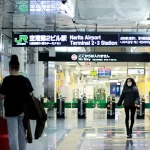
📷 Featured image by henry perks on Unsplash.