On this page
- The Dotonbori Street Food Circuit: How to Walk It
- Must-Eat Stalls and Shops: The Specific Stops
- The 2026 Budget Reality
- Eating Like a Local: Timing, Etiquette, and Avoiding the Traps
- Beyond Takoyaki: The Foods Most Visitors Walk Right Past
- Late-Night and Early-Morning Windows: When the Scene Shifts
- Frequently Asked Questions
💰 Click here to see Japan Budget Breakdown
💰 Prices updated: October, 2026. Budget figures are estimates — always verify before travel.
Exchange Rate: $1 USD = ¥157.00
Daily Budget (per person)
Shoestring: ¥8,000 – ¥15,000 ($50.96 – $95.54)
Mid-range: ¥18,000 – ¥35,000 ($114.65 – $222.93)
Comfortable: ¥45,000 – ¥80,000 ($286.62 – $509.55)
Accommodation (per night)
Hostel/guesthouse: ¥2,500 – ¥6,000 ($15.92 – $38.22)
Mid-range hotel: ¥10,000 – ¥20,000 ($63.69 – $127.39)
Food (per meal)
Budget meal: ¥800.00 ($5.10)
Mid-range meal: ¥2,500.00 ($15.92)
Upscale meal: ¥20,000.00 ($127.39)
Transport
Single metro/bus trip: ¥250.00 ($1.59)
Monthly transport pass: ¥30,000.00 ($191.08)
Dotonbori in 2026 is not the same place it was two years ago. Since Osaka‘s tourist numbers hit a post-pandemic record in late 2024 and kept climbing through 2025, this strip has become genuinely difficult to navigate on weekends. Stall queues stretch into side streets, some of the most photographed spots now have crowd-management barriers, and a handful of legacy vendors quietly tripled their prices without changing their signage. If you show up without a plan, you will spend more money, eat less food, and enjoy it far less than you should. This guide gives you the specific streets, stalls, timing, and real 2026 prices to run a proper Dotonbori food crawl.
The Dotonbori Street Food Circuit: How to Walk It
Most visitors walk straight down Dotonbori-suji, the main canal-side strip, and stop at the first recognisable sign they see. That is the most expensive and most crowded way to eat here. The smarter move is to treat Dotonbori as three distinct zones and move through them in a deliberate order.
Zone 1: Namba Grand Kagetsu to the Glico Man (West to Centre)
Start at the western end near Namba Grand Kagetsu theatre. The density of street food vendors is lower here, the prices are slightly better, and you can get your bearings without being shoulder-to-shoulder with a thousand people. This stretch has a cluster of takoyaki carts and taiyaki shops that are frequented more by local workers than tour groups. It is also where you will find some of the smaller kushikatsu counters spilling onto the pavement — the kind with hand-written menus and no English signage, which is almost always a good sign.
Zone 2: The Central Bridge Area (Ebisubashi)
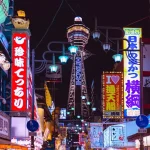
The Glico Man sign and Ebisubashi bridge mark the heart of Dotonbori. This is where the sensory overload peaks — the smell of frying batter and sweet sauce hits you half a block before you arrive, the neon signs reflect off the canal water in blurred streaks of red and orange, and the noise from competing vendor speakers stacks up into a constant hum. Eat strategically here. This zone has the most famous names and the longest queues. It is best visited after you have already eaten something from Zone 1, so you are choosing with your palate rather than your hunger.

Zone 3: Hozenji Yokocho and the Side Streets East
East of the main strip, the narrow lanes around Hozenji Yokocho change the atmosphere entirely. The cobblestones, the moss-covered stone lanterns, and the tiny counter-seat restaurants make this feel like a different city. Street food options here are fewer but tend to be higher quality and lower in tourist markup. This is where serious eaters finish their crawl — sitting at a six-seat counter, watching someone grill skewers over binchotan charcoal, with a glass of cold Asahi on the side.
Must-Eat Stalls and Shops: The Specific Stops
Names matter here because Dotonbori has a lot of imitation. Several stalls have opened in recent years using names that are deliberately similar to well-known vendors. These are the specific stops worth your time and money.
Takoyaki: Wanaka and Aizuya
Wanaka has two locations on the main strip and consistently produces takoyaki with the right texture — liquid at the core, set on the outside, with a slightly crisp base from the cast-iron pan. The queue is real but moves fast because they run multiple pans simultaneously. An eight-ball tray with bonito flakes, green onion, and okonomiyaki sauce costs ¥700 in 2026. Aizuya, further east near Hozenji, has been making takoyaki since 1933 and uses a thinner batter with a stronger dashi flavour. Their style divides people — the centre is runnier than most visitors expect — but it is the oldest version you can eat in this neighbourhood.

Kushikatsu: Daruma
Daruma is the most visible kushikatsu chain in Dotonbori, with the giant chef mascot outside the main branch. The skewers are light and properly drained, which matters more than most people realise — badly made kushikatsu is greasy in a way that kills the rest of your meal. The house sauce, which you dip once and never double-dip (a firm rule enforced at every table), is tangy and slightly sweet. A basic set of five skewers runs around ¥1,100. The pork and quail egg skewers are the two worth ordering on a first visit.
Okonomiyaki: Mizuno
Mizuno on Dotonbori-suji has been making Osaka-style okonomiyaki for decades. The Osaka style — where all ingredients are mixed into the batter before cooking, not layered like the Hiroshima version — produces a thicker, more integrated pancake. Watching the cook flatten and fold one on the iron griddle in front of you while the sweet sauce caramelises at the edges is one of those small theatre moments that makes street eating in Japan so satisfying. A standard seafood okonomiyaki runs ¥1,400–¥1,600 depending on your additions.
Ikayaki and Kanikoro
Two things most first-timers walk past: ikayaki (grilled whole squid pressed flat on a hot plate, served with soy-based sauce) at the smaller cart vendors near the canal, and kanikoro — a Dotonbori original that is essentially a deep-fried crab croquette. The kanikoro from the crab-themed shops along the main strip look like tourist traps but are genuinely good. One croquette costs around ¥500–¥650 and is a better value snack than most of the branded options nearby.

The 2026 Budget Reality
Dotonbori has gotten more expensive. Between 2024 and 2026, average street food prices in this area rose by roughly 15–20%, driven partly by ingredient inflation, partly by landlord rent increases in a high-footfall tourist zone, and partly by vendors adjusting to what the international market will bear. Here is what a realistic food crawl costs by tier.
Budget Crawl (¥2,500–¥3,500 per person)
- Takoyaki (8 balls): ¥700
- One or two kushikatsu skewers from a standing cart: ¥300–¥400
- Kanikoro croquette: ¥550
- Canned beer or vending machine drink: ¥160–¥200
- Taiyaki or imagawayaki for dessert: ¥250–¥350
This gets you a full round of the main food types without sitting down at a restaurant. It requires being selective and skipping the large chains in favour of cart vendors and smaller counters.
Mid-Range Crawl (¥4,500–¥7,000 per person)
- Takoyaki at a sit-down counter (12 balls, better quality): ¥1,100–¥1,300
- Okonomiyaki at Mizuno or equivalent: ¥1,400–¥1,600
- Kushikatsu set at Daruma (5 skewers): ¥1,100
- Draft beer or highball at a standing bar: ¥600–¥800
This is the most common spend level for visitors doing a proper half-day food crawl, mixing street stalls with one or two short sit-down stops.
Comfortable Crawl (¥8,000–¥12,000 per person)
- All of the above, plus one counter-seat restaurant in Hozenji Yokocho for grilled skewers or fresh seafood
- Sake or craft beer pairing
- Dorayaki or high-end wagashi from one of the side-street confectionery shops
At this level, you are not really doing street food anymore — you are combining it with proper sit-down dining. This is worth it if you have a full evening rather than a two-hour pass-through.
Eating Like a Local: Timing, Etiquette, and Avoiding the Traps
The single biggest difference between a good Dotonbori experience and a frustrating one is timing. Locals who eat here regularly — and many do, because this is a neighbourhood, not just a tourist corridor — do not come between noon and 2pm or between 6pm and 9pm on weekends. Those windows are when the crowds peak and when some vendors switch to rush mode, which affects quality.

Etiquette That Matters
Japan has clear, unspoken rules about eating while walking. In Dotonbori specifically, eating while moving has become somewhat accepted for street food items, but standing still near a stall to eat is almost always preferred and appreciated by vendors. Do not take food from one vendor’s area to eat in front of a competitor’s stall. The double-dipping rule at kushikatsu is serious — communal sauce pots are shared, and violating this will get you corrected immediately, usually politely but firmly.
The Tourist Trap Signals
Any stall with a menu board that lists prices in USD, EUR, and CNY alongside yen is priced for tourists and typically charges 20–40% more than equivalent vendors nearby. QR code menus displayed in five languages at standing carts are a similar signal. Neither of these things makes the food bad, but you should go in knowing what you are paying for. The best value food in Dotonbori almost always comes from vendors whose signage is Japanese-only.
Beyond Takoyaki: The Foods Most Visitors Walk Right Past
Takoyaki and kushikatsu absorb most of the attention in Dotonbori, which means a whole range of excellent and cheaper options go overlooked. These are worth building into your crawl.
Negiyaki
A thinner, crispier relative of okonomiyaki made almost entirely of green onion and often with thin strips of pork or beef. Less famous than its cousin, which means shorter queues and lower prices — typically ¥900–¥1,100 for a full portion. The texture is completely different: lighter, slightly chewy at the centre, with a clean savoury flavour that pairs well with cold beer.

Ikayaki (the Flat Version)
Not the grilled whole squid on a skewer, but the flat pressed squid sandwich — a round of thin squid flesh pressed on a griddle and served folded in a piece of thin pancake with sweet sauce. This is a classic Osaka market food that predates the current tourist boom by decades. It costs ¥400–¥500 and takes about two minutes to make. Most visitors assume the squid-shaped signs outside shops mean expensive seafood and keep walking.
Kushiage Vegetable Skewers
Most people think of meat when they think of kushikatsu, but the vegetable skewers — lotus root, shishito pepper, asparagus wrapped in thin pork, eringi mushroom — are some of the best items on any skewer menu. They are usually the cheapest skewers, running ¥120–¥180 each, and they fry faster, meaning they come out at exactly the right temperature.
Mitarashi Dango
Small glutinous rice balls on a skewer, coated in a sticky soy-based glaze and grilled until the outside just chars. Available at a handful of confectionery stalls in the side streets east of Ebisubashi, these cost ¥200–¥300 for a skewer of three or four. The glaze is salty-sweet in a way that works as a palate reset between richer fried foods.
Late-Night and Early-Morning Windows: When the Scene Shifts
Dotonbori does not stop. The street food culture here runs almost around the clock, and the experience changes dramatically depending on when you show up.
After 10pm: The Night Shift
By 10pm on most nights, the tour groups are gone and the crowd shifts to a younger, local demographic — couples, groups of friends, people who have just finished work or a night out. The stalls that remain open — and most of the major ones do, until midnight or 1am — slow down and become more relaxed. Vendors chat with customers more. You can watch the takoyaki being made without someone nudging you from behind. Some of the standing izakayas along the canal side open their best bottles at this hour, knowing the people coming in now are there to settle in rather than rush through.

Before 11am: The Quiet Morning
This window gets almost no coverage in food guides because most visitors are sleeping off the previous night. The canal at 9am, with mist still sitting on the water and the neon signs dark, feels completely different. A few vendors — particularly those selling taiyaki and fresh-pressed juice — open early. Some of the karaage and breakfast-style food carts appear by 10am. The Hozenji Yokocho area is particularly atmospheric at this hour, the stone lanterns and moss walls catching early light in a way that the midday crowds make impossible to appreciate.
A morning walk through this area — stopping for one or two small things, with the streets nearly empty — is one of those Osaka experiences that does not appear on most itineraries but stays with you longer than the crowded evening version.
Frequently Asked Questions
How much should I budget for a Dotonbori food crawl in 2026?
A satisfying crawl covering the main street foods — takoyaki, kushikatsu, okonomiyaki, and a couple of snacks — costs between ¥3,000 and ¥5,500 per person in 2026. Add a drink or two and it reaches ¥6,000–¥7,000. Prices have risen roughly 15–20% since 2024, so older budget estimates you may find online will be lower than reality.
Is cash still necessary in Dotonbori, or do most vendors accept cards?
Cash is still widely preferred at small carts and standing vendors. Most sit-down restaurants now accept IC cards and major credit cards, but street stalls and smaller counter shops frequently operate cash-only. Carry at least ¥3,000–¥5,000 in cash before entering the area. ATMs are available at the 7-Eleven and Lawson branches along Midosuji nearby.

What is the best time of day to visit Dotonbori for street food?
Weekday mornings from 10am to noon are the least crowded and most relaxed. For atmosphere with manageable crowds, weekday evenings from 9pm onwards are ideal. Avoid weekend afternoons and early evenings — roughly noon to 9pm on Saturdays and Sundays — when pedestrian density makes the experience genuinely unpleasant.
Are there vegetarian or vegan street food options in Dotonbori?
Options exist but require careful ordering. Mitarashi dango, some vegetable kushikatsu, taiyaki with sweet red bean filling, and plain okonomiyaki without meat or seafood are the most accessible choices. Be aware that many broths and sauces contain dashi made from fish. Japanese-only menus make it harder to check — having a translation app ready is practical.
How do I get to Dotonbori from central Osaka?
Dotonbori is directly accessible from Namba Station, served by the Midosuji, Sennichimae, and Yotsubashi subway lines, as well as Nankai and Kintetsu rail lines. From Shin-Osaka, take the Midosuji Line south to Namba — about 8 minutes. From Osaka Station (Umeda), the same line takes roughly 6 minutes. The walk from any exit at Namba to the Glico Man sign takes under 5 minutes.
Explore more
First Time in Osaka? Here Are the Must-Do Things You Can’t Miss!
The Ultimate Kyoto Day Trip from Osaka: An Essential 1-Day Itinerary
Osaka Nightlife Guide: Bars, Clubs & Late-Night Fun
📷 Featured image by Crystal Jo on Unsplash.