On this page
- Two Networks, One City: How Tokyo’s Rails Are Split
- Tokyo Metro and Toei Subway: When Going Underground Wins
- JR Lines and the Yamanote Loop: When the Overground Wins
- Paying for Both: IC Cards and the 2026 Mobile Suica Fix
- 2026 Budget Reality: What Tokyo Rail Costs
- A Practical Day Plan: Choosing Between Them Ride by Ride
- Beyond Tokyo: Osaka Metro, Kyoto Bikes and the Shinkansen Link
- What Has Changed Since 2024
- Common Mistakes to Avoid
- Frequently Asked Questions
You land in Tokyo, open a rail map, and see a tangle of coloured lines run by different companies. Then you learn that the plastic IC card every guide recommended is hard to buy new. In 2026, Getting around Tokyo is easy once you know how the system is split, but the first hour can feel confusing. The real choice is not one train against another. It is between the JR lines that run mostly above ground and the Tokyo Metro and Toei subways below it. Each is best for different trips, and you will probably use both.
Two Networks, One City: How Tokyo’s Rails Are Split
Tokyo’s train system is not run by one operator. Japan Railways (JR) runs the Yamanote Line and many other surface lines. Tokyo Metro and Toei Subway are two separate companies that together cover most of central Tokyo underground. Private railways fill in the suburbs.
This matters for your wallet. Transfers between companies are common, but separate fares can apply if you do not use an IC card or a combined pass. With an IC card you just tap in and out, and the system works out the fare.
As a rough guide, JR lines are good for covering long distances across the city and for reaching big hubs. The subways are better for dense neighbourhoods where JR stations are a long walk from your hotel or the sights. Google Maps handles both well, with real-time schedules and platform numbers, so you rarely have to work out which company owns which line.
Tokyo Metro and Toei Subway: When Going Underground Wins
The subway is the better choice for point-to-point trips inside central Tokyo. Stations are close together and exits often lead straight into shopping areas or office towers. On a Ginza-area platform you feel the warm rush of air before the headlights appear, then a short jingle plays as the doors open. Trains come every few minutes, so you almost never need a timetable.
Single ticket fares (2024 figures, projected for 2026):
- Tokyo Metro: JPY 180 to JPY 330, depending on distance
- Toei Subway: JPY 180 to JPY 480, depending on distance
If you are not using an IC card, buy paper tickets from the machines at any station. Insert the ticket into the gate and collect it on the other side.
The Tokyo Subway Ticket
This tourist pass is valid on all Tokyo Metro and Toei Subway lines:
- 24-hour: JPY 800
- 48-hour: JPY 1,200
- 72-hour: JPY 1,500

It pays off if you plan five or more subway rides a day. It does not cover JR lines, so it makes less sense if your sightseeing runs along the Yamanote Line.
For route planning, the official Tokyo Metro App and Toei Transportation App both offer route planners and service status. Google Maps is still the easiest all-in-one option.
JR Lines and the Yamanote Loop: When the Overground Wins
JR lines are the better option when you want to see the city. Late in the afternoon, the windows of a Yamanote Line train fill with low gold light, then with neon as you pass the big hubs. You see the layout of the city in a way the subway never shows you. Many popular tourist routes are JR lines, including the Yamanote Line in Tokyo and the Nara Line from Kyoto.
Short local JR rides start at around JPY 140 to JPY 200, and fares rise with distance. An IC card is the easiest way to pay. If you use paper tickets, pick your destination or fare amount on the machine, then insert the ticket at the gate.
Where the JR Pass fits
The Japan Rail Pass is valid on almost all JR local and limited express lines, so it is excellent value for exploring regions. For a Tokyo-only trip it is rarely worth it, because most of your rides will be short and cheap. It makes sense when your itinerary includes long Shinkansen trips.
Japan Rail Pass prices (set in October 2023, still the reference for 2026):
- Ordinary Car: 7-day JPY 50,000, 14-day JPY 80,000, 21-day JPY 100,000
- Green Car (first class): 7-day JPY 70,000, 14-day JPY 111,000, 21-day JPY 140,000
For comparison, a one-way Tokyo to Kyoto Shinkansen ticket costs about JPY 14,000. A round trip is roughly JPY 28,000, so you need a fairly busy itinerary to justify a 7-day pass.
The pass is valid for consecutive days and covers the Shinkansen (excluding Nozomi and Mizuho without a supplementary ticket), JR local lines, JR buses and some JR ferries, such as the one to Miyajima. You can buy it:
- Online from the official JR Pass site (japanrailpass-reservation.net), which gives you an e-ticket.
- Through overseas sales agents, who issue an Exchange Order before you arrive.
- In Japan at major JR stations such as Narita, Haneda, Tokyo Station and Kyoto Station, at a price typically 10 to 15 percent higher.
To activate it, show your passport (with the Temporary Visitor stamp or sticker) and your e-ticket or Exchange Order at a JR Travel Service Center or designated JR ticket office. Choose a start date up to 30 days ahead and you will get the physical pass. You can book seats online, at a “Midori no Madoguchi” ticket office, or at reserved-seat machines.
Paying for Both: IC Cards and the 2026 Mobile Suica Fix
An IC card means you never have to read a fare map. Suica is issued by JR East, Pasmo by the non-JR railways and subways in Tokyo, and ICOCA by JR West in Kansai. They work almost interchangeably across the country, so a Suica works in Osaka and an ICOCA works in Tokyo. You can also use them for vending machines and many shops.
The physical card problem
Because of a global chip shortage, sales of new physical Suica and Pasmo cards have been largely suspended since mid-2023. The tourist options are the Welcome Suica and Pasmo Passport. They are valid for 28 days with no deposit, but sales are limited, often to airport stations such as Narita and Haneda or a few large stations. Availability can change, so check before you fly. If you do find a regular physical card, it needs a JPY 500 deposit, which is refundable minus a JPY 220 handling fee if there is balance left.
Setting up Mobile Suica on iPhone
- Make sure your iPhone region is set to Japan (you can change it back later).
- Open the Wallet app.
- Tap the “+” icon to add a card.
- Select “Transit Card” and choose “Suica.”
- Follow the prompts to create a new Suica or transfer an existing physical one.
- Top up with Apple Pay using a credit or debit card.
Mobile Suica and Mobile Pasmo also work on Android. The advantages are no physical card, top-ups from anywhere, and no JPY 500 deposit on a new mobile card. You can top up physical cards at multilingual ticket machines or convenience stores.
2026 Budget Reality: What Tokyo Rail Costs
These figures are based on 2024 prices projected for 2026.

Budget
- Tokyo Subway Ticket (24-hour): JPY 800, or JPY 1,500 for 72 hours
- Short JR rides: JPY 140 to JPY 200
- Single subway rides: JPY 180 to JPY 330 on Tokyo Metro
Mid-range
- IC card with a mix of JR, Metro and Toei rides, paying as you go
- Toei single rides up to JPY 480
- Tokyo to Kyoto by Hikari: about JPY 13,500 to JPY 14,000
Comfortable
- Shinkansen by Nozomi, Tokyo to Kyoto: about JPY 14,000 to JPY 14,500
- JR Pass Green Car: JPY 70,000 for 7 days
- Taxis for late nights and luggage: a base fare of about JPY 500 to JPY 550 for the first 1.0 to 1.2 km, plus about JPY 100 per 230 to 280 metres. Between 22:00 and 05:00 a surcharge of 20 to 30 percent usually applies, and tolls are extra.
Taxis accept cash, credit cards, IC cards and mobile payments such as PayPay and Apple Pay. The GO app (go.go.jp/en/) and S.RIDE (sride.jp/en/) let you book, estimate the fare and pay without cash.
A Practical Day Plan: Choosing Between Them Ride by Ride
Use this process every time you leave your hotel:
- Type your destination into Google Maps and compare the top two or three routes.
- Check the time and the number of transfers. A subway route with one transfer often beats a JR route with two, even if the JR line is faster on paper.
- Look at the station exits. A big station can mean a ten-minute walk underground, so pick the route that drops you closest.
- Tap in with your IC card. You do not need to think about which company runs the next leg.
- Use a day pass only if the maths works. If you will take five or more subway rides, the JPY 800 24-hour Tokyo Subway Ticket usually wins.
Beyond Tokyo: Osaka Metro, Kyoto Bikes and the Shinkansen Link
The same logic applies elsewhere. In Osaka, the Osaka Metro has nine lines covering major attractions and business districts. Single tickets start at JPY 180 to JPY 240. The Osaka Metro One-Day Pass (Enjoy Eco Card) costs JPY 820 on weekdays and JPY 620 on weekends and holidays. There is also an official Osaka Metro App.
In Kyoto, many visitors skip trains and ride bikes. A standard city bike costs JPY 1,000 to JPY 1,500 a day, and an electric-assist bike costs JPY 1,500 to JPY 2,500. Ride on the left, avoid sidewalks unless they are marked as shared paths, and use lights at night. Park only in designated areas, which often cost JPY 100 to JPY 300 for a few hours, because illegally parked bikes can be impounded.

Between cities, the Shinkansen is the main option. Nozomi is the fastest, Hikari makes more stops, and Kodama stops everywhere. Trains run as often as every 10 to 15 minutes on busy routes. Book through the Smart EX app or website for the Tokaido and Sanyo lines, or through JR East’s Ekinet.
What Has Changed Since 2024
- Tourist air fares: JAL’s Japan Explorer Pass and ANA’s Experience Japan Fare cost roughly JPY 5,500 to JPY 11,000 per sector and need proof of an international return ticket. Confirm current pricing before relying on them.
Flights make sense on long routes. Tokyo to Sapporo takes 1.5 to 2 hours and costs JPY 7,000 to JPY 15,000 with a tourist pass or low-cost carrier, versus about 8 to 10 hours and JPY 25,000 to JPY 30,000 by rail. For Tokyo to Osaka or Kyoto, the Shinkansen (2.5 to 3 hours, about JPY 14,000) is usually better once airport transfers are counted.
Common Mistakes to Avoid
- Buying a JR Pass for a Tokyo-only trip. Short rides are cheap, and the pass will not pay for itself.
- Expecting to pick up a physical Suica in town. Set up Mobile Suica before you leave, or plan to collect a Welcome Suica at the airport.
- Assuming the Tokyo Subway Ticket covers JR. It only covers Tokyo Metro and Toei lines.
- Forgetting the Nozomi surcharge. It must be bought in advance, so do not get on a Nozomi with only a JR Pass.
- Missing the last train and taking a taxi without checking. Late-night fares include a 20 to 30 percent surcharge from 22:00 to 05:00.
- Cycling on sidewalks or parking anywhere. You risk a fine or an impounded bike.
Frequently Asked Questions
Is the JR Pass worth it for Tokyo?
Usually not if you stay in Tokyo. Local rides cost JPY 140 to JPY 480, so a 7-day Ordinary Car pass at JPY 50,000 rarely pays off. It makes sense when you take several long Shinkansen trips, such as Tokyo to Kyoto at about JPY 14,000 each way.
Can I use my Suica card in Osaka?
Yes. Suica, Pasmo and ICOCA are generally interoperable across the country, so a Suica works in Osaka and an ICOCA works in Tokyo. You tap in and out on trains and subways, and you can also pay at many shops and vending machines.
Is it easy to buy a physical Suica or Pasmo in 2026?

No. New physical card sales have been largely suspended since mid-2023 because of a chip shortage. Tourists can use Mobile Suica or Mobile Pasmo on their phone, or look for a Welcome Suica or Pasmo Passport at major airport stations. Check availability before you travel.
What is the Tokyo Subway Ticket and who should buy it?
It is a tourist pass for all Tokyo Metro and Toei Subway lines: JPY 800 for 24 hours, JPY 1,200 for 48 hours and JPY 1,500 for 72 hours. It suits people making many subway trips a day. It does not cover JR lines such as the Yamanote.
Are taxis expensive in Tokyo?
They are fine for short trips, groups and luggage. The base fare is roughly JPY 500 to JPY 550 for the first 1.0 to 1.2 km, then about JPY 100 per 230 to 280 metres. A 20 to 30 percent surcharge applies from 22:00 to 05:00, and tolls are extra.
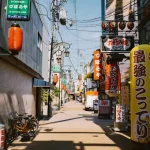
📷 Featured image by cool guy jon on Unsplash.