On this page
- Set Up Your Mobile IC Card Before You Land
- Tokyo by Metro, Toei and the Yamanote Line
- Osaka Metro and Passes Worth Buying
- Shinkansen and the JR Pass: Doing the Maths
- Flights and Highway Buses Between Cities
- Taxis and Rental Cars Where Trains Stop
- Cycling Kyoto’s Quiet Corners
- 2026 Budget Reality
- Mistakes That Cost Travellers Time and Money
- Frequently Asked Questions
Getting around Japan in 2026 is easier than the myths suggest, but two changes catch many first-timers off guard. The plain plastic Suica and Pasmo cards that visitors once grabbed at the airport are no longer sold to tourists, and the Japan Rail Pass now costs far more than it did a few years ago. Knowing both facts before you land saves money and stops you queuing at the wrong machine. This guide walks through each transport option in the order you will probably use it, from your phone wallet to the bullet train, with real prices in yen.
Set Up Your Mobile IC Card Before You Land
An IC card is a rechargeable smart card. You tap it at ticket gates for trains, subways and buses. You also use it at convenience stores, vending machines and some shops. Suica (JR East), Pasmo (Tokyo private railways and subways) and ICOCA (JR West) are the main ones. Regional cards such as Kitaca, Toica, Sugoca, Nimoca and Hayakaken work with them, so one card covers most of the country.
The problem is supply. Because of global semiconductor shortages, sales of new anonymous plastic Suica and Pasmo cards were suspended in 2023. In 2026 those sales remain suspended indefinitely for tourists. Anonymous plastic ICOCA cards are also suspended.
Your three options
- Mobile Suica or Mobile Pasmo (recommended): Add the card to Apple Wallet on an iPhone 8 or newer (or Apple Watch Series 3 or newer). On Android, you need an Osaifu-Keitai compatible device and Google Pay. You top up with Apple Pay, Google Pay, or a linked credit or debit card. There is no plastic card and no deposit, and top-ups are instant.
- Welcome Suica (JR East) or Pasmo Passport (Tokyo Metro/Toei): These are special cards for short-term visitors. They cost ¥2,000, which is a ¥0 deposit plus a ¥2,000 balance. They are valid for 28 days and cannot be refunded. You can get them at major airport and city stations.
- Named IC cards: Longer-term residents, or people with a Japanese address, may be able to buy these at certain JR ticket offices. They need personal details, so they are not practical for a short trip.
Standard plastic cards, where you can still find one, carry a ¥500 deposit. If you return the card and ask for the remaining balance back, a ¥220 handling fee is deducted. You can recharge at ticket machines, convenience stores and some bus terminals.

Tokyo by Metro, Toei and the Yamanote Line
Tokyo’s subway has two operators. Tokyo Metro runs 9 lines and Toei Subway runs 4. Single fares start at ¥180 on both for the shortest distances (1-6 km). Fares rise with distance, typically to about ¥330 for longer rides inside the city centre. Tap your IC card at the gate and the correct fare comes off automatically.
If you plan many rides in a day, a pass can be cheaper:
- Tokyo Subway Ticket (all Tokyo Metro and Toei lines): ¥800 for 24 hours, ¥1,200 for 48 hours, ¥1,500 for 72 hours.
- Tokyo Metro 24-hour Ticket: ¥600, Tokyo Metro lines only.
- Toei One-day Pass: ¥700, covering Toei lines, Toei Bus, Toei Streetcar and the Nippori-Toneri Liner.
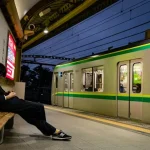
Above ground, JR local lines tie the city together. The Yamanote Line loops around central Tokyo and links Shinjuku, Shibuya and Tokyo Station, with trains every 2-4 minutes at peak hours. A short ride of one to three stations costs around ¥140-¥170. At a Yamanote platform in the evening, you hear the short departure jingle, then the doors slide shut, and the next train is already pulling in behind it. Longer regional JR journeys can cost several thousand yen, and the JR Pass covers JR local lines.
For routing, use Google Maps, Japan Transit Planner (Jorudan) or NAVITIME Japan Transit Planner. All three show real-time routes and fares. Official pages are www.tokyometro.jp/en/ and www.kotsu.metro.tokyo.jp/eng/.
Osaka Metro and Passes Worth Buying
Osaka Metro runs 9 lines. Single fares start at ¥190 for rides up to 3 km and top out around ¥380. Buy tickets from machines or just tap an IC card.
Osaka’s passes are built around sightseeing:
- Osaka Metro One-Day Pass (Enjoy Eco Card): ¥820 on weekdays, ¥620 on weekends and holidays. It covers Osaka Metro and City Bus lines.
- Osaka Amazing Pass: ¥2,800 for 1 day or ¥3,600 for 2 days. It covers Osaka Metro, buses and private railways within Osaka, plus free entry to over 40 tourist attractions.
The Amazing Pass only pays off if you actually visit several of the included attractions. Count the entrance fees you plan to pay before you buy it. The Osaka Loop Line, run by JR, works like the Yamanote Line and links key areas of the city. Official site: www.osakametro.co.jp/en/.

Shinkansen and the JR Pass: Doing the Maths
The Shinkansen network links major cities at high speed. Nozomi is the fastest with the fewest stops. Hikari is intermediate. Kodama stops at every station.
The Japan Rail Pass changed sharply. A price increase took effect in October 2023, and the 7-day Ordinary Pass rose from ¥29,650 to ¥50,000. These are the 2026 adult prices:
- Ordinary Car: 7-day ¥50,000, 14-day ¥80,000, 21-day ¥100,000
- Green Car (first class): 7-day ¥70,000, 14-day ¥111,000, 21-day ¥140,000
The pass covers most Shinkansen, but Nozomi and Mizuho trains need an extra surcharge ticket bought separately before boarding. A Tokyo to Shin-Osaka Nozomi surcharge is approximately ¥4,960. With a price this high, add up your planned journeys first. If you only make one or two long trips, individual tickets may cost less.
How to activate and use the pass
- Buy an Exchange Order online or from an authorised agent outside Japan. The official site is japanrailpass.net.
- In Japan, take your Exchange Order, passport and “Temporary Visitor” stamp or sticker to a JR Pass exchange office. You find them in major airports and JR stations.
- Choose your start date, which must fall within 30 days of the exchange.
- Reserve seats at a JR station ticket machine (choose the “JR Pass” option) or at a Midori-no-Madoguchi ticket counter. Reservations are free with the pass.
Flights and Highway Buses Between Cities
For long distances, flying is often fastest. ANA and JAL are the full-service carriers, with flexible tickets and typically 20-23 kg of checked baggage included. Peach, Jetstar Japan and Spring Japan are low-cost carriers, with cheaper base fares but extra charges for bags and seat selection. Typical flight times:
- Tokyo (Haneda/Narita) to Osaka (Itami/Kansai): about 1 hour 15 minutes
- Tokyo to Sapporo (Chitose): about 1 hour 35 minutes
- Tokyo to Fukuoka: about 1 hour 50 minutes
LCC fares booked in advance run about ¥4,000-¥15,000 one way, and they change constantly. On LCCs only carry-on (typically 7 kg) is included, and a checked 20 kg bag usually starts at ¥2,000-¥3,500. ANA’s Experience Japan Fare and the JAL Japan Explorer Pass bring tourist fares to roughly ¥7,000-¥15,000 per segment, against standard fares of ¥20,000-¥40,000 or more. Check ana.co.jp/en/jp/, jal.com/en/, flypeach.com/en/ and jetstar.com/jp/en/.

Highway buses are the budget choice. Willer Express (willerexpress.com/en/) is the biggest and the most tourist-friendly, with English booking. Pick your route and date, choose a bus type (from Standard to “Luxurious” with privacy hoods), then pay by credit card. Typical times are Tokyo to Osaka 8-9 hours, Tokyo to Kyoto 7-8 hours, and Tokyo to Nagoya 5-6 hours. Tokyo to Osaka one way costs ¥3,500-¥12,000, with dynamic pricing. Overnight buses often cost more than daytime ones, but they also save you a hotel night.
Taxis and Rental Cars Where Trains Stop
Taxis are plentiful in cities and scarce in the countryside. A red light in the lower corner of the windshield means the car is free. The Tokyo fare structure looks like this:
- Flag fall: about ¥500 for the first 1.0 km. The distance was reduced from 1.052 km in 2024, and the price itself can shift slightly.
- Distance charge: about ¥100 for every 230-250 metres after that.
- Time charge: about ¥100 per 90 seconds when moving slowly or stopped.
- Night surcharge: typically 20% between 10:00 PM and 5:00 AM.
- Tolls: you pay any highway tolls.
The GO app is the most popular for hailing a taxi and paying cashlessly. S.RIDE is another major app, especially strong in Tokyo. Cash, credit cards and IC cards are widely accepted. Fixed-fare airport services between Narita or Haneda and central Tokyo are becoming more common, typically ¥6,000 to ¥20,000 depending on destination and time.
For Hokkaido, Tohoku, Kyushu, Okinawa, or scenic routes such as the Noto Peninsula and Aso Caldera, a rental car makes sense. You need:
- An International Driving Permit based on the 1949 Geneva Convention, obtained in your home country.
- Your original driving licence.
- Your passport.
Drivers from Germany, France, Switzerland, Belgium and Taiwan can use an official Japanese translation of their licence instead of an IDP. Major companies include Toyota Rent-a-Car, Nissan Rent-a-Car, Times Car Rental, Orix Rent-A-Car and Nippon Rent-A-Car. Extra coverage such as the Non-Operation Charge waiver and CDW costs about ¥1,000-¥2,500 per day. Rent an ETC card for expressway tolls, about ¥330-¥550. Some companies offer unlimited ETC passes for tourists, such as the Japan Expressway Pass.
Cycling Kyoto’s Quiet Corners
Kyoto is relatively flat, and a bicycle lets you slip down narrow lanes that buses cannot enter. Riding the Philosopher’s Path between Ginkaku-ji and Nanzen-ji in the morning, you hear only the water in the canal and the tick of your wheels. Other good routes are Arashiyama, with the Bamboo Grove, Tenryu-ji and Togetsukyo Bridge, and the banks of the Kamo River.

Rental shops cluster near Kyoto Station, Arashiyama and Gion, and many hotels rent bikes too. A standard city bike costs ¥1,000-¥1,500 for 8-10 hours. An electric-assist bike costs ¥1,800-¥2,500 and is worth it for longer distances or slight slopes.
Follow these rules:
- Park only in designated bicycle parking areas. Impounded bikes cost around ¥2,300 to retrieve.
- Ride on the left side of the road.
- Do not ride on sidewalks unless they are marked for bikes.
- Use front and rear lights at night.
- Give way to pedestrians.
- Never cycle after drinking alcohol. It is illegal.
2026 Budget Reality
Here is roughly what each travel style costs, using the figures above.
Budget
- Tokyo Subway Ticket 24-hour: ¥800
- Osaka Metro One-Day Pass on a weekend: ¥620
- Willer Express Tokyo to Osaka: from ¥3,500
- LCC flight, one way: from ¥4,000 plus bags
- Kyoto city bike: ¥1,000-¥1,500 per day
Mid-range
- Tokyo Subway Ticket 72-hour: ¥1,500
- Osaka Amazing Pass: ¥2,800 (1 day) or ¥3,600 (2 days)
- JR Pass 7-day Ordinary: ¥50,000, plus a Nozomi surcharge of about ¥4,960 for Tokyo-Shin-Osaka if you want the fastest train
- ANA or JAL tourist fares: ¥7,000-¥15,000 per segment
- Electric-assist bike in Kyoto: ¥1,800-¥2,500
Comfortable
- JR Pass 7-day Green Car: ¥70,000 (14-day ¥111,000, 21-day ¥140,000)
- Standard full-service flight: ¥20,000-¥40,000 or more
- Mid-size SUV rental: ¥10,000-¥18,000 per day, plus insurance and fuel
- Airport taxi on a fixed fare: ¥6,000-¥20,000
Mistakes That Cost Travellers Time and Money
- Looking for a plastic Suica at the airport. Anonymous plastic cards are not sold to tourists. Set up a mobile card first, or buy Welcome Suica or Pasmo Passport.
- Assuming the JR Pass covers every train. Nozomi and Mizuho need a surcharge ticket bought before boarding.
- Buying the JR Pass without adding up your trips. At ¥50,000 for seven days, a short itinerary may be cheaper with single tickets.
- Skipping seat reservations. They are free with the pass, and non-reserved cars can be crowded.
- Missing the 30-day window. Your JR Pass start date must fall within 30 days of exchange.
- Forgetting your International Driving Permit. It must follow the 1949 Geneva Convention and be arranged before you leave home.
- Parking a rental bike wherever it fits in Kyoto. Illegal parking can mean impoundment and a fee of around ¥2,300.
- Ignoring LCC baggage fees. A cheap ¥4,000 ticket grows once you add a checked bag at ¥2,000-¥3,500.

Frequently Asked Questions
Can tourists buy a Suica card in 2026?
Standard anonymous plastic Suica and Pasmo cards remain suspended for tourists. You can use Mobile Suica or Mobile Pasmo on a compatible iPhone or Android phone, or buy Welcome Suica or Pasmo Passport for ¥2,000. Those two are valid for 28 days and cannot be refunded.
How much is the Japan Rail Pass in 2026?
Adult Ordinary Car prices are ¥50,000 for 7 days, ¥80,000 for 14 days and ¥100,000 for 21 days. Green Car prices are ¥70,000, ¥111,000 and ¥140,000. The prices rose in October 2023, when the 7-day Ordinary Pass went up from ¥29,650.
Does the JR Pass cover the Nozomi Shinkansen?
Not by default. You can ride Nozomi and Mizuho services only by buying an extra surcharge ticket separately before boarding. For example, a Tokyo to Shin-Osaka Nozomi surcharge is approximately ¥4,960. Hikari and Kodama trains are covered without extra cost, and seat reservations are free.
Is a Tokyo Subway Ticket worth buying?
It can be, if you ride many times a day. It covers all Tokyo Metro and Toei lines for ¥800 (24 hours), ¥1,200 (48 hours) or ¥1,500 (72 hours). A single fare starts at ¥180, so count your likely rides before choosing a pass over an IC card.
Do I need an International Driving Permit to rent a car?
Most foreign licence holders need an IDP based on the 1949 Geneva Convention, plus their original licence and passport. Drivers from Germany, France, Switzerland, Belgium and Taiwan can use an official Japanese translation of their licence instead. Get your IDP in your home country before departure.
📷 Featured image by John Cameron on Unsplash.