On this page
- Why Kanazawa Rewards a 2-Night Stay
- Day 1 Morning — Kenroku-en and the Castle Grounds
- Day 1 Afternoon — Higashi Chaya and the Geisha District
- Day 1 Evening — Omicho Market and Where to Eat
- Day 2 Morning — Nagamachi Samurai District and Myoryuji
- Day 2 Afternoon — 21st Century Museum and Katamachi
- 2026 Budget Reality for 2 Days in Kanazawa
- Getting To and Around Kanazawa in 2026
- Frequently Asked Questions
💰 Click here to see Japan Budget Breakdown
💰 Prices updated: October, 2026. Budget figures are estimates — always verify before travel.
Exchange Rate: $1 USD = ¥157.00
Daily Budget (per person)
Shoestring: ¥8,000 – ¥15,000 ($50.96 – $95.54)
Mid-range: ¥18,000 – ¥35,000 ($114.65 – $222.93)
Comfortable: ¥45,000 – ¥80,000 ($286.62 – $509.55)
Accommodation (per night)
Hostel/guesthouse: ¥2,500 – ¥6,000 ($15.92 – $38.22)
Mid-range hotel: ¥10,000 – ¥20,000 ($63.69 – $127.39)
Food (per meal)
Budget meal: ¥800.00 ($5.10)
Mid-range meal: ¥2,500.00 ($15.92)
Upscale meal: ¥20,000.00 ($127.39)
Transport
Single metro/bus trip: ¥250.00 ($1.59)
Monthly transport pass: ¥30,000.00 ($191.08)
Kanazawa has been quietly absorbing overflow crowds from Kyoto ever since the Hokuriku Shinkansen extended to Tsuruga in March 2024, making it significantly easier to combine with an Osaka or Kyoto trip. By 2026, that shift is fully settled — meaning Kanazawa is busier than it was five years ago, but still nowhere near Kyoto-level congestion. The real problem most visitors face now isn’t crowds; it’s trying to squeeze everything into a single day. This guide is built around two full days, which is genuinely the minimum to experience Kanazawa without feeling like you’re rushing a meal.
Why Kanazawa Rewards a 2-Night Stay
Kanazawa is compact but layered. The three major districts — the geisha quarters, the samurai neighbourhood, and the historic garden — sit within walking distance of each other, but each one deserves more than a 30-minute pass-through. Visitors who arrive on a day trip from Osaka or Kyoto almost always say the same thing afterward: they wished they’d stayed.
Beyond the famous sights, Kanazawa has a food culture that genuinely stands apart from the rest of Japan. The city sits between the Sea of Japan and the mountains, which means exceptional seafood and mountain vegetables often appear on the same plate. You need at least one full evening here to eat properly. Two nights also means you can visit Kenroku-en early in the morning before the tour groups arrive — the difference between 7:30am and 10:00am in that garden is substantial.
Kanazawa also earns its “Little Kyoto” nickname not just through temples and gardens, but through craftsmanship. Kaga Yuzen silk dyeing, Kutani porcelain, and Kanazawa gold leaf production are all still active here in 2026. Several workshops accept walk-in visitors or short experience bookings — something worth layering into your second day.
Day 1 Morning — Kenroku-en and the Castle Grounds
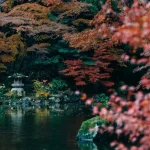
Kenroku-en opens at 7:00am from March through October. Arrive as close to that time as possible. The garden in the early morning feels entirely different from midday — paths are quiet, the air carries the smell of wet moss and pine, and the iconic Kotoji stone lantern reflects cleanly in the pond without a crowd of smartphones surrounding it. By 9:30am, the tour buses have arrived and that stillness is gone.
Kenroku-en is consistently ranked among Japan’s top three landscape gardens, and it earns that reputation through sheer variety. Ponds, waterfalls, plum groves, and stone pathways across 11.4 hectares. Admission in 2026 is ¥320 for adults.
Directly adjacent to Kenroku-en is Kanazawa Castle Park, which is free to enter. The restored Hishi Yagura turret and Gojikken Nagaya storehouse are worth walking through — the pale grey stone walls and white plaster give the castle a quieter, more restrained appearance than Osaka or Himeji. Budget about 90 minutes total for both the garden and castle grounds.
Day 1 Afternoon — Higashi Chaya and the Geisha District
From the castle, it’s about a 15-minute walk northeast to Higashi Chaya-gai, Kanazawa’s best-preserved geisha district. The streets are narrow, the wooden lattice facades are perfectly intact, and unlike some historic districts in Japan, this one still functions — geisha performances do take place here, and several of the ochaya (teahouses) remain private establishments.
What you can visit freely are the craft shops and gold leaf studios lining the main street. Kanazawa produces over 99% of Japan’s gold leaf, and you’ll find it applied to everything from lacquerware to soft-serve ice cream. The gold leaf ice cream (¥700–¥900 depending on the shop) is genuinely worth trying — the leaf itself is tasteless, but the visual impression and the slightly waxy texture on the tongue are memorable in a way that photographs alone don’t capture.
For a proper interior view of a historic ochaya, Shima Ochaya is open to the public (¥750 admission). It’s a real preserved teahouse with original tatami rooms, painted screens, and explanatory materials in English. Allow 30–40 minutes.
Spend the rest of the afternoon wandering the narrower backstreets behind the main Higashi Chaya strip, where local pottery and textile shops operate without the tourist markup of the front row.
Day 1 Evening — Omicho Market and Where to Eat
Omicho Market is a 10-minute walk southwest from Higashi Chaya. It’s been Kanazawa’s central food market for nearly 300 years and remains the most straightforward place to understand why the city’s food culture is exceptional. Vendors selling live crab, yellowtail (buri), sweet shrimp (ama-ebi), and sea urchin from the Sea of Japan fill the covered stalls. The market closes in the early evening, so aim to arrive by 5:00pm to browse before dinner.
Several small restaurants operate inside and around the market building. For dinner, the standard recommendation is kaiseki — Kanazawa’s version leans on local seafood and seasonal Kaga vegetables — but this comes at a price (see budget section below). A more accessible option is a kaisendon (seafood rice bowl) at one of the market’s upper-floor restaurants, where you’ll spend ¥2,000–¥3,500 for a bowl piled with whatever came in that day.
For evening drinks, the Katamachi area about 10 minutes southwest of the market has a dense cluster of small bars and izakayas along a narrow lane called片町スクランブル (Katamachi Sukuranburu). Low-key, local, and very affordable.
Day 2 Morning — Nagamachi Samurai District and Myoryuji
Start Day 2 early in Nagamachi, Kanazawa’s former samurai residential quarter. Earthen walls, narrow lanes, and a small water channel running along the street give the neighbourhood a completely different character from the geisha district. The Nomura Clan Samurai House (野村家) is the main paid attraction here — admission is ¥550, and the interior garden, though small, is exceptionally refined. The moss-covered stones and the sound of water moving through a stone basin in the inner garden are the kind of sensory details that stay with you.
A short walk from Nagamachi is Myoryuji, commonly called the Ninja Temple — though it has no actual connection to ninja. The temple was built by the Maeda clan with an elaborate series of hidden staircases, trapdoors, and secret rooms designed to confuse enemies. Entry is by advance reservation only (¥1,200 per person), and tours run in Japanese with English printed handouts. Book at least a week ahead in 2026, especially for weekends.
Day 2 Afternoon — 21st Century Museum and Katamachi
The 21st Century Museum of Contemporary Art is a five-minute walk from Kenroku-en and one of the best contemporary art museums in Japan. The circular building with no front or back entrance is an architectural statement in itself. The permanent collection includes Leandro Erlich’s Swimming Pool installation — a glass-bottomed pool that lets you stand above water while people below appear to be underwater — which remains one of the most photographed artworks in Japan in 2026.
Admission to the paid zones is ¥1,100 for adults; the outer galleries and grounds are free. Budget 1.5 to 2 hours. The museum’s café also does a respectable lunch if you haven’t eaten.
Spend your final hours in Katamachi exploring the shopping streets, picking up gold leaf souvenirs, or booking a short craft workshop. Several studios in the area offer 45-minute Kanazawa gold leaf pressing experiences for around ¥2,500.
2026 Budget Reality for 2 Days in Kanazawa
Kanazawa is moderately priced by Japanese city standards — noticeably cheaper than Kyoto or Tokyo for accommodation and food at the mid-range level.
- Budget (¥10,000–¥15,000/day per person): Guesthouse or budget business hotel (¥4,000–¥6,000/night), market kaisendon for lunch (¥2,000), izakaya dinner (¥2,500–¥3,500), attractions (¥2,000–¥3,000 across both days).
- Mid-range (¥20,000–¥35,000/day per person): Mid-tier hotel near Kanazawa Station (¥10,000–¥15,000/night), casual restaurant lunches, one proper kaiseki dinner (¥8,000–¥15,000 per person), all major attractions plus one craft experience.
- Comfortable (¥50,000+/day per person): Boutique ryokan with meals included (¥30,000–¥50,000/night), high-end kaiseki at a destination restaurant, private craft workshop, taxi transport.
Day trip visitors from Osaka or Kyoto should factor in the Hokuriku Shinkansen fare: roughly ¥8,000–¥9,000 one-way from Kyoto (via the new Tsuruga connection as of 2024). The Japan Rail Pass (2026 pricing) covers this route in its standard coverage, which makes a Kanazawa stay easy to justify if you’re already holding a pass.
Getting To and Around Kanazawa in 2026
The fastest option from Tokyo is the Hokuriku Shinkansen (Kagayaki or Hakutaka service) from Tokyo Station — roughly 2.5 hours to Kanazawa Station for around ¥14,000 one-way unreserved. From Osaka or Kyoto, the 2024 Tsuruga extension means you can ride Shinkansen the entire way; journey time from Shin-Osaka is approximately 2 hours, from Kyoto around 1 hour 40 minutes. Both routes are covered by the Japan Rail Pass.
There are no direct flights from Tokyo’s Haneda or Narita to Kanazawa — Komatsu Airport (about 35 kilometres southwest of the city) handles domestic flights from Sapporo, Naha, and Fukuoka. Buses connect Komatsu Airport to Kanazawa Station in about 40 minutes for ¥1,130.
Kanazawa is walkable between most major sights, but the distances add up. The city operates a well-organised loop bus system called the Kanazawa City Loop Bus, which covers Kenroku-en, Higashi Chaya, Omicho, and Nagamachi on a single route. A one-day pass costs ¥600 and is worth buying if you plan to use it more than twice. Buses run every 15 minutes on weekdays, slightly less frequent on weekends.
Taxis are plentiful near Kanazawa Station and outside Kenroku-en. Most rides within the central districts cost ¥700–¥1,200. Bicycle rental is also available near the station for around ¥1,000 per day, which is a pleasant option in dry weather — the city is flat and manageable on two wheels.
Frequently Asked Questions
Is Kanazawa worth visiting as a day trip from Kyoto or Osaka?
You can do it, but you’ll feel rushed. The Hokuriku Shinkansen makes the journey feasible in about 1 hour 40 minutes from Kyoto, but a day trip only allows time for Kenroku-en and one other district. Two nights is the practical minimum if you want to eat well and actually absorb the city’s character.
When is the best time to visit Kanazawa?
Late March to early April for cherry blossoms in Kenroku-en, and late November for autumn foliage. Summer (July–August) is hot and humid but less crowded than the peak seasons. Winter brings heavy snow, which makes Kenroku-en look extraordinary — but check transport before travel, as the Shinkansen is rarely affected while local roads can be difficult.
Does the Japan Rail Pass cover the Hokuriku Shinkansen to Kanazawa?
Yes. As of 2026, the standard Japan Rail Pass covers the Hokuriku Shinkansen between Tokyo and Kanazawa, including the Kagayaki and Hakutaka services. The Tsuruga extension (opened March 2024) connecting to the Osaka/Kyoto direction is also covered. Reserved seat bookings are strongly recommended on this route.
Is English widely spoken in Kanazawa?
Less so than in Kyoto or Tokyo, but international tourism has grown steadily and most major attractions offer English signage and printed materials. The Visit Kanazawa app (available in English) provides maps, audio guides, and updated transport information and is genuinely useful for navigating independently in 2026.
What souvenirs is Kanazawa known for?
Gold leaf products are the most distinctive — from decorative sheets to cosmetics. Kutani-yaki porcelain, Kaga Yuzen silk items, and lacquerware are the other traditional crafts. For edible souvenirs, Kanazawa’s wagashi (Japanese sweets) are exceptional — the city has one of Japan’s highest concentrations of traditional confectionery shops per capita.
📷 Featured image by Nichika Sakurai on Unsplash.