On this page
- Why Cash Still Matters in Japan in 2026
- How the Wise Card Works in Japan
- How Credit Cards Work in Japan
- 2026 Budget Reality: What Each Option Costs You
- Getting Cash: Konbini ATMs Step by Step
- Mobile Suica and PASMO: The 2026 Transit Fix
- Tax-Free Shopping and Which Card to Use
- The Setup That Saves the Most
- Common Mistakes to Avoid
- Frequently Asked Questions
💰 Click here to see Japan Budget Breakdown
💰 Prices updated: November, 2026. Budget figures are estimates — always verify before travel.
Exchange Rate: $1 USD = ¥157.56
Daily Budget (per person)
Shoestring: ¥7,000 – ¥12,000 ($44.43 – $76.16)
Mid-range: ¥15,000 – ¥25,000 ($95.20 – $158.67)
Comfortable: ¥30,000 – ¥75,000 ($190.40 – $476.01)
Accommodation (per night)
Hostel/guesthouse: ¥2,500 – ¥7,750 ($15.87 – $49.19)
Mid-range hotel: ¥5,000 – ¥18,500 ($31.73 – $117.42)
Food (per meal)
Budget meal: ¥800.00 ($5.08)
Mid-range meal: ¥2,500.00 ($15.87)
Upscale meal: ¥10,000.00 ($63.47)
Transport
Single metro/bus trip: ¥250.00 ($1.59)
Monthly transport pass: ¥53,000.00 ($336.38)
You land at Narita or Haneda with a card in your wallet and a quiet worry: will it work, and how much is it costing you? Foreign transaction fees can add hundreds or thousands of yen to a trip without you noticing. In 2026, the choice between a Wise card and a regular credit card matters more because Japan is also dealing with a shortage of physical IC cards, which changes how you pay for trains. Here is how the two cards compare, where each one works, and the setup that saves the most money.
Why Cash Still Matters in Japan in 2026
Japan’s payment scene is a mix of old and new. Card and IC card payments have grown a lot since 2024, especially in cities. But the Japanese yen (JPY) is still essential. Coins come in 1, 5, 10, 50, 100 and 500 yen. Banknotes are 1,000, 5,000 and 10,000 yen, plus the 2,000 yen note, which you will rarely see.
Cash is often preferred, or the only option, at these places:
- Smaller restaurants and cafes
- Street vendors and local markets
- Some traditional ryokan (inns) and guesthouses
- Small shops outside major tourist hubs
- Entrance gates at certain temples, shrines and attractions
- Local buses, some of which need exact change
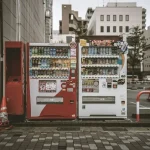
- Some vending machines, though many now take IC cards
Picture a six-seat counter shop at lunchtime. The broth is steaming and the owner hands you a ticket from a small machine that only takes coins and notes. No card reader is in sight. That is why the card question is really about how you split your spending between cards, cash and IC cards.
How the Wise Card Works in Japan
The Wise Card (Wise was formerly TransferWise) is a multi-currency debit card linked to a Wise account. You can hold and convert over 50 currencies, including JPY, at the mid-market exchange rate. That is the real rate, which is often much better than what banks or currency exchange counters offer.
Getting and funding the card
- Open an account at wise.com or in the Wise app.
- Verify your identity with a passport, driver’s license or similar ID.
- Order the physical Wise Debit Card. Delivery usually takes 1 to 3 weeks depending on where you live. A virtual card is usually available instantly for online use.
- Fund the account by transferring money from your bank in your home currency.
- Convert to JPY in the app before your trip. This is optional but recommended. It locks in a good rate and helps you avoid dynamic currency conversion (DCC) problems.

Where it works
The Wise Card works wherever Visa or Mastercard debit cards are accepted. That covers major department stores, hotels, most convenience stores (konbini), supermarkets and a growing number of restaurants and shops. Contactless tap-to-pay is now more common, so you can tap more often than in 2024.
Wise fees (based on the 2024 structure)
- Currency conversion: typically 0.43% to 0.8% of the amount, plus a small fixed fee (for example, 60 JPY for JPY conversions). This applies if you spend in JPY directly from a non-JPY balance.
- ATM withdrawals: up to 30,000 JPY per calendar month across two withdrawals is typically free.
- Beyond that: 1.75% of the amount over 30,000 JPY, plus a fixed 70 JPY per withdrawal.
- ATM operator fees: separate from Wise. Japanese ATMs usually charge 110 JPY or 220 JPY for foreign cards, depending on the amount and the time of day.
Wise may have adjusted its fees or limits for 2026, so check the Wise app before you fly. The core offer of mid-market rates and clear fees is expected to stay the same.
How Credit Cards Work in Japan
Credit cards are more widely accepted in Japan than a few years ago, but not everywhere. Larger cities and tourist areas are easy. Rural Japan and small independent businesses are harder.
Where they work and where they don’t
- Widely accepted: major hotels, department stores, large retail chains, most konbini, major supermarkets, JR ticket offices, many urban restaurants, and online purchases.
- Less accepted: small independent restaurants and cafes, ryokan, local shops, street vendors, some taxis (though this is improving), smaller museums, and rural businesses.
Which networks to carry
- Visa and Mastercard: the most widely accepted. Carry at least one.
- JCB: a Japanese network that is widely accepted in Japan, sometimes even where Visa and Mastercard are not. Many international cards are co-branded with JCB.
- American Express and Diners Club: less widely accepted, but fine at high-end places and international hotels.
The main downside is cost. Most credit cards issued outside Japan charge a foreign transaction fee of 2% to 4% on every purchase in JPY. Some premium travel cards waive it. Check your card’s terms before you leave.
2026 Budget Reality: What Each Option Costs You
The examples below use the fee ranges above. They show the cost of card spending only, before Wise’s small fixed fees.
Card spending fees by trip size

- Budget (100,000 JPY on card): credit card with a 2% to 4% fee costs 2,000 to 4,000 JPY. Wise at 0.43% to 0.8% costs about 430 to 800 JPY.
- Mid-range (300,000 JPY on card): credit card costs 6,000 to 12,000 JPY. Wise costs about 1,290 to 2,400 JPY.
- Comfortable (600,000 JPY on card): credit card costs 12,000 to 24,000 JPY. Wise costs about 2,580 to 4,800 JPY.
If you convert to JPY in the Wise app before the trip, you pay no Wise conversion fee when you tap at the register.
Cash withdrawal: 50,000 JPY
- Wise: the first 30,000 JPY is free. The remaining 20,000 JPY costs 1.75% (350 JPY) plus 70 JPY, so 420 JPY in Wise fees. Add an ATM operator fee of, for example, 220 JPY. Total: 640 JPY.
- Credit card cash advance: your issuer charges 3% to 5% (1,500 to 2,500 JPY on 50,000 JPY), with a minimum of around 500 to 1,000 JPY. Add the same 220 JPY ATM fee, and interest starts on day one. Total: roughly 1,720 to 2,720 JPY, plus interest.
Getting Cash: Konbini ATMs Step by Step
The most reliable ATMs for foreign cards are in convenience stores. These are your options:
- 7-Eleven (Seven Bank): the most common and reliable. It is open 24/7, has English support, and accepts Visa, Mastercard, Amex, JCB, Plus, Cirrus, Maestro and UnionPay.
- Lawson (Lawson Bank): similar, widely available, 24/7, with English support.
- FamilyMart (E-net): common, with similar services.
- Japan Post Bank: found in post offices (limited hours) and some supermarkets. Also accepts international cards.
Limits are typically 50,000 JPY or 100,000 JPY per transaction, depending on the ATM and your card’s daily limit.
- Insert your card.
- Select “International Cards” or “English”.
- Enter your PIN.
- Select “Withdrawal”, then “Savings Account”, even if you are using a debit or credit card.
- Enter the amount.
- Confirm the ATM operator fee.
- Take your cash, card and receipt.
Mobile Suica and PASMO: The 2026 Transit Fix
IC cards such as Suica (JR East) and PASMO (Kanto private railways) let you tap in and tap out on trains, subways and buses across major cities. They also pay for items at konbini (7-Eleven, Lawson, FamilyMart), vending machines, station kiosks, some taxis and lockers. Others include ICOCA (JR West), Kitaca, TOICA, SUGOCA, nimoca and Hayakaken, and they largely work across Japan for transit.
The catch is supply. A global semiconductor shortage has severely limited or suspended sales of new physical Suica and PASMO cards, including Welcome Suica and PASMO Passport, in most areas since 2023. It is expected to continue into 2026. For tourists, mobile IC cards are now the main option.

- iPhone (iPhone 8 / Apple Watch Series 3 and newer): open Wallet, tap “+”, choose “Transit Card”, then Suica or PASMO. Load it with Visa, Mastercard, Amex or JCB inside the Wallet app, or with cash at station machines.
- Android with NFC: download the “Mobile Suica” or “Mobile PASMO” app from Google Play and follow the registration steps. Load by card or with cash at station machines.
If you do get a physical card, ticket machines at JR and subway stations and convenience stores mostly take cash only for top-ups. A mobile IC card loaded from your card avoids that. Note that a credit card with a 2% to 4% foreign fee will charge it on each top-up, so load from a low-fee card where you can.
Tax-Free Shopping and Which Card to Use
Non-resident visitors with a temporary visitor stamp in their passport (or an equivalent digital record for e-visas) can shop tax-free. Minimums apply per store, per day, before tax:
- General goods (clothing, electronics, home goods): 5,000 JPY or more.
- Consumables (food, drinks, cosmetics, medicine): 5,000 JPY to 500,000 JPY. Items must be sealed in a special bag and not used in Japan.
Look for “Tax-Free” signs at department stores, large electronics shops and many souvenir shops. Show your passport at the register or tax-free counter. The store usually deducts the tax from the price and has you sign a “Record of Purchase”, which is attached to your passport. You can pay with Wise, a credit card or cash. Customs may inspect your goods and forms at departure, so don’t remove the forms from your passport.
Digital records, such as QR codes or direct data transmission to customs, have become more common since 2024, cutting paperwork. Exact implementation in 2026 may vary by store, so ask at the counter.
The Setup That Saves the Most
The cheapest approach for most travellers is a mix:
- Wise Card as your main card. Use it for most in-store purchases and for ATM withdrawals. Pre-convert a good amount to JPY in your Wise account.
- A credit card as backup. Ideally, carry one with no foreign transaction fee. Use it for hotels, major department stores and rental cars, where cards are universally accepted. Never use it for cash advances.
- Mobile Suica or PASMO for daily transit and small purchases, loaded through your phone.
- Cash in JPY, about 5,000 to 20,000 JPY at a time, for small shops, restaurants, temples and rural areas. Refill at 7-Eleven or Lawson ATMs.

Credit cards still win on one point: consumer protection. They often have stronger policies than debit cards. Both card types offer fraud protection, and Wise lets you freeze and unfreeze your card in the app. That is why a credit card is a good backup, even if it isn’t your main card.
Common Mistakes to Avoid
- Accepting payment in your home currency. When a terminal or ATM offers to charge you in your own currency (DCC), choose JPY. Your card issuer’s rate is usually better than the merchant’s.
- Using a credit card for cash. Cash advance fees of 3% to 5%, immediate interest and the ATM operator fee add up fast.
- Ordering the Wise card too late. Delivery can take 1 to 3 weeks.
- Relying on one card. Cards get blocked or declined. Carry a second card and some cash.
- Counting on a physical Suica. New cards are very hard to find. Set up a mobile IC card before or soon after you land.
- Tipping. Don’t, at restaurants, hotels or taxis.
- Arriving with no yen. Ryokan, small restaurants and temple gates may take only cash.
- Forgetting your passport for tax-free shopping. Without it, you pay the full price.
Frequently Asked Questions
Is a Wise card better than a credit card in Japan?
For most purchases and cash withdrawals, yes. Wise uses the mid-market rate with low fees, while many credit cards add a 2% to 4% foreign transaction fee. A no-foreign-fee credit card is a good backup, and cards often offer stronger consumer protection.
Can I use a Wise card at Japanese ATMs?
Yes. Wise works at ATMs that support Visa or Mastercard, mainly 7-Eleven (Seven Bank) and Lawson (Lawson Bank). Wise’s own fees are separate from the ATM operator’s charge, which is usually 110 JPY or 220 JPY per transaction for foreign cards.
Do I still need cash in Japan in 2026?
Yes. Card use has grown, but cash is still needed at small restaurants, street vendors, some ryokan, certain temples and shrines, local buses and rural areas. Carrying about 5,000 to 20,000 JPY and topping up at konbini ATMs keeps you covered.
Can I buy a Suica or PASMO card as a tourist in 2026?
Physical Suica and PASMO sales, including Welcome Suica and PASMO Passport, have been severely limited or suspended in most areas since 2023, and this is expected to continue into 2026. Mobile Suica or PASMO on iPhone or Android is the main option.
Should I tip in Japan?
No. Japan has no tipping culture, and tipping at restaurants, hotels or taxis can cause confusion or seem rude. The price you see is the price you pay, so keep your small change for vending machines and local buses.
📷 Featured image by jirayu koontholjinda on Unsplash.