On this page
- What Makes a Tokyo Co-working Space Worth Your Time
- Membership Structures and How Tokyo Co-working Pricing Actually Works in 2026
- The 10 Best Co-working Spaces in Tokyo for Remote Workers
- 2026 Budget Reality — What You Will Actually Pay
- Practical Logistics — Wi-Fi, Addresses, and Getting There
- Frequently Asked Questions
Tokyo’s remote work scene shifted significantly between 2024 and 2026. Japan’s Designated Activities visa for Digital nomads — quietly expanded in late 2024 — means more people are legally setting up long-term work arrangements in the city rather than squeezing productivity into a tourist stay. The problem in 2026 is choice paralysis. Tokyo has hundreds of co-working venues, ranging from serious professional environments to glorified Instagram cafes with unreliable internet. This guide cuts through the noise and focuses on spaces that actually support productive work: stable high-speed internet, usable desk ergonomics, quiet zones, and membership flexibility that makes sense whether you are staying three weeks or six months.
What Makes a Tokyo Co-working Space Worth Your Time
Before looking at specific venues, it helps to know what separates a genuinely functional space from one that looks good in photos. Tokyo has a particular version of this problem — many spaces are styled beautifully but designed more for meetings and brand events than for someone who needs to be on calls, write code, or hit a deadline by 3pm.
The non-negotiables for serious remote workers in Tokyo are:
- Internet speed and redundancy: Look for spaces that advertise dedicated fibre connections with at least 500 Mbps download. Shared Wi-Fi in trendy cafes averages around 30–80 Mbps during peak hours, which collapses the moment a dozen people start video calls simultaneously.
- Quiet zones or acoustic separation: Open-plan Tokyo co-working spaces can get loud, especially near lunch and after 5pm when the startup crowd arrives. Spaces with designated silent areas are worth paying extra for.
- Address registration: If you are on the Designated Activities visa or running a freelance business, some spaces allow you to register a business address. Not all do. Confirm this before signing anything.
- Month-to-month contracts: Many Tokyo co-working spaces push three-month minimum commitments. For remote workers without a fixed Japan timeline, month-to-month flexibility with reasonable notice periods matters.
- Air conditioning that actually works: Tokyo summers are brutal — regularly above 35°C with high humidity. Spaces in older buildings with inadequate cooling become genuinely difficult work environments from June through September.
Membership Structures and How Tokyo Co-working Pricing Actually Works in 2026
Tokyo co-working pricing has a specific logic that confuses people coming from Europe or North America. Most spaces operate on a tiered model with three or four levels, and the pricing looks reasonable until you add the mandatory registration fees, locker deposits, and consumption tax (currently 10% in Japan as of 2026).
The typical structure looks like this:
- Drop-in / day pass: A single day without any commitment. Ranges from ¥1,500 to ¥3,500 depending on the space and location. Often limited to certain hours (9am–6pm) and excludes private meeting rooms.
- Part-time membership: Usually covers a set number of days per month — commonly 10 or 15 days. Good for people who are also working from home or travelling within Japan. Typically ¥15,000–¥28,000 per month.
- Full-time hot desk: Unlimited access to the open floor during operating hours. No dedicated desk. The workhorse plan for most digital nomads. Typically ¥25,000–¥45,000 per month in central Tokyo.
- Dedicated desk: Your own locked desk, 24/7 access in most cases. You leave your equipment overnight without stress. Typically ¥45,000–¥80,000 per month depending on location and floor area.
- Private office: Enclosed single or multi-person offices. Starts around ¥80,000 per month for a solo office in a mid-tier location and climbs quickly in Shinjuku or Shibuya.
One important 2026 change: several major operators now include meeting room credits in full-time memberships rather than charging per booking. If you run client calls or team standups, confirm whether the space gives you at least 4–6 hours of meeting room time per month before signing up.
The 10 Best Co-working Spaces in Tokyo for Remote Workers
These spaces are selected based on verified internet performance, membership flexibility, access to quiet working areas, and overall suitability for remote workers — not aesthetics alone. Pricing reflects 2026 rates including 10% consumption tax.
1. WeWork — Multiple Tokyo Locations
WeWork’s Tokyo footprint in 2026 covers eight locations including Roppongi Hills, Shibuya Scramble Square, and Marunouchi. After its global restructuring, the Tokyo operation stabilised with consistent service standards. The main advantage is network access — one membership covers all eight locations, useful if your Tokyo base shifts. Hot desk memberships start at approximately ¥38,000 per month. Internet infrastructure is solid at 1 Gbps fibre with load balancing across floors. Quiet zones exist in all locations but vary in enforcement — Roppongi Hills is stricter than Shibuya.
2. Regus — Shinjuku and Otemachi
Regus suits remote workers who need a professional mailing address and the option to scale up to a private office without changing providers. The Shinjuku location sits a four-minute walk from the south exit of Shinjuku Station — a detail that matters enormously when you are navigating Tokyo in the rain with a laptop bag. Meeting rooms are well-equipped and bookable through a reliable app. Full-time hot desk from ¥32,000 per month. Not the most exciting environment, but consistent and quiet.
3. Spaces — Aoyama
Spaces (owned by the same parent as Regus) operates differently in tone and design — open, bright, and with a stronger community focus. The Aoyama location in Minato ward draws a mix of creative freelancers and tech startup staff. The building has good natural light, which matters when you are spending eight hours at a desk. Full-time membership from ¥40,000 per month. The weekly community lunches are optional but genuinely useful for meeting other foreigners working legally in Japan under the Designated Activities visa.
4. Fabbit — Otemachi
Fabbit is a Japanese domestic chain with a more business-formal atmosphere than global operators. The Otemachi location is inside a major office tower with excellent transport links (Tokyo Station is a seven-minute walk). The crowd here leans toward Japanese business professionals and corporate remote workers rather than solo freelancers, which keeps noise levels low and meeting room usage predictable. Fabbit also offers registered address services compatible with business visa requirements. Hot desk from ¥27,500 per month.
5. Plug and Play — Shibuya
Originally an accelerator space, Plug and Play Shibuya opened its co-working floor to general members in 2023 and has expanded capacity since. It works best for people in tech, product, or startup roles who benefit from being around an innovation-focused crowd. The espresso machine on the main floor produces a surprisingly good flat white — a small sensory detail that makes the difference on a long afternoon of deadline work. Full-time membership from ¥35,000 per month. Internet is fibre-direct at 1 Gbps.
6. Impact Hub — Tokyo, Meguro
Impact Hub skews toward sustainability-focused professionals and social enterprise workers. The Meguro location is quieter than Shibuya equivalents and has a genuine community culture rather than performative networking. If your work involves environmental consulting, NGO coordination, or impact-driven business, the connections here are directly relevant. Memberships start at ¥22,000 per month for part-time access. Quiet floor policy is enforced during core hours (9am–1pm).
7. Basis Point — Shinjuku
Basis Point is one of the few Tokyo co-working brands that operates 24 hours a day, seven days a week. For remote workers dealing with time zone differences — reporting to teams in New York, London, or Sydney — this matters practically. The Shinjuku location is also priced more accessibly than premium global brands. Drop-in day passes are ¥1,650. Full-time monthly membership is approximately ¥24,000. The interior is functional rather than stylish, which is exactly what a 2am deadline call requires.
8. Hakodateyama Toranomon Hills — Toranomon
The Toranomon Hills complex received a major infrastructure upgrade in 2025 and the co-working floors inside Toranomon Hills Station Tower are among the best-equipped in the city. Floor-to-ceiling windows on the upper floors give a view of the Tokyo skyline — the kind of visual that makes a Monday morning feel slightly more manageable. Business address registration is available. Full-time hot desk from ¥48,000 per month. Best suited to workers who can expense their co-working costs.
9. Senq — Ginza and Roppongi
Senq is a Japanese boutique co-working brand that emphasises calm working environments over community events. The Ginza location has a notably formal atmosphere — conversations are kept to a minimum on the main floor, phone calls are directed to booth areas, and the air conditioning is reliable even in peak summer. This is the space for people who genuinely need to focus rather than network. Full-time membership from ¥30,000 per month. Dedicated desk options available from ¥52,000.
10. Open Network Space (ONS) — Akihabara
ONS in Akihabara serves the tech and engineering community specifically. The location is practical for anyone working in software, hardware, or electronics — the area’s character as Tokyo’s tech hub means access to specialised components, repair shops, and industry contacts within walking distance. The space itself is straightforward and functional. What sets it apart is the quality of the technical community: overhearing a conversation in the kitchen about machine learning infrastructure or embedded systems is a regular occurrence. Hot desk from ¥22,000 per month.
2026 Budget Reality — What You Will Actually Pay
Here is an honest breakdown of monthly co-working costs in Tokyo across three spending levels, including tax and typical add-on fees:
- Budget (¥20,000–¥28,000/month): Part-time membership at a mid-tier space or full-time hot desk at an off-centre location. Includes basic internet and common area access. No address registration. Examples: Basis Point Shinjuku, Impact Hub Meguro part-time, ONS Akihabara.
- Mid-range (¥30,000–¥45,000/month): Full-time hot desk in a well-located, professionally managed space with 1 Gbps internet, quiet zones, and some meeting room credits. The realistic baseline for a serious remote worker. Examples: Regus Shinjuku, Senq Ginza, Plug and Play Shibuya.
- Comfortable (¥48,000–¥85,000/month): Dedicated desk or premium hot desk in a top-tier location with 24/7 access, business address registration, private meeting rooms included, and high-speed dedicated internet. Examples: Toranomon Hills, WeWork dedicated desk, Regus private office.
Additional costs to budget for: most spaces charge a one-time registration fee of ¥5,000–¥15,000. Locker deposits typically run ¥5,000–¥10,000 (refundable). Meeting room overages are charged at ¥1,000–¥3,000 per hour above your included credits.
For comparison, a full-time co-working membership in Tokyo at the mid-range tier is roughly equivalent to what you would pay in Singapore or Hong Kong, but typically with smaller floor area per person. It is noticeably more expensive than Bangkok, Bali, or Ho Chi Minh City — cities that compete for the same digital nomad population in 2026.
Practical Logistics — Wi-Fi, Addresses, and Getting There
A few operational details that trip people up when they first set up in Tokyo:
Internet backup: Even in spaces with strong fibre connections, having a mobile data backup is sensible. In 2026, the major Japanese carriers — NTT Docomo, SoftBank, and au — all offer data SIM plans suitable for heavy users. A 100GB monthly SIM runs approximately ¥3,000–¥5,000. IIJmio and Rakuten Mobile offer competitive rates for longer stays. This gives you a genuine fallback for critical video calls if the building network experiences issues.
Business address registration: If you are using Japan’s Designated Activities (Digital Nomad) visa and invoicing clients, some spaces allow you to use their address for business correspondence. This is legally distinct from registering a company in Japan — you are not establishing a Japanese entity, simply receiving mail. Confirm this in writing with the space before signing up, as policies vary and some locations restrict this to dedicated desk or private office members only.
Getting there efficiently: Tokyo’s train network covers every location on this list. The IC card system (Suica or Pasmo) works on all rail and metro lines. A daily commute from a central residential area to any of these spaces rarely exceeds ¥300–¥600 in train fares. For Toranomon Hills, the direct connection via the Hibiya Line to Toranomon Station or the Tokyu-Minato Mirai connection opened in 2025 makes the previously inconvenient journey significantly easier.
Print and scanning: A surprising number of Tokyo co-working spaces have limited or no printing facilities. If your work involves contracts, visa documents, or physical deliveries, confirm the printing situation in advance. Convenience stores — FamilyMart, 7-Eleven, and Lawson — all have high-quality print and scan terminals available 24/7 for ¥10–¥60 per page, which is a workable alternative for occasional needs.
Frequently Asked Questions
Can I use a Tokyo co-working space on a tourist visa?
Yes. Using a co-working space in Tokyo on a tourist visa is legally permissible as long as you are not receiving payment from a Japanese company or performing work that should be licensed in Japan. Remote workers paid by overseas clients while on a tourist visa occupy a legal grey area — Japan’s Designated Activities visa, launched nationally in 2024, is the cleaner option for stays over 90 days.
What internet speeds should I expect at Tokyo co-working spaces?
Premium spaces in 2026 offer 1 Gbps dedicated fibre with load balancing across floors. Mid-tier spaces typically deliver 200–500 Mbps in practice during business hours. Budget or cafe-style spaces can drop to 30–80 Mbps under load. Always test with a speed check tool during your trial day before committing to a membership.
Do Tokyo co-working spaces offer short-term or weekly memberships?
Most do, though the per-day cost increases significantly for very short commitments. Weekly passes (where offered) typically run ¥8,000–¥15,000. Day passes range from ¥1,500 to ¥3,500. For stays of three weeks or more, a monthly membership almost always works out cheaper. Some chains like Basis Point price drop-in access more aggressively to attract flexible users.
Can I register a business address at a Tokyo co-working space?
Some spaces allow this, but not all. Spaces that do typically restrict the service to dedicated desk or private office members. It is important to confirm whether the address can be used for invoicing and mail receipt versus official company registration — these are different things in Japan, and using a co-working address for a formal Japanese company registration requires specific agreement with the space operator.
How do Tokyo co-working costs compare to renting a monthly apartment and working from home?
A furnished monthly apartment in central Tokyo in 2026 runs ¥120,000–¥250,000 per month depending on size and location. Adding a mid-range co-working membership (¥35,000–¥45,000) is a significant extra cost but provides a professional work environment, separation between work and living space, and access to meeting rooms — which a typical small Tokyo apartment cannot offer.
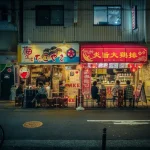
📷 Featured image by Takafumi Yamashita on Unsplash.