On this page
- What Golden Week Actually Means for the Mid-May Traveller
- Weather in May 2026: What to Pack and When to Go
- Where to Go After the Rush: Destinations That Shine in Mid-to-Late May
- Fresh Green Season (Shinryoku): The Nature Experience Most Visitors Overlook
- May Festivals and Local Events Worth Planning Around
- 2026 Budget Reality: What Japan Costs in May
- Practical Tips for Navigating Japan in May 2026
- Frequently Asked Questions
Golden Week — Japan’s cluster of national holidays running from late April into early May — is one of the most congested travel periods in the entire country. Bullet trains sell out weeks ahead, popular ryokan raise their rates, and major attractions can feel less like sightseeing and more like queuing. But here is what most travel guides do not tell you clearly enough: the moment Golden Week ends, usually around May 6th, Japan quietly exhales. Crowds thin, prices drop back to normal, and the country settles into what is arguably its most pleasant month of the year. If your 2026 trip lands in mid-to-late May, you are in a genuinely good position.
What Golden Week Actually Means for the Mid-May Traveller
Golden Week runs roughly from April 29th through May 5th or 6th in 2026, depending on how the days fall. During this window, domestic Japanese travellers fill every popular destination — Kyoto, Nikko, Hakone, the Fuji Five Lakes — to a degree that surprises even seasoned visitors. Hotels in tourist zones can be booked out months in advance, and prices for accommodation at peak demand can be double or triple the standard rate.
Then, almost overnight, it stops. Japanese workers return to their offices. School groups disappear. The shinkansen seats open up again. Accommodation prices normalise. A ryokan in Hakone that was charging ¥40,000 per person during Golden Week might drop back to ¥18,000–¥22,000 by May 10th.
For the international visitor arriving after May 7th, this reset is a genuine advantage. You get the warmth, the long daylight hours, and the beautiful spring-to-summer transition scenery, without the domestic crowd that defines late April and early May. The trade-off is that late cherry blossom season is mostly over by mid-May at lower elevations, but other natural and cultural rewards more than compensate for this.

Weather in May 2026: What to Pack and When to Go
May sits in a sweet spot in Japan’s climate calendar. The cold of winter is long gone, the oppressive heat and humidity of July and August has not yet arrived, and the rainy season (tsuyu) typically does not begin in Honshu until mid-to-late June. This makes May one of the most reliably comfortable months to be outside.
Typical daytime temperatures in Tokyo run around 18–24°C in May, with evenings cooling to around 12–15°C. Kyoto tends to run slightly warmer. Hokkaido, by contrast, can still feel genuinely cool in early May — daytime highs around 12–16°C — which makes it a worthwhile destination if you want to escape the warmer south, though it warms pleasantly by late May.
Rain is not absent in May, but it is generally passing showers rather than sustained downpours. A compact umbrella is worth carrying every day, but you are unlikely to lose a full day to rain the way you might in June.
- Upper layers: A light jacket or cardigan is useful, especially for evenings and air-conditioned train carriages.
- Footwear: Comfortable walking shoes with some water resistance. May involves a lot of outdoor walking, and wet stone paths are common at shrines and gardens.
- Sun protection: UV levels rise sharply in May. A hat and sunscreen matter more than most visitors expect.
- Layers over bulk: Japanese fashion in May leans toward layers. Packing light with versatile pieces works better than bringing heavy items you will only wear once.

Where to Go After the Rush: Destinations That Shine in Mid-to-Late May
Not every destination is equally rewarding in May. Some places peak specifically during this window, either because of natural timing or because they are genuinely less crowded once Golden Week clears.
Nikko, Tochigi
Nikko’s ornate shrines and mountain scenery draw crowds during Golden Week, but the week after, the cedar-lined approaches and lacquered temple gates feel almost meditative. The surrounding Oku-Nikko area, with its marshes and waterfalls, sees fresh green foliage in mid-May that is genuinely worth making the trip for.
Kanazawa, Ishikawa Prefecture
Often called a smaller Kyoto, Kanazawa avoids the extreme crowd pressure that Kyoto faces year-round. In mid-May, the geisha districts of Higashi Chaya and the immaculate Kenroku-en garden are at their most lush. The garden’s moss, ponds, and sculpted pines take on a vivid green intensity in May light that feels almost artificial — but is entirely real.
Tohoku Region
The Tohoku region — covering prefectures like Aomori, Iwate, Akita, Yamagata, Miyagi, and Fukushima — runs several weeks behind Tokyo in seasonal terms. Late cherry blossoms can still be found in northern Tohoku in early May, and by mid-May the entire region is deep into fresh-green season. It remains one of the most undervisited parts of Japan’s main island, which means genuinely quiet temples, onsen towns, and countryside you will not have to share with tour groups.
Kyoto in Late May
Kyoto is never empty, but the gap between Golden Week ending and the summer tourist surge beginning (roughly May 7th to June 10th) is one of the year’s better windows. Temple gardens are at peak green, the light is long and warm, and you can reach Fushimi Inari early on a weekday morning and find the upper trails nearly to yourself — the vermilion torii catching clean morning light before the day’s first tour groups arrive.

Fresh Green Season (Shinryoku): The Nature Experience Most Visitors Overlook
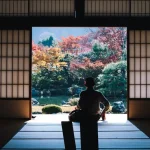
Cherry blossoms receive almost all the international attention in spring, but Japan’s May landscape offers something that many repeat visitors consider even more beautiful: shinryoku, or fresh green season. This is the point in spring when deciduous trees have fully leafed out but the leaves are still new — impossibly bright, almost translucent when backlit by afternoon sun.
Walk beneath a canopy of young maple leaves in any Japanese mountain forest in mid-May and you will understand immediately why this is celebrated. The light that filters through is a warm, slightly yellow-green that photographers chase specifically. It does not photograph the way cherry blossoms do — it photographs better, once you understand how to use it.
The best places to experience shinryoku in 2026 include:
- Arashiyama, Kyoto: The bamboo grove is famous, but the mountain hillsides behind Tenryu-ji in mid-May, covered in new-growth maples and cedars, are the real reward.
- Shinjuku Gyoen, Tokyo: Massive plane trees and Japanese maples create a green canopy over the central lawn that feels removed from the surrounding city.
- Nikko’s cedar avenues: The 35-kilometre cedar-lined road approaching Nikko’s shrines is among Japan’s great natural corridors, and May is one of the best months to walk sections of it.
- Any rural mountain onsen town: Places like Nyuto Onsen in Akita or Nishi-no-Kawame Onsen in Yamagata sit deep in forest that glows in May. Soaking in an outdoor rotemburo surrounded by fresh-green forest is one of those sensory memories you carry for years.
May Festivals and Local Events Worth Planning Around

Japan’s festival calendar does not pause after Golden Week. Several significant matsuri and cultural events fall in mid-to-late May, and attending one can be the defining experience of a trip.
Aoi Matsuri, Kyoto — May 15th
One of Kyoto’s three great festivals, the Aoi Matsuri has been held for well over a thousand years. A procession of around 500 participants dressed in Heian period (794–1185) court costume travels from the Imperial Palace to Shimogamo and Kamigamo shrines. The costumes are extraordinarily detailed, and the procession moves at a pace that allows genuine observation rather than a blur of movement. Arrive early to claim a good spot along the route — by mid-morning the viewing areas fill up, but nothing like Golden Week crowds.
Sanja Matsuri, Tokyo — Third Weekend of May
Held at Asakusa Shrine in mid-to-late May, Sanja Matsuri is one of Tokyo’s most energetic festivals. Over the three-day event, over 100 portable shrines (mikoshi) are carried through the streets of Asakusa by local neighbourhood groups. The atmosphere in Asakusa during this weekend — the smell of festival food stalls, the rhythmic chanting of mikoshi carriers, the dense press of locals in happi coats — is entirely different from the quiet temple garden experience and worth choosing specifically if you want urban Japanese festival energy.
Cormorant Fishing Season Begins
Traditional cormorant fishing (ukai) on rivers such as the Nagara River in Gifu begins in mid-May and runs through October. Watching trained cormorants fish by torchlight from a wooden boat on a dark river in the evening is a genuinely unusual experience, and May bookings are considerably easier to secure than summer slots.
2026 Budget Reality: What Japan Costs in May
Japan’s tourism infrastructure has adjusted significantly to higher international visitor numbers, and 2026 prices reflect a cost level that is noticeably higher than five years ago, though still structured enough that budget travel is possible with planning.

Accommodation (per person, per night)
- Budget: Hostel dorm or basic business hotel — ¥3,500–¥7,000
- Mid-range: Solid business hotel or simple guesthouse with private room — ¥10,000–¥18,000
- Comfortable: Mid-range ryokan with meals or well-located city hotel — ¥20,000–¥40,000
These are post-Golden Week rates. Expect roughly a 30–60% premium on the above if your stay overlaps with the holiday period itself.
Food
- Budget: Convenience store meals, standing noodle bars, gyudon chains — ¥400–¥900 per meal
- Mid-range: Set lunch at a sit-down restaurant, ramen shop, teishoku restaurant — ¥1,000–¥1,800
- Comfortable: Dinner at a decent izakaya or local sushi restaurant — ¥3,000–¥6,000 per person
Transport
- IC card (Suica/Pasmo) for local trains: Pay as you go, typically ¥200–¥500 per journey in metro areas
- Tokyo–Kyoto shinkansen (Nozomi, unreserved): Approximately ¥13,000–¥14,000 one way
- Japan Rail Pass: Check current pricing directly with JR before purchasing — the value calculation depends heavily on your itinerary and has shifted in recent years
Attraction Entry
- Most Kyoto temple gardens: ¥500–¥1,000 per site
- Tokyo national museums: ¥620–¥1,000 general admission
- Nikko shrines: combined ticket approximately ¥2,100
Practical Tips for Navigating Japan in May 2026
Book accommodation before Golden Week begins, not after. Even though post-Golden Week availability improves dramatically, the best-value mid-range and ryokan options still fill up weeks in advance. If you are arriving May 7th or later, book by mid-April at the latest.
Shinkansen reservations are easy again after May 6th. During Golden Week, reserved seats on major lines sell out. After the holiday ends, same-day and next-day reservations on most routes are straightforward. You can book at the station or through the Shinkansen’s online systems without the stress of the peak period.
The tourist tax landscape in 2026. Several municipalities across Japan have either introduced or increased visitor accommodation taxes in recent years. These are typically small per-night charges added to your bill at check-out — in the range of ¥200–¥1,000 per person per night depending on the property tier — but worth knowing about so they do not appear as a surprise on your invoice.

Overtourism countermeasures are increasingly visible. Popular sites including sections of Kyoto, Fujikawaguchiko near Mount Fuji, and some Nara areas have introduced crowd management measures, timed entry systems, or photography barriers at specific spots. In May, post-Golden Week, these measures are less intrusive than during peak season, but checking ahead for any timed entry requirements before visiting a specific site saves frustration.
Pack for the temple circuit. Visiting multiple shrines and temples on foot in May means a lot of walking on uneven stone, gravel paths, and polished wooden floors. You will remove your shoes repeatedly indoors. Slip-on footwear or shoes with easy fastenings make this significantly less tedious across a full day of sightseeing.
Frequently Asked Questions
Is mid-May a good time to visit Japan?
Mid-May is one of the best times to visit Japan. The weather is warm and stable, the crowds from Golden Week have cleared, accommodation prices return to normal, and the fresh green foliage (shinryoku) makes the countryside and temple gardens particularly beautiful. It combines comfortable conditions with relatively manageable tourist numbers.
Are cherry blossoms still visible in May in Japan?
At most lower-elevation destinations — Tokyo, Kyoto, Osaka — cherry blossoms finish well before mid-May. However, late-blooming varieties and higher-altitude locations in the Tohoku region and parts of the Japanese Alps can still have blossoms in early May. By mid-to-late May, the season has shifted fully into fresh green foliage.
How far in advance should I book accommodation for post-Golden Week in May 2026?
For mid-to-late May, booking four to six weeks ahead is generally sufficient for most destinations, though popular ryokan and well-reviewed mid-range hotels in Kyoto and Hakone can fill earlier. If your dates are after May 7th, you have considerably more flexibility than travellers arriving during Golden Week itself.

Does Japan get crowded in May after Golden Week?
After Golden Week ends, crowd levels drop noticeably at most destinations. International tourist numbers remain steady throughout May, but the surge of domestic Japanese travellers that defines the holiday period clears quickly. Major spots like Fushimi Inari and Arashiyama in Kyoto are still popular, but they are far more manageable than in late April or during summer peak.
What festivals happen in Japan in May outside of Golden Week?
Two of the most significant are Aoi Matsuri in Kyoto on May 15th — a procession of Heian-era court costume with over a millennium of history — and Sanja Matsuri in Tokyo’s Asakusa district, held on the third weekend of May. Traditional cormorant fishing (ukai) also begins on the Nagara River in Gifu in mid-May, running through October.
Explore more
Experience Kyoto’s Historic Aoi Matsuri in May 2026
Japan in May 2026: Navigating Golden Week and Early Summer Delights
April 2026 in Japan: What to Know Before You Go for a Seamless Spring Journey