On this page
- Visa Reality in 2026: What Actually Gets You Legal Working Status in Japan
- Tax Residency and the 183-Day Rule: What Japan Expects From You
- Health Insurance: Filling the Gap Between Tourist and Resident
- What It Costs to Actually Live Here: 2026 Budget Reality by City
- Banking, Payments, and Getting Money Without Losing Your Mind
- The Honest Tradeoffs: Why Japan Isn’t the Right Fit for Everyone
- Frequently Asked Questions
Japan has surged to the top of Digital nomad wish lists since 2024, and in 2026, the country is still pulling in remote workers from every corner of the world. But there’s a growing gap between the romanticised version — working from a ryokan in Kyoto, matcha latte in hand — and the legal, financial, and logistical reality of actually doing it. Japan’s immigration rules are strict, its tax system is aggressive toward long-term visitors, and the country does not make bureaucracy easy for non-Japanese speakers. If you’re seriously planning to live and work from Japan for anywhere from one to twelve months, this article covers what you genuinely need to know before you book a one-way ticket.
Visa Reality in 2026: What Actually Gets You Legal Working Status in Japan
Japan does not have a visa explicitly called a “digital nomad visa” in the way Portugal or Indonesia do. What exists is a patchwork of options, and choosing the wrong one creates real legal exposure.
The 90-Day Tourist Visa Workaround
Citizens of around 68 countries — including the United States, United Kingdom, Australia, Canada, and most of the EU — can enter Japan visa-free for 90 days. Japan officially prohibits working for Japanese entities on a tourist entry, but the rules around remote work for a foreign employer remain in a grey zone. As of 2026, Japan has not passed legislation explicitly addressing foreign-employed remote workers on tourist visas. However, immigration officials retain the right to deny entry or reject visa extensions if they suspect you are working from Japanese soil.
The practical risk is real. Japan has increased immigration scrutiny at ports of entry since late 2024, and officers now routinely ask about laptop use and remote employment. Overstaying or misrepresenting your purpose of visit carries a ban of one to five years from re-entry.
The Designated Activities Visa
This is the most legitimate long-term option available to digital nomads in 2026. Originally designed for specific government-approved programmes, the Designated Activities (DA) visa has been extended in scope and is now used to cover activities including Japan-approved research, alumni exchange programmes, and — in some cases — structured remote work arrangements tied to recognised sponsorship bodies.
Getting a DA visa requires a Japanese sponsor organisation or an approved programme partner. Processing time runs approximately four to eight weeks from a Japanese embassy or consulate in your home country. The visa itself can be issued for durations of three months, six months, or one year, and in some cases it is renewable. It does not grant the right to work for Japanese employers.
Longer-Term Paths: HSP and Work Visas
If you intend to stay longer than a year and want full legal clarity, Japan’s Highly Skilled Professional (HSP) visa is the most accessible structured route. It uses a points-based system — scoring on age, education, salary, and Japanese language ability. Applicants who score 70 points or above qualify. Many established remote workers earning strong foreign salaries clear this threshold comfortably. HSP visa holders can bring family members and are on a fast track to permanent residency.
Processing typically takes six to twelve weeks through a Japanese immigration bureau after an initial Certificate of Eligibility application. As of 2026, the HSP programme has seen increased applications from digital nomads, and the immigration bureau has responded by adding English-language guidance documents for the first time — a notable improvement from 2024.
Tax Residency and the 183-Day Rule: What Japan Expects From You
Japan’s tax rules are among the most consequential — and least-discussed — aspects of staying there long term. Understanding them before you cross day 183 is not optional.
When You Become a Tax Resident
Under Japanese tax law, any individual who has a domicile in Japan or has resided in Japan for one year or more is considered a permanent tax resident. This is more aggressive than the simple 183-day rule used in many countries. In practice, if you stay continuously for more than one year — or if tax authorities determine Japan is your primary residence — you become liable for Japanese income tax on your worldwide income.
For stays under one year, you may be classified as a non-permanent resident, meaning you pay Japanese tax only on Japan-sourced income and on foreign income that is remitted (sent) into Japan. This is a key distinction. If your foreign employer pays you into a bank account outside Japan and you do not transfer those funds to a Japanese account, that income is generally not taxable in Japan during your non-permanent resident period.
Tax Treaties and Double Taxation
Japan has tax treaties with over 80 countries. If your home country has a treaty with Japan, you likely have protections against being taxed twice on the same income. However, treaty terms vary significantly. For US citizens specifically, the situation is complicated: the US taxes based on citizenship, not residency, so Americans working from Japan may owe taxes in both countries depending on income level and treaty provisions. An international tax accountant familiar with both jurisdictions is not a luxury here — it’s a necessity.
Filing Requirements
If you stay long enough to become a Japanese tax resident, you must file a Japanese income tax return (確定申告, kakutei shinkoku) by March 15 each year for the prior calendar year. Japan’s National Tax Agency added a partial English interface to its online filing system in 2025, but the system is still complex. Prefectural tax offices in major cities have foreign-language support available by appointment in 2026.
Health Insurance: Filling the Gap Between Tourist and Resident
Healthcare in Japan is excellent. The public health insurance system is also mandatory for residents — and the rules around who must enrol, and when, are stricter than most nomads expect.
National Health Insurance (NHI)
If you register your address at a Japanese municipal office (which is required for stays over 90 days and mandatory for all visa holders), you become obligated to enrol in Japan’s National Health Insurance (国民健康保険, Kokumin Kenko Hoken). NHI premiums are calculated based on prior-year income and vary by municipality, but for a first-year resident with no Japanese income history, premiums typically range from approximately ¥20,000 to ¥35,000 per month depending on the city. Coverage is comprehensive — NHI covers 70% of most medical costs, leaving you responsible for 30%.
Travel Insurance for Short Stays
For stays under 90 days on a tourist visa where you do not register an address, private travel insurance is your only coverage. Comprehensive travel health insurance for Japan typically costs between ¥15,000 and ¥45,000 per month depending on your age and coverage level. Make sure your policy explicitly covers Japan and includes medical evacuation — standard policies sometimes carve this out.
The Registration Trigger
Many nomads try to avoid NHI by not registering their address. Be aware that address registration (住民登録, juumin touroku) is legally required for anyone staying over 90 days in Japan regardless of visa type. Non-registration is a violation of the Basic Resident Registration Act and can complicate future visa applications. If your NHI enrolment is backdated (which it legally can be, up to two years), you could face a lump-sum bill for missed premiums upon registering.
What It Costs to Actually Live Here: 2026 Budget Reality by City
Japan’s cost of living has increased noticeably since 2024. The yen has stabilised compared to the historic lows of 2022–2023, and domestic inflation has pushed rents and grocery prices up. That said, Japan remains considerably more affordable than London, Sydney, or New York for comparable quality of life.
Monthly Cost Estimates by City (2026)
The figures below cover a single person renting a furnished one-room (1K or 1DK) apartment, utilities, local transport, groceries, and basic meals out. They exclude international health insurance or NHI premiums, which should be added separately.
- Tokyo: Rent ¥100,000–¥180,000 / month for a 1K apartment in central or near-central wards. Total monthly budget: ¥220,000–¥350,000 (budget to comfortable).
- Osaka: Rent ¥75,000–¥130,000 / month. Total monthly budget: ¥180,000–¥280,000.
- Kyoto: Rent ¥80,000–¥150,000 / month (limited supply, higher than Osaka). Total monthly budget: ¥190,000–¥300,000.
- Fukuoka: Rent ¥60,000–¥100,000 / month. Total monthly budget: ¥150,000–¥240,000. Fukuoka consistently offers the best value-to-quality ratio of Japan’s major cities for long-term stays.
Budget tier: ¥150,000–¥180,000 / month (shared housing or outer-ward apartment, cooking at home, minimal social spending).
Mid-range: ¥200,000–¥280,000 / month (private apartment, mix of cooking and eating out, occasional travel).
Comfortable: ¥300,000–¥400,000+ / month (central apartment, regular dining out, domestic travel, co-working space membership).
Banking, Payments, and Getting Money Without Losing Your Mind
Japan’s financial infrastructure for non-residents has improved significantly since 2024, but it still requires planning. Walking in unprepared is one of the most common sources of frustration for new arrivals.
Opening a Japanese Bank Account
Traditional Japanese banks — Japan Post Bank, Mitsubishi UFJ, Sumitomo Mitsui — generally require proof of residence (a registered address) and a residence card (在留カード, zairyu card) issued with a valid visa. On a tourist visa, you will not have these documents and cannot open a standard account.
The practical alternative in 2026 is Wise (formerly TransferWise) and Revolut, both of which operate legally in Japan and issue accounts that function for yen transactions and ATM withdrawals. Japan Post Bank ATMs and 7-Eleven ATMs accept international cards reliably, with withdrawal limits typically set at ¥50,000 per transaction. Monthly ATM fees vary — budget approximately ¥2,000–¥4,000 per month in withdrawal fees if you’re pulling cash regularly.
Japan’s Cash Reality
Japan is not cashless. Despite accelerated contactless payment adoption since 2024 — IC transport cards like Suica and PASMO are now accepted at a much wider range of shops and vending machines — many small restaurants, izakayas, temples, and local markets remain cash-only. Arriving with a solid cash access strategy is not old-fashioned; it’s practical. Withdrawing ¥30,000–¥50,000 at a time from a 7-Eleven ATM and keeping it on hand covers most situations.
Invoicing and Receiving Payments
If you are self-employed and invoicing foreign clients while in Japan, payment services like Wise Business, Payoneer, and Stripe (which launched full Japanese merchant support in 2025) handle international transfers efficiently. Note that as of 2026, Japan’s consumption tax (JCT) rules require digital service providers earning above ¥10 million annually from Japanese customers to register and collect JCT — relevant mainly to nomads running larger-scale online businesses with Japanese customer bases.
The Honest Tradeoffs: Why Japan Isn’t the Right Fit for Everyone
Japan’s appeal is genuine and deep — the infrastructure is world-class, personal safety is extraordinary, food is exceptional, and the culture rewards patience and curiosity. But there are specific conditions under which Japan is the wrong choice for a digital nomad base.
Language Barrier
English proficiency in Japan remains limited outside of major tourist districts and international business environments. Setting up utilities, dealing with a landlord, visiting a local clinic, or resolving a bureaucratic issue at the municipal office will frequently involve no English at all. Translation apps have improved dramatically — Google Translate’s camera function handles most written Japanese competently in 2026 — but the language barrier creates a consistent low-level friction that some people find energising and others find exhausting. Be honest with yourself about which camp you’re in.
Visa Uncertainty for Extended Stays
The lack of a clear, openly available digital nomad visa means that stays beyond 90 days require either navigating a complex application process (DA visa or HSP) or operating in a legal grey area. Japan is not a country where you want to be casual about immigration rules. The consequences — entry bans, forced departure — are serious. If visa certainty matters to you, countries with purpose-built nomad visa programmes offer a less complicated entry point.
Social Integration
Japan is a famously high-context culture. Building genuine local social connections takes time, language investment, and consistency. Nomads who stay for one to three months typically report warm but surface-level interactions. Those who stay six months or more, make an effort with Japanese language basics, and engage with local community structures — neighbourhood associations, sports clubs, language exchanges — consistently report richer experiences. The culture gives back in proportion to what you put in, but it rarely meets you halfway at the start.
Frequently Asked Questions
Can I legally work remotely from Japan as a tourist in 2026?
Japan has not passed legislation explicitly legalising remote work for foreign-employed individuals on tourist visas. The rules sit in a grey zone, but immigration officers can and do ask about remote work at ports of entry. For stays beyond 90 days, a Designated Activities visa or Highly Skilled Professional visa provides the only legally clear status for remote workers.
How much money do I need to live comfortably in Japan as a digital nomad?
In 2026, a comfortable single-person lifestyle in Tokyo requires roughly ¥300,000–¥350,000 per month including rent, food, transport, and health insurance. Fukuoka offers comparable quality for around ¥200,000–¥250,000 per month. Budget-conscious nomads can manage on ¥150,000–¥180,000 with shared housing and home cooking.
Do I have to pay Japanese income tax if I work remotely while staying in Japan?
If your stay is under one year and you do not remit foreign income to a Japanese bank account, you are generally not taxed on that income as a non-permanent resident. Stays over one year trigger worldwide income taxation. Tax treaty protections vary by nationality. Consulting an international tax accountant before crossing the six-month mark is strongly recommended.
Do I need Japanese health insurance as a digital nomad in Japan?
For stays under 90 days without address registration, private travel insurance is sufficient. For longer stays — or any stay where you register your address — enrolment in Japan’s National Health Insurance is legally mandatory. Monthly NHI premiums for first-year residents typically run ¥20,000–¥35,000 depending on the city, with 70% of most medical costs covered.
Is Fukuoka or Tokyo better for digital nomads in 2026?
Fukuoka offers significantly lower rents, a more walkable city layout, and fast connections to South Korea via ferry and flight — useful for visa-related travel. Tokyo offers unmatched infrastructure, international community size, and professional networking depth. Your choice depends on whether you prioritise cost and pace of life or access and scale of opportunity.
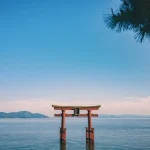
📷 Featured image by Darren Ahmed Arceo on Unsplash.