On this page
- What Makes Hakone Different from Other Onsen Towns
- The Onsen Experience: What to Expect and Where to Go
- Nature Highlights: Fuji Views, Volcanic Valleys, and Lake Ashi
- The Hakone Loop: Getting Around Without a Car
- Day Trip or Overnight? How Long You Actually Need
- Food Scene: Where to Eat in Hakone
- 2026 Budget Reality: What Hakone Costs
- Practical Tips Before You Go
- Frequently Asked Questions
💰 Click here to see Japan Budget Breakdown
💰 Prices updated: October, 2026. Budget figures are estimates — always verify before travel.
Exchange Rate: $1 USD = ¥157.00
Daily Budget (per person)
Shoestring: ¥8,000 – ¥15,000 ($50.96 – $95.54)
Mid-range: ¥18,000 – ¥35,000 ($114.65 – $222.93)
Comfortable: ¥45,000 – ¥80,000 ($286.62 – $509.55)
Accommodation (per night)
Hostel/guesthouse: ¥2,500 – ¥6,000 ($15.92 – $38.22)
Mid-range hotel: ¥10,000 – ¥20,000 ($63.69 – $127.39)
Food (per meal)
Budget meal: ¥800.00 ($5.10)
Mid-range meal: ¥2,500.00 ($15.92)
Upscale meal: ¥20,000.00 ($127.39)
Transport
Single metro/bus trip: ¥250.00 ($1.59)
Monthly transport pass: ¥30,000.00 ($191.08)
Hakone has become one of Japan’s most visited destinations outside of Tokyo, and in 2026 that popularity comes with real consequences. Crowd levels at peak times — Golden Week, autumn foliage season, and holiday weekends — are intense enough that some onsen ryokan now require bookings three months out. The Odakyu Romancecar train sells out on weekends. Mount Fuji hides behind clouds far more often than Instagram photos suggest. None of that means Hakone isn’t worth visiting — it absolutely is — but going in with accurate expectations will make or break your trip.
What Makes Hakone Different from Other Onsen Towns
Japan has hundreds of onsen towns. Beppu is more dramatic. Kinosaki is more traditionally intimate. Kusatsu has stronger, more medicinal waters. So why does Hakone consistently draw the biggest crowds?
The answer is location and variety. Hakone sits roughly 80 kilometres southwest of Tokyo, inside the Fuji-Hakone-Izu National Park, and it packs an unusual concentration of experiences into a compact area. You can soak in a volcanic hot spring, ride a cable car over a sulfur-venting crater, cruise a lake with views of Mount Fuji, and visit a serious open-air sculpture museum — all within a single day if you move efficiently.
This isn’t a one-trick town. Most onsen destinations reward slowing down and doing very little, which is genuinely wonderful. Hakone rewards that too, but it also works for travellers who want to combine relaxation with sightseeing. That flexibility is rare, and it explains why Hakone consistently earns its reputation even as other destinations have emerged as alternatives.
The volcanic geology here is also distinctive. The Owakudani area sits inside a caldera formed roughly 3,000 years ago, and the active fumaroles still vent enough hydrogen sulfide that the smell hits you before you see the steam. The landscape looks genuinely otherworldly — pale grey rock, yellow sulfur deposits, rising white clouds — and it provides a geological context for why the water that flows into Hakone’s baths feels the way it does.

The Onsen Experience: What to Expect and Where to Go
Hakone’s hot spring water varies significantly by area. The waters around Miyanoshita and Tonosawa tend to be mildly alkaline and gentle on the skin. The Dogashima and Yumoto areas have water that feels silkier. Owakudani’s sulfuric waters, accessed via ryokan in the surrounding valleys, are more potent and leave a faint mineral scent on your skin after soaking.
If you’re staying at a ryokan with a private or semi-private rotenburo (outdoor bath), the best window is early morning, around 6:00–7:00 AM. The air is cool enough that steam rises visibly off the water, and if you’re facing the right direction, the shape of Fuji appears through the tree line before mist fills the valley. That particular moment — the contrast of cold mountain air on your face and scalding water around your shoulders, with absolute silence except for birds — is what people mean when they describe Hakone as restorative in a way that goes beyond tourism.
For day visitors who aren’t staying overnight, day-use onsen (higaeri onsen) are accessible without a reservation at several facilities:
- Tenzan Tohji-kyo — Large bath complex near Yumoto with multiple indoor and outdoor pools. Entry around ¥1,400. Popular with locals as well as tourists, which is a good sign. Open until 23:00 most nights.
- Yunessun — A more resort-style facility with themed baths including sake and green tea pools. Better for families. Entry from ¥2,800 depending on areas accessed.
- Hakone Kowakien Yunessun — Connected to Yunessun but includes traditional baths if you want a quieter option without the themed-bath crowds.
- Hotel de Yama (Okada Group) — Day-use rotenburo with a strong Lake Ashi view. Limited spots, pre-booking required in 2026.
One practical note: tattoo policies vary. Tenzan Tohji-kyo allows tattoos in designated areas. Many ryokan private baths allow them. Public-facing communal baths at traditional facilities often still prohibit them. Check before you visit rather than arriving and being turned away.
Nature Highlights: Fuji Views, Volcanic Valleys, and Lake Ashi
Mount Fuji visibility from Hakone is genuinely unpredictable. The mountain is clearest in winter (December through February) when cold, dry air keeps the atmosphere transparent. Summer, particularly July and August, brings humidity and cloud cover that hides the summit the majority of the time. Autumn is moderate — decent odds of a clear view in October and November. Spring cherry blossom season is photogenic but Fuji often disappears by mid-morning.
The best viewpoints within Hakone are:
- Lake Ashi (Ashinoko) — The classic reflection shot with the lake in the foreground and Fuji rising behind it. The lakeside at Moto-Hakone, near the old torii gate that stands partially in the water, gives you the most unobstructed angle. The pirate-ship-style sightseeing boats cross the lake and offer elevated views across the water.
- Owakudani Cable Car — On a clear day, the gondola ride over the volcanic valley frames Fuji in the background as steam rises from the crater below. It’s a genuinely surreal combination. Note: the ropeway occasionally closes due to volcanic activity — check the Hakone Ropeway website before building your day around it.
- Hakone Open Air Museum — Less famous as a Fuji viewpoint but the museum’s hillside setting means Fuji appears behind the sculptures on clear days. The museum itself is excellent regardless of weather — the Picasso pavilion alone is worth the ¥1,800 entry.

Owakudani deserves its own mention beyond the view. The black eggs (kuro-tamago) boiled in the sulfuric hot spring pools are sold here for around ¥600 for five eggs. The folklore claims each egg extends your life by seven years, which is obviously not true, but the eggs do have a distinctive flavour — slightly mineral, with a firm white — that you won’t find anywhere else. The walking trail around the active vent area gives you access to the steam fields at close range, though some sections are fenced off when sulfur levels spike.
The Hakone Loop: Getting Around Without a Car
One of Hakone’s practical advantages is a multi-modal transport circuit that lets you move through the area without a car, combining train, cable car, ropeway, boat, and bus. This loop is what the Hakone Free Pass is built around.
The standard route runs: Hakone-Yumoto Station (arrived by Odakyu from Shinjuku) → Hakone Tozan Railway (mountain switchback train) → Gora → Hakone Tozan Cable Car → Sounzan → Hakone Ropeway (over Owakudani) → Togendai → Hakone Sightseeing Cruise (across Lake Ashi) → Hakonenmachi or Moto-Hakone → Hakone Tozan Bus back to Yumoto or Odawara.
The Hakone Free Pass in 2026 costs ¥6,500 from Shinjuku (2-day) or ¥7,000 (3-day). It covers the round trip from Shinjuku on the Odakyu line plus unlimited use of the loop transport. This represents good value if you’re doing the full loop — the individual tickets would add up to significantly more. The pass is sold at Odakyu stations and online.
A few things the loop doesn’t warn you about:
- The ropeway queues at Owakudani can run 40–60 minutes during peak periods. Go before 10:00 AM or after 15:00 to reduce wait time.
- The Hakone Tozan Railway mountain section is single-track with switchbacks. It’s scenic but slow — budget 40 minutes from Hakone-Yumoto to Gora.
- Lake Ashi boat crossings run roughly every 30 minutes. The “pirate ships” are kitschy but the views across the lake are legitimate.
- Bus routes back from the lake area to Yumoto can be standing-room only on weekends. The Odakyu Hakone Highway Bus from Moto-Hakone to Shinjuku is an alternative that’s often overlooked and sometimes faster.

Day Trip or Overnight? How Long You Actually Need
Hakone works as a day trip from Tokyo, but it works significantly better as an overnight stay — and the difference is mainly about the onsen experience rather than the sightseeing.
On a day trip from Shinjuku, you have roughly 7–8 hours in the area after accounting for travel time (about 85 minutes each way on the Romancecar, or 90–100 minutes on the slower local service). That’s enough time to complete the loop, have lunch, and visit one or two sites. You will not have a meaningful onsen experience in that window unless you skip most of the loop and go directly to a day-use bath.
An overnight stay changes everything. Checking into a ryokan in the afternoon means you have the private or communal baths available in the late afternoon, evening, and early morning — the three best windows. The kaiseki dinner at a mid-range ryokan is typically 8–10 courses and takes 90 minutes, which is itself a significant experience. You also arrive at Owakudani and Lake Ashi before the day-trip crowds in the morning.
If you’re travelling from Osaka or Kyoto, Hakone is less natural as a day trip. The Shinkansen to Odawara from Shin-Osaka takes about 2 hours 15 minutes (¥14,000+ on the Hikari), making a day trip technically possible but tiring. An overnight stay makes more sense in that case, or combining it with a Tokyo stop.

For families with young children, a two-night stay allows a slower pace and makes the ryokan experience less rushed. Most ryokan with family-friendly options are in the Yumoto and Kowakidani areas.
Food Scene: Where to Eat in Hakone
Hakone doesn’t have the dining density of a city, but the food quality at the right places is genuinely high. The area has its own regional specialties worth seeking out.
Kaiseki at a ryokan is the signature dining experience, and you don’t need to stay overnight to access it. Several ryokan offer lunch kaiseki courses — typically ¥6,000–¥12,000 per person — in their dining rooms. This is one of the best ways to experience multi-course traditional Japanese cuisine without the full overnight commitment.
Hatago Isen in Yumoto serves a lunch set that leans into local mountain vegetables and Kanagawa-sourced fish. The building is an older ryokan structure and the dining room is small and quiet — arrive before noon on weekends or you’ll wait.
Amazake-chaya along the Tokai Nature Trail near Amazake-chaya station is a 400-year-old teahouse selling warm amazake (sweet fermented rice drink, non-alcoholic) for ¥500 and mochi. The setting — a thatched-roof structure on a cedar-lined old highway — is as good as the food itself. This is one of those places that genuinely feels unchanged, which in 2026 is increasingly rare.
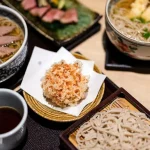
Soba is widely available around Hakone-Yumoto and Moto-Hakone. Look for hand-cut (te-uchi) soba rather than machine-made. The Hakone-Yumoto station area has a concentration of soba shops competing for tourist traffic — quality varies significantly. Yoshiike, a small shop a short walk from the station, has hand-cut soba and a short queue that moves fast.
For casual eating at Owakudani, the black eggs are the main draw. There are also several vendors selling sulfur-yellow soft cream (ice cream), which is a novelty worth trying — it’s mild in flavour, and the colour comes from local ingredients rather than artificial colouring.

2026 Budget Reality: What Hakone Costs
Hakone is not a cheap destination by Japanese standards, particularly for accommodation. Prices in 2026 reflect continued strong demand and the weak yen attracting international visitors, which has pushed mid-range options upward.
Accommodation (per person per night, two sharing, includes dinner and breakfast)
- Budget: ¥12,000–¥20,000 — Basic ryokan or business hotel with shared onsen baths. Meals may be cafeteria-style or not included at this price point in shared hotels. True ryokan at this price range are scarce but exist in Yumoto.
- Mid-range: ¥25,000–¥45,000 — Standard ryokan with private or semi-private rooms, group onsen baths, and kaiseki dinner and breakfast included. This is the most common category and where the experience-to-cost ratio is strongest.
- Comfortable: ¥60,000–¥120,000+ — Rooms with private rotenburo attached, premium kaiseki, and elevated service levels. Properties like Gora Kadan and Hakone Gora Byakudan fall in this tier.
Transport
- Hakone Free Pass (2-day from Shinjuku): ¥6,500
- Odakyu Romancecar upgrade (reserved seat): ¥1,200 each way
- Hakone Open Air Museum entry: ¥1,800
- Owakudani ropeway (if not covered by pass): ¥1,500 one way
Food (per person per day, not including ryokan meals)
- Budget: ¥1,500–¥3,000 — Convenience store breakfast, soba lunch, black eggs at Owakudani
- Mid-range: ¥4,000–¥8,000 — Proper soba lunch, a light dinner at a local restaurant
- Comfortable: ¥10,000–¥18,000 — Lunch kaiseki at a ryokan plus a la carte dinner
Practical Tips Before You Go
Booking windows: In 2026, popular ryokan in Hakone fill 2–3 months ahead for weekends and 4–6 months ahead for Golden Week (late April to early May) and peak autumn foliage (mid-November). Weekday stays are considerably easier to book and often 15–25% cheaper.
Mount Fuji odds: Check the weather forecast for Gotemba City (the closest weather station to Fuji’s base) rather than Hakone itself. Clear skies in Hakone don’t guarantee a visible Fuji. Winter months give you the best odds — roughly 60–70% chance of a clear morning view in January and February.

Ropeway closures: The Hakone Ropeway occasionally suspends service when volcanic activity at Owakudani increases. In 2026, the monitoring system is robust and closures are generally announced 24–48 hours ahead. Check the Hakone Ropeway official site before your visit if Owakudani is a priority.
Japan Rail Pass users: The JR Pass does not cover most of the Hakone transport loop. It covers the Shinkansen to Odawara, but from Odawara you’ll need either the Hakone Free Pass (Odakyu) or individual tickets. The Odakyu line from Shinjuku is a separate railway not covered by JR Pass.
Connectivity: Mobile coverage in Hakone is reliable in most areas in 2026. There are a few dead spots on the mountain railway and in some valley ryokan. Most accommodation provides Wi-Fi, though speed varies in older properties.
Seasonal crowds: The quietest periods are January–February (cold but clear), late June (rainy season, but ryokan rates drop), and weekday visits in September. These windows offer the same experiences at lower prices and smaller crowds.
Frequently Asked Questions
Is Hakone worth visiting if Mount Fuji is hidden by clouds?
Yes, entirely. The onsen, Owakudani volcanic valley, Hakone Open Air Museum, and Lake Ashi are all worth the trip regardless of Fuji visibility. The mountain is a bonus, not the main event. Most visitors who go specifically for Fuji views end up spending most of their time doing other things anyway.
How far is Hakone from Tokyo and how do you get there?
Hakone is approximately 80 kilometres from central Tokyo. The Odakyu Romancecar from Shinjuku reaches Hakone-Yumoto in about 85 minutes. The slower local Odakyu service takes around 95–110 minutes and is cheaper but less comfortable. From Odawara (Shinkansen stop), the Hakone Tozan Railway takes around 40 minutes to Gora.

Do I need to speak Japanese to visit Hakone?
No. Hakone is well set up for English-speaking visitors. Signage at major sites is in English, the Hakone Free Pass is sold with English instructions, and most ryokan catering to tourists have English-speaking staff or can manage bookings by email in English. Smaller local restaurants may have Japanese-only menus, but picture menus are common.
What is the Hakone Free Pass and is it worth buying in 2026?
The Hakone Free Pass (¥6,500 for 2 days from Shinjuku in 2026) covers return travel from Shinjuku on Odakyu and unlimited use of the Hakone transport loop including the ropeway, cable car, sightseeing boat, and bus. If you plan to complete the full loop, it saves money compared to buying individual tickets and simplifies the experience significantly.
Can you visit Hakone onsen with tattoos?
It depends on the facility. Communal public baths at traditional ryokan and public bathhouses often prohibit tattoos. However, many facilities have shifted policies in 2026, particularly those serving international guests. Private baths attached to ryokan rooms are generally fine. Day-use facilities like Tenzan Tohji-kyo have designated areas for guests with tattoos. Always confirm directly with your specific accommodation or bath facility before visiting.
📷 Featured image by Alex Knight on Unsplash.