On this page
- What Kind of City Is Fukuoka, Really?
- The Neighbourhoods That Actually Reward Exploration
- Beyond the Bowl — Fukuoka’s Broader Food Identity
- Culture and History That Most Visitors Skip
- Day Trips From Fukuoka That Outperform Expectations
- 2026 Budget Reality — What Fukuoka Actually Costs
- Getting To and Around Fukuoka in 2026
- Day Trip or Overnight?
- Frequently Asked Questions
💰 Click here to see Japan Budget Breakdown
💰 Prices updated: October, 2026. Budget figures are estimates — always verify before travel.
Exchange Rate: $1 USD = ¥157.00
Daily Budget (per person)
Shoestring: ¥8,000 – ¥15,000 ($50.96 – $95.54)
Mid-range: ¥18,000 – ¥35,000 ($114.65 – $222.93)
Comfortable: ¥45,000 – ¥80,000 ($286.62 – $509.55)
Accommodation (per night)
Hostel/guesthouse: ¥2,500 – ¥6,000 ($15.92 – $38.22)
Mid-range hotel: ¥10,000 – ¥20,000 ($63.69 – $127.39)
Food (per meal)
Budget meal: ¥800.00 ($5.10)
Mid-range meal: ¥2,500.00 ($15.92)
Upscale meal: ¥20,000.00 ($127.39)
Transport
Single metro/bus trip: ¥250.00 ($1.59)
Monthly transport pass: ¥30,000.00 ($191.08)
With Kyoto hitting its tourist-capacity limits in 2026 and Tokyo feeling more overwhelming than ever, a lot of travelers are recalculating their Japan itineraries. Fukuoka keeps coming up — but the conversation almost always collapses into ramen and street food stalls, which undersells the city badly and makes it sound like a one-night stopover. It isn’t. Fukuoka has the density of a real city life, an approachable scale, and a food culture that goes several layers deeper than a bowl of tonkotsu. Here’s what it actually offers.
What Kind of City Is Fukuoka, Really?
Fukuoka is the largest city on Kyushu island and the fifth most populous metropolitan area in Japan — yet it consistently ranks as one of the most livable cities in the country. That tension is what makes it interesting for visitors. It has genuine urban energy without the suffocating density of Tokyo, and it has deep cultural roots without presenting them in the manicured, museum-like way Kyoto tends to do.
The city sits on a flat coastal plain facing the Korean Peninsula, roughly 1,000 kilometres southwest of Tokyo. This geography matters. Fukuoka has historically been Japan’s front door to the Asian continent — trade, culture, and occasionally invasion all passed through here. That outward-facing identity still shows up in the food, the business culture, and the general ease with which the city deals with foreign visitors.
What strikes most people on arrival is how navigable it feels. The subway covers the main areas efficiently. Central neighbourhoods are flat and walkable. And unlike Osaka, where the grid can feel relentless, Fukuoka has a canal, a waterfront, and patches of green that break up the urban texture. The Naka River cuts through the heart of the city, and on warm evenings the yatai stalls set up along its banks in Nakasu, their paper lanterns casting orange light on the water while the smell of frying chicken skin drifts through the humid air. That scene is genuinely worth experiencing once — but it’s the start of what Fukuoka offers, not the whole thing.

The Neighbourhoods That Actually Reward Exploration
Most visitors stick to the Hakata station area and Nakasu, which means they miss the version of Fukuoka that locals actually inhabit.
Tenjin and Daimyo
Tenjin is the commercial heart — department stores, underground shopping arcades, and the kind of street-level retail energy that keeps it interesting without feeling like a tourist district. Just west of Tenjin’s main drag, Daimyo is where the city’s design consciousness lives. Independent clothing boutiques, specialty coffee shops with single-origin pour-overs, and small galleries occupy buildings that feel genuinely considered rather than just repurposed. It’s the neighbourhood where Fukuoka’s creative class actually spends time.
Yakuin
South of Tenjin, Yakuin has matured significantly over the past few years into one of the best eat-and-drink neighbourhoods in Japan that most foreign visitors have never heard of. The streets around Yakuin-Odori station are dense with independent restaurants, natural wine bars, craft sake shops, and the kind of small izakayas that take reservations and actually care about what they serve. On weekend evenings the neighbourhood hums at a frequency that feels entirely local.
Momochi and the Waterfront
Momochi, on the western edge of the city near Fukuoka Tower, is a planned waterfront district that could easily be skipped — but Seaside Momochi gives you a clean view of Hakata Bay and access to the beaches that Fukuoka locals actually use in summer. It’s a useful reminder that this is a coastal city, not just an inland urban sprawl.
Hakata
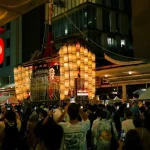
Hakata is the older commercial core around the main Shinkansen station. The famous Hakata Gion Yamakasa festival transforms this area every July into something visceral and ancient — massive floats (kazariyama) displayed in front of Kushida Shrine from early July, and the actual running race (oiyama) on the 15th starting before dawn. Outside festival season, Hakata is functional and efficient rather than scenic, but Hakata Station itself was expanded again in 2025 and now has better food hall access on the basement levels.

Beyond the Bowl — Fukuoka’s Broader Food Identity
Yes, tonkotsu ramen was born here, and yes, the yatai stalls are worth visiting. But reducing Fukuoka’s food identity to those two things is like describing Tokyo purely through sushi.
Mentaiko
Spicy cod roe (mentaiko) is Fukuoka’s other defining ingredient, and it appears in everything from pasta to onigiri to bread. The Yamaya brand originated here, and the shopping arcade beneath Hakata Station has dedicated mentaiko shops where you can taste and buy different grades — some marinated simply in salt and chili, others aged in ways that deepen the umami. It travels well if vacuum-sealed, and it’s significantly cheaper here than anywhere else in Japan.
Motsunabe
Motsunabe — a hotpot of beef or pork offal in either a soy or miso broth, finished with cabbage, garlic chives, and a mound of champon noodles — is Fukuoka’s cold-weather obsession. Hakata Shoryu in Nakasu and Rakutenchi in Yakuin are both reliable choices. The texture of the slow-cooked offal against the crunch of cabbage cooked just enough to soften is the kind of combination that makes you understand why locals eat it weekly from November through March.
Chicken Sashimi (Torisashi)
Raw chicken is served at izakayas across Kyushu, and Fukuoka is the easiest city on the island to find it prepared well. It sounds alarming, but the birds are raised and handled under strict hygiene standards specific to the region. The texture is closer to seared tuna than raw poultry — silky, mild, and served with ginger and ponzu. Try it at any standing izakaya near Yakuin or in the Tenjin underground bar district.

Local Sweets and Snacks
Hakata’s wagashi (traditional confectionery) tradition produces hakata-ori fabric-inspired designs in seasonal sweets, but the snack most people take home is niwaka senbei — a thin, lightly sweet rice cracker shaped like the comic mask from Hakata’s traditional comic performance culture. The Fukusaya bakery near Tenjin also produces a particular castella (honey sponge cake) that has been made to the same recipe for over a century.
Culture and History That Most Visitors Skip
Fukuoka’s history is not decorative — it shaped Japan’s relationship with the wider world in ways that are still relevant and genuinely interesting to trace on the ground.
The Mongol Invasions
In 1274 and again in 1281, Kublai Khan launched the largest naval invasions in medieval history against Japan, and both times the landing point was Hakata Bay — right where Fukuoka stands today. The stone wall (genko borui) built after the first invasion to defend against the second is partially preserved at Imazu and Nishijin, along the bay. It’s not a polished tourist site — it’s just a long, mossy stone wall in a residential neighbourhood, and that un-curated quality makes it more affecting, not less. The Mongol forces were ultimately driven back by a combination of Japanese resistance and the famous typhoons (the “divine winds” or kamikaze). A small but excellent permanent exhibit at the Fukuoka City Museum in Momochi covers this history with artifacts including a bronze Mongol seal recovered from the sea.

Kushida Shrine
This is Hakata’s guardian shrine, founded in 757 CE, and it holds a permanently displayed kazariyama float — a ten-metre tower of elaborate ornamentation — that you can view year-round. The shrine grounds are compact but have real age to them, with a gnarled camphor tree that is reportedly over a thousand years old. Entry to the main grounds is free.
Hakata Machiya Folk Museum
A short walk from Kushida Shrine, this museum occupies a preserved Meiji-era merchant townhouse and covers Hakata’s craft traditions — particularly Hakata-ori silk weaving and Hakata ningyo (clay dolls). The demonstrations by working craftspeople run several times daily and take about 20 minutes. Admission is ¥200. It’s small, quiet, and more satisfying than it sounds.
Fukuoka Castle Ruins (Maizuru Park)
The castle was never reconstructed after the Meiji government ordered its demolition, so what remains is the stone foundation, turret walls, and a commanding view over the city. The surrounding Maizuru Park is famous for cherry blossoms in spring, but in any season the ruins give a sense of the castle’s original scale. Ohori Park, directly adjacent, has a classical Japanese garden and a loop path around a central lake that takes about 30 minutes to walk — it’s where Fukuoka residents go to breathe.
Day Trips From Fukuoka That Outperform Expectations
Fukuoka’s position at the northwest tip of Kyushu makes it an excellent base for day trips that feel genuinely different from anything you’ll find on the usual tourist trail.
Yanagawa (1 hour by train)
A canal city south of Fukuoka with flat-bottomed boat trips (donkobune) through narrow waterways lined with old merchant walls, willow trees, and mud-plaster storehouses. The boatmen pole the boats slowly through the canal system while narrating in a Kyushu dialect. In late autumn the yellow willows reflect off the dark water. Lunch on seiro mushi (eel steamed over rice in a lacquered box) is the local tradition — Motoyoshiya near the central boat dock has been doing it for generations. Round-trip from Fukuoka: around ¥1,500–2,000 on Nishitetsu rail.

Dazaifu (40 minutes by Nishitetsu rail)
Home to Dazaifu Tenmangu, one of Japan’s most important Shinto shrines dedicated to the deity of learning. In 2027 the shrine’s main hall reconstruction (underway since 2023) is due to complete, meaning in 2026 the temporary hall designed by Kengo Kuma — a dramatic lattice of timber and wisteria — is still the main draw. It’s a genuinely beautiful piece of architecture. The approach road (sando) is lined with plum-flavored umegae mochi shops, each one griddle-pressing the same rice cakes fresh to order.
Itoshima (40–50 minutes by JR Chikuhi Line)
A coastal peninsula west of Fukuoka that has built a strong identity around local farms, craft studios, and one of Kyushu’s best stretches of beach (Futamigaura). The iconic torii gate standing in the sea at Sakurai Futami rocks is best seen at high tide when the stone base disappears. Itoshima has attracted a quiet wave of makers and artisans over the past decade, and weekend markets near the beach area regularly feature local ceramics, natural cosmetics, and farm-direct produce. It’s the closest thing Fukuoka has to a laid-back weekend escape.
Karatsu (1 hour 20 minutes by subway and JR)
A castle town on Saga Prefecture’s coast, famous for Karatsu-yaki pottery — one of Japan’s most celebrated ceramic traditions, with roots in Korean influence brought back through Hakata’s trade routes. The castle (reconstructed) sits on a promontory over the sea and the view across Karatsu Bay is legitimately striking. The town has a walkable craft district with working pottery studios and the Karatsu Kunchi festival in November fields an incredible procession of lacquered float-ships.

2026 Budget Reality — What Fukuoka Actually Costs
Fukuoka is measurably cheaper than Tokyo or Kyoto, and that gap has widened slightly as those cities have implemented tourist taxes and higher accommodation surcharges in 2025–2026.
Accommodation (per night)
- Budget: Capsule hotels and guesthouses near Hakata Station — ¥3,500–5,500
- Mid-range: Business hotels (APA, Dormy Inn, Vessel Hotel) — ¥9,000–16,000
- Comfortable: Boutique hotels and upper business hotels (Loisir Hotel, Canal City Washington) — ¥18,000–30,000
- High-end: The Ritz-Carlton Fukuoka (opened 2023) — from ¥65,000
Food and Drink
- Ramen at a dedicated ramen shop: ¥900–1,200 per bowl
- Set lunch at a mid-range restaurant: ¥1,000–1,800
- Motsunabe dinner for two (including drinks): ¥5,000–9,000
- Yatai stall dinner with drinks: ¥2,500–4,000 per person
- Specialty coffee: ¥600–900
Transport Within the City
A single subway ride in Fukuoka costs ¥210–360 depending on distance. The Fukuoka Tourist City Pass (¥1,500 for one day in 2026) covers unlimited subway rides and selected bus routes and is worth buying if you plan to cross the city more than four times in a day. The IC card Hayakaken works on all public transport in the city.
Practical Note on Tourist Tax
As of 2025, Fukuoka City levies a lodging tax of ¥200 per person per night for accommodation priced below ¥20,000, and ¥500 per person per night above that threshold. This is charged directly at check-in and is separate from the room rate.
Getting To and Around Fukuoka in 2026
By Shinkansen
The Tokaido/Sanyo Shinkansen connects Tokyo to Hakata (Fukuoka’s main station) in approximately 5 hours on the Nozomi. From Osaka it’s about 2 hours 15 minutes, and from Hiroshima around 1 hour. The Japan Rail Pass covers the Hikari and Kodama services on this route (not Nozomi). In 2026, JR Pass prices remain at their 2023-revised level — the 7-day pass is ¥50,000 for adults — so the pass is most cost-effective for visitors covering multiple cities. A standard unreserved Nozomi Tokyo–Hakata one-way is approximately ¥22,000.

By Air
Fukuoka Airport is the most central major airport in Japan — it’s on the city subway line and takes exactly two stops (6 minutes) from the airport to Hakata Station. International routes from Seoul, Shanghai, Taipei, Bangkok, and Singapore make Fukuoka a viable first entry point for visitors arriving from other parts of Asia. Domestic flights connect to Tokyo (Haneda and Narita), Osaka (Itami and Kansai), Okinawa, and several other cities. Jetstar, Peach, and Solaseed Air all serve Fukuoka with budget fares that occasionally drop to ¥5,000–8,000 on Tokyo routes booked in advance.
Getting Around the City
The three subway lines (Kuko, Hakozaki, Nanakuma) cover most of what visitors need. The city is also flat and very bikeable — rental services including the Machi-chari city cycle system (dockless-style stations throughout Tenjin and Hakata) charge around ¥165 per 30 minutes. Taxis are available and reasonably priced by Japanese standards; a cross-city ride rarely exceeds ¥1,500–2,000.
Day Trip or Overnight?
The honest answer depends on where you’re coming from and what you want from the city.
Day trip makes sense if: You’re already in Hiroshima or Kitakyushu and want a focused food and neighbourhood experience. A Shinkansen day trip from Hiroshima (about 1 hour each way) gives you 8–9 hours in the city, which is enough to cover Daimyo and Tenjin, eat two or three meals well, and visit Kushida Shrine. It will not feel rushed if you go in with a clear list.
One night is the minimum for most visitors: Yatai stalls only come alive after 7pm and are best experienced late. The Yakuin bar and restaurant scene requires evening time. One night lets you arrive late afternoon, eat properly, sleep in the city’s rhythm, and then spend the next morning exploring before moving on.

Two or three nights opens the city up: This is the right length for anyone who wants to combine a day trip to Yanagawa or Itoshima with genuine city exploration. It’s also enough time to understand why Fukuoka consistently ranks as one of Japan’s most livable cities — not because it has the most to see, but because the day-to-day quality of being in it is genuinely high. The city doesn’t perform for tourists; it just gets on with being itself, and that’s a different feeling from most places on the standard Japan itinerary.
Fukuoka as a base for Kyushu: If your itinerary includes Nagasaki, Kumamoto, Kagoshima, or Beppu, Fukuoka is the logical hub. All of those destinations are reachable by Shinkansen or express train within 1.5–3 hours, and Fukuoka’s accommodation options and transport connections are the strongest on the island.
Frequently Asked Questions
Is Fukuoka worth visiting if you’ve already been to Japan before?
Yes — arguably more so. First-time visitors often stick to the Tokyo–Kyoto–Osaka corridor, which means Fukuoka rewards return visitors who want something less curated. The food scene, the neighbourhood texture, and the access to Kyushu’s wider network make it one of the most rewarding additions to a second or third Japan itinerary.
How many days do you need in Fukuoka?
Two nights and two full days covers the city itself comfortably. Add a third day if you want to include a day trip to Yanagawa, Itoshima, or Dazaifu. One night is workable but feels slightly rushed if you also want to explore beyond the immediate station area.

Is Fukuoka safe for solo travelers and first-time visitors to Japan?
Very safe. Fukuoka consistently ranks in the top tier for safety in Japanese city surveys. English signage in the subway is clear, staff at Hakata Station are experienced with foreign visitors, and the central neighbourhoods are walkable and well-lit at night. It’s a good choice for visitors who find Tokyo’s scale intimidating.
What is the best time of year to visit Fukuoka?
Spring (late March to early May) for cherry blossoms in Maizuru Park and mild temperatures. October and November for cooler weather, autumn colour, and the Karatsu Kunchi festival nearby. July brings the spectacular Hakata Gion Yamakasa festival but also Kyushu’s humid summer heat, which can be intense. Avoid the rainy season in June if possible.
Is the Japan Rail Pass worth it for a trip focused on Fukuoka?
Only if Fukuoka is part of a longer itinerary that includes Tokyo, Kyoto, or Osaka. A 7-day JR Pass at ¥50,000 covers the Shinkansen from Tokyo to Hakata and back (approximately ¥44,000 combined), making it borderline cost-effective on that route alone. For Kyushu-only travel, the Kyushu JR Pass (all-area, 3 days: ¥22,000; 5 days: ¥27,000 in 2026) is a better option and covers Shinkansen travel across the island.
📷 Featured image by Shigeki Wakabayashi on Unsplash.