On this page
- What Golden Week Actually Is
- The Crowds: What “Busy” Really Means in Japan
- Golden Week Festival Highlights Worth the Chaos
- Transportation Reality: Trains, Shinkansen, and Getting Around
- 2026 Budget Reality: What Everything Costs During Golden Week
- Destinations That Quietly Shine During Golden Week
- Practical Survival Tips for Travelling Golden Week
- Frequently Asked Questions
Golden Week 2026 runs from April 29 through May 6, and if you are already searching for advice, you have probably heard the horror stories — packed Shinkansen, fully booked hotels, and tourist spots that feel less like Japan and more like a crowded stadium. The honest answer to whether you should travel during this period is not a simple yes or no. It depends entirely on how you prepare, where you go, and whether you understand what you are actually walking into.
What Golden Week Actually Is
Golden Week is not a single holiday — it is four separate national holidays packed into one eight-day stretch, usually at the end of April and beginning of May. Because these holidays fall close together, most Japanese companies give their employees the entire period off, making it one of the three biggest domestic travel seasons in Japan alongside Obon in August and New Year in January.
The four holidays are:
- Showa Day (April 29) — Originally the birthday of Emperor Showa (Hirohito), now a day to reflect on the turbulent Showa era and Japan’s recovery from World War II.
- Constitution Day (May 3) — Marks the 1947 Japanese constitution coming into effect.
- Greenery Day (May 4) — A celebration of nature and the environment, moved to May 4 in 2007 after Constitution Day took its original slot.
- Children’s Day (May 5) — A public holiday celebrating children’s happiness and honouring mothers. You will see koinobori — brightly coloured carp-shaped streamers — flying from poles and rooftops everywhere.
In 2026, April 29 falls on a Wednesday, which means many Japanese workers use paid leave on April 27 and 28 to create a full ten-day holiday. Expect the absolute peak of domestic travel on the first and last two days of this window.
The Crowds: What “Busy” Really Means in Japan
Busy in Japan during Golden Week is a different category of busy than almost anywhere else. Japan’s domestic population of roughly 125 million people moves simultaneously. Popular destinations like Kyoto’s Arashiyama bamboo grove, Tokyo Disneyland, and Nara’s deer park do not just get crowded — they hit visitor capacity limits that make it genuinely difficult to move.
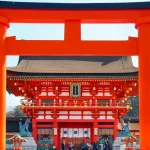
At Fushimi Inari in Kyoto, the lower trails near the iconic vermilion torii gates become so packed by mid-morning that the atmospheric dawn light you have seen in photos is essentially impossible to experience unless you arrive before 5:30am. The mountain trail higher up, however, remains noticeably quieter — most visitors turn back at the first major rest point.
That said, Japan’s crowd management is world-class. Queues are orderly, signage is clear, and stations have extra staff deployed throughout the period. The stress is real but manageable if you go in with the right mindset and a plan.
Golden Week Festival Highlights Worth the Chaos
The crowds have a reason to exist — Golden Week genuinely is one of the most culturally rich periods to be in Japan. Festivals, performances, and seasonal events run throughout the country, and many of them are only possible because the entire nation is on holiday at the same time.
Some highlights across the country in late April and early May:
- Hamamatsu Kite Festival (May 3–5, Shizuoka Prefecture) — One of Japan’s largest kite battles, held on the shores of Lake Nakatajima. Teams representing different neighbourhoods fly enormous kites and try to cut down rivals’ strings. The sound of hundreds of kites cutting through sea wind is unlike anything else.
- Hakata Dontaku (May 3–4, Fukuoka) — Japan’s largest festival by attendance, drawing over two million people annually. Colourful parades fill the streets of Fukuoka with dancers, musicians, and traditional performers.
- Koinobori Displays — Across rural towns especially, massive koinobori carp streamers are strung across rivers and valleys. The display at Kazo in Saitama Prefecture features a 100-metre streamer, the largest in Japan.
- Late Cherry Blossoms in Northern Japan — In Tohoku and Hokkaido, cherry blossoms peak during Golden Week rather than late March. Hirosaki Castle in Aomori Prefecture is particularly stunning, with pink petals falling over the castle moat.
The late sakura of Tohoku is honestly one of the best-kept secrets of Golden Week travel. While everyone fights for space in Kyoto, Hirosaki feels festive but not overwhelming, and the sight of pale pink petals drifting across the dark castle walls at dusk carries a quiet magic that is hard to put into words.
Transportation Reality: Trains, Shinkansen, and Getting Around
This is where Golden Week can genuinely cause problems if you are unprepared. Japan Rail Pass holders need to understand that reserved seats are mandatory during Golden Week — unreserved Shinkansen carriages fill completely within minutes of a train arriving at a major station. Standing in a packed Shinkansen carriage for two hours is not a comfortable experience.
Key facts for 2026 transportation during Golden Week:
- Book Shinkansen reserved seats as early as one month in advance. JR opens reservations exactly one month before departure at 10:00am Japan time.
- The Hokuriku Shinkansen extension to Tsuruga, which opened in March 2024, now makes accessing Fukui Prefecture significantly easier, and this route sees notably less Golden Week congestion than the Tokaido line between Tokyo and Osaka.
- Domestic flights between major cities book out fast but are worth checking — ANA and JAL both typically add extra Golden Week capacity, and routes like Tokyo–Sapporo or Osaka–Okinawa can be more comfortable than the Shinkansen gauntlet.
- Highway buses are dramatically cheaper than Shinkansen but journey times double or triple due to expressway congestion. Only use them if time is not a constraint.
- Within cities, IC cards (Suica, ICOCA) remain the fastest way to tap through gates. Do not rely on purchasing paper tickets at busy stations — the queues at ticket machines during peak Golden Week days are significant.
2026 Budget Reality: What Everything Costs During Golden Week
Golden Week pricing is hotel-driven. Accommodation prices surge dramatically compared to regular season rates, and this is non-negotiable — it is supply and demand in its purest form.
Accommodation (per night, for two people)
- Budget — Capsule hotel or hostel dormitory: ¥3,500–¥6,000 per person. Private rooms in budget guesthouses start around ¥10,000 for two.
- Mid-range — Business hotels (Toyoko Inn, APA, Dormy Inn): ¥18,000–¥35,000 per room. Expect Golden Week surcharges of 30–50% above standard rates.
- Comfortable — Mid-tier hotels and ryokan with meals: ¥40,000–¥90,000 per room. Top ryokan in Kyoto or Hakone exceed ¥150,000 per night easily.
Daily Expenses
- Budget traveller: ¥5,000–¥8,000 per day (konbini meals, cheap ramen, walking and transit)
- Mid-range traveller: ¥12,000–¥20,000 per day (sit-down meals, museum entries, Shinkansen segments)
- Comfortable traveller: ¥30,000–¥60,000+ per day (ryokan dining, premium experiences, taxis)
The Japan Rail Pass price increased again in 2025, with the 7-day pass now at approximately ¥50,000. For Golden Week specifically, the pass delivers excellent value if you plan to cross the country, since multiple reserved Shinkansen segments add up fast when purchased individually.
Destinations That Quietly Shine During Golden Week
The smart move during Golden Week is not avoiding travel — it is avoiding the obvious destinations at obvious times. While Kyoto and Tokyo absorb the bulk of visitors, other places remain genuinely enjoyable.
- Hirosaki, Aomori — Late cherry blossoms plus the castle festival. Fewer international tourists than anywhere in Kansai.
- Kanazawa, Ishikawa — Access improved dramatically with the Hokuriku Shinkansen extension. The samurai and geisha districts stay calmer than Kyoto equivalents.
- Matsumoto, Nagano — The black castle, open-air alpine scenery, and a thriving craft sake scene. The city absorbs visitors more gracefully than its fame suggests.
- Yakushima Island, Kagoshima — Ancient cedar forests and sea turtles. Getting here requires a ferry or flight, which naturally limits numbers.
- Inland Kyushu (Aso, Kurokawa Onsen) — Even with Hakata Dontaku drawing millions to Fukuoka city, the volcanic highlands one hour inland remain tranquil and stunning in spring green.
Practical Survival Tips for Travelling Golden Week
Beyond booking early, a handful of specific habits make Golden Week travel dramatically better:
- Reverse your schedule. Visit popular sites at 6:00–8:00am or after 5:00pm. Midday is peak crowd time. This single habit changes the entire experience.
- Eat at odd hours. Restaurants fill completely between 12:00–13:30 and 18:30–20:00. Eat at 11:00am or 14:30pm and you will walk straight in.
- Use convenience stores strategically. Seven-Eleven, FamilyMart, and Lawson have genuinely good food, and their ATMs reliably accept foreign cards. During Golden Week, they are often calmer than any restaurant.
- Confirm holiday opening hours. Japan’s smaller attractions — local museums, craft workshops, some gardens — sometimes close on the actual national holidays rather than opening for them. Check before travelling.
- Book a luggage forwarding service (takuhaibin). Using Yamato Transport or Sagawa to send your bags between hotels costs around ¥1,500–¥2,500 per bag and means you move through packed stations with your hands free. It is transformative during high-traffic periods.
- Have offline maps. Google Maps works well in Japan but download your destination areas offline. Station Wi-Fi and phone signal can struggle under Golden Week network load in very crowded spots.
Frequently Asked Questions
Is Golden Week a good time to visit Japan as a foreign tourist?
It can be, but it requires more planning than any other period. Accommodation must be booked months ahead, Shinkansen seats need early reservations, and you should build flexibility into your itinerary. The payoff is a Japan that feels genuinely alive with celebration, festivals, and seasonal beauty — particularly late cherry blossoms in northern regions.
When exactly is Golden Week in 2026?
Golden Week 2026 runs from April 29 (Showa Day) through May 5 (Children’s Day), with May 6 acting as a substitute holiday. Many Japanese workers extend this to ten days by taking leave on April 27–28. The absolute busiest travel days are April 29–30 and May 3–5.
How far in advance should I book hotels for Golden Week?
For popular destinations like Kyoto, Tokyo, Osaka, and Hakone, book three to six months ahead. Seriously. Mid-range hotels in central Kyoto sell out by November for the following Golden Week. Budget options go even faster. Rural and secondary cities offer more last-minute availability but still fill up by February.
Is the Japan Rail Pass worth buying for a Golden Week trip?
Yes, if you plan to travel between multiple cities. The 7-day pass at approximately ¥50,000 covers Shinkansen travel that would cost ¥60,000–¥80,000+ purchased individually across a multi-city trip. Crucially, JR Pass holders can make free reserved seat bookings — do this the moment you arrive in Japan or online before departure.
What should I absolutely avoid during Golden Week?
Avoid showing up at Arashiyama bamboo grove, Fushimi Inari’s lower gates, or Universal Studios Japan between 9:00am and 5:00pm without a timed entry ticket or early arrival plan. Also avoid highway buses if you have a schedule to keep — expressway jams during Golden Week are severe and unpredictable, adding hours to journey times.
📷 Featured image by Levi Meir Clancy on Unsplash.