On this page
- Osaka’s Neon District After Dark: Why Dotonbori Hits Different at Night
- The Neon Icons You’re Here to See
- Where to Eat Along the Dotonbori Strip
- Drinking Your Way Through the District
- Beyond the Main Strip: The Streets That Actually Reward Wandering
- What a Night in Dotonbori Actually Costs in 2026
- Getting to Dotonbori and Moving Around at Night
- What’s New in Dotonbori in 2026
- What Locals Know That Tourists Don’t
- Frequently Asked Questions
💰 Click here to see Japan Budget Breakdown
💰 Prices updated: October, 2026. Budget figures are estimates — always verify before travel.
Exchange Rate: $1 USD = ¥157.00
Daily Budget (per person)
Shoestring: ¥8,000 – ¥15,000 ($50.96 – $95.54)
Mid-range: ¥18,000 – ¥35,000 ($114.65 – $222.93)
Comfortable: ¥45,000 – ¥80,000 ($286.62 – $509.55)
Accommodation (per night)
Hostel/guesthouse: ¥2,500 – ¥6,000 ($15.92 – $38.22)
Mid-range hotel: ¥10,000 – ¥20,000 ($63.69 – $127.39)
Food (per meal)
Budget meal: ¥800.00 ($5.10)
Mid-range meal: ¥2,500.00 ($15.92)
Upscale meal: ¥20,000.00 ($127.39)
Transport
Single metro/bus trip: ¥250.00 ($1.59)
Monthly transport pass: ¥30,000.00 ($191.08)
Osaka’s Neon District After Dark: Why Dotonbori Hits Different at Night
By 2026, Osaka has become one of the most visited cities in Asia, and the pressure on Dotonbori shows. Daytime crowds along the canal are now genuinely difficult — the 180-metre stretch between Ebisu Bridge and the canal can feel like a slow shuffle rather than a stroll. But here’s the thing most guides don’t tell you: Dotonbori is actually designed for nighttime. The giant mechanical crab claws, the rivers of neon, the smoke rising from takoyaki grills — all of it comes alive after 8 PM in a way that daylight simply can’t replicate. This guide covers what to actually do when the sun goes down, where to eat without getting ripped off, and how to find the parts of the neighbourhood that most visitors never reach.
The Neon Icons You’re Here to See
Dotonbori’s landmarks are genuinely worth your time, even if they’ve been photographed millions of times. The experience of standing in front of them at night is something photographs can’t fully capture.
Glico Running Man
The Glico Man LED sign on the south side of Ebisu Bridge is the undisputed symbol of Osaka. It’s been rebuilt and upgraded several times, and the 2024 version runs on full LED with colour cycles that shift every few minutes. The best viewing spot is from the Ebisu Bridge itself, facing south. Arrive before 9 PM if you want a clear shot — after that, the bridge is wall-to-wall people. Standing just east of the main bridge on the smaller pedestrian walkway gives you a slightly elevated angle that works better for photos without the crowd crush.
Kani Doraku’s Giant Crab
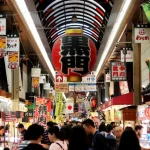
The mechanical crab above the Kani Doraku restaurant entrance on the north bank moves its claws and legs on a slow rotation. At night with the neon behind it, it looks like something out of a fever dream. You don’t need to eat at Kani Doraku to appreciate it — just stand on the opposite bank of the canal and look up. The contrast of the crab against the illuminated building faces behind it is one of the genuinely strange, wonderful things about this city.
The Dotonbori Canal Itself
The canal running east-west through the district reflects every sign, every light, every passing boat. The Tombori River Cruise (cruises run until approximately 9 PM, last entry around 20:45) takes you through the heart of the illuminated strip by water, looking up at the signs from below. Tickets in 2026 run around ¥1,200 per adult. It’s a 20-minute loop and genuinely worth it once — the perspective from water level, with neon shimmering on the canal surface and the smell of grilled food drifting down from the banks, is something you won’t get any other way.
Where to Eat Along the Dotonbori Strip
Dotonbori has a serious tourist-trap problem in 2026. Many of the restaurants on the main canal-facing street charge significantly inflated prices for mediocre food. The rule of thumb: if a restaurant has a laminated English menu propped up outside and a staff member actively calling to you from the doorway, keep walking. The good stuff requires a small amount of effort.
Takoyaki — The Real Ones
Wanaka Honten on Dotonbori-suji (the main pedestrian street, one block south of the canal) serves some of the best takoyaki in the area. Eight pieces run around ¥700–¥800 depending on topping choice. The balls come scorching hot from iron moulds, crisp on the outside and almost liquid at the centre, with a hit of bonito flakes that flutter from the heat as soon as they land on top. Arrive before 8 PM or prepare to queue — they sell out of certain varieties later in the night.
Standing Ramen
Dotonbori Ichifuji on the eastern end of the strip operates a standing-only counter that seats around eight people. No waiting for a table, no drawn-out ordering process — you pick from two or three broth options at a ticket machine, hand over your ticket, and a bowl arrives within four minutes. The tonkotsu shoyu hybrid they serve here is aggressively seasoned and rich without being heavy. Bowls run ¥850–¥1,100.
Kushikatsu Without the Markup
Daruma Honten near the Shinsekai end (a short walk south of Dotonbori proper, but absolutely worth it) is the original location of Osaka’s most famous kushikatsu chain. Skewers start at ¥110 each. The unbreakable rule — no double-dipping the communal sauce — is enforced by staff with a sense of humour. This is where the food is genuinely excellent rather than simply convenient. The crunch of the panko coating on a fresh prawn skewer straight from the fryer is one of the best eating moments you’ll have in Osaka.

Okonomiyaki in a Proper Setting
Mizuno on Dotonbori-suji has been cooking Osaka-style okonomiyaki (the mixed kind, not Hiroshima-style layered) since 1945. Tables have embedded griddles. The waiting list runs long after 7 PM — put your name down when you arrive and use the time to walk the canal. Prices run ¥1,200–¥1,800 per pancake depending on fillings.
Drinking Your Way Through the District
Dotonbori’s drinking scene splits into two completely different worlds: the loud, tourist-facing bars on the main strip, and the quieter, far more interesting spots in the alleys immediately behind it.
Standing Bars and Shotglass Culture
The convenience stores (7-Eleven and FamilyMart both have branches directly on the strip) sell cold Asahi and Sapporo for ¥200–¥250. In 2026, Osaka still allows open-container drinking outdoors in most of the Dotonbori area, making canal-side convenience store drinks a completely legitimate evening activity. Plenty of locals do it.
Craft Beer
Craft Beer Base Dotonbori, just off the main strip on a narrow side lane, runs 12 taps with a rotating selection weighted toward Japanese craft — Kyoto Brewing Company, Minoh Beer, Coedo. Pints run ¥900–¥1,300. The space is narrow, noisy, and usually requires standing by 9 PM on weekends — which is exactly the atmosphere it’s going for.
Whisky and Quiet
Bar K2 on the third floor of a building one block north of the canal on the Shinsaibashi side is the antidote to Dotonbori’s volume. Small, dark, serious about whisky. Highballs start at ¥700, rare single malts go significantly higher. The owner speaks enough English to make recommendations. It doesn’t advertise and has no sign beyond a small plaque — look for the building number and take the elevator.
Beyond the Main Strip: The Streets That Actually Reward Wandering
Most visitors walk one loop of the main canal strip and feel they’ve seen Dotonbori. They’ve missed most of it.
Hozenji Yokocho
This stone-paved alley running parallel to and just south of the main strip is one of Osaka’s oldest surviving restaurant lanes. The entrance is easy to miss — a stone torii-style gateway on Dotonbori-suji leads into a narrow passage where restaurants have been operating for generations. Moss-covered lanterns line the path. The small Hozenji Temple at the alley’s heart is dedicated to Fudo Myo-o, and the stone statue is layered in thick green moss from decades of water offerings. Visiting at 10 PM, with the lanterns casting soft orange light on the wet stones and the sound of jazz drifting from a counter bar — this is the version of Dotonbori that stays with you.

Shinsaibashi-suji Shopping Street
Running north from the Dotonbori canal, this covered arcade is 600 metres of retail that stays open until 8–9 PM. The southern end (closest to the canal) runs cheaper and faster: 100-yen accessories, phone cases, tourist items. Walk north past the midpoint and the quality shifts — Uniqlo, Muji, domestic fashion brands, and mid-range cosmetics shops. The covered arcade means it’s usable even in rain, which is not a minor consideration in Osaka’s summer months.
Amerikamura
Three minutes west of Shinsaibashi-suji, Amerika Mura (American Village) is Osaka’s youth fashion and subculture district. Triangle Park at its centre functions as a gathering point. The secondhand and vintage clothing shops here — many running until 9 or 10 PM — are genuinely excellent, with inventory that turns over fast. Prices for quality vintage denim run ¥3,000–¥15,000. The vibe is entirely different from the canal strip: younger, local, less interested in tourists.
What a Night in Dotonbori Actually Costs in 2026
Prices in the Dotonbori area have risen noticeably since 2023, partly due to the weak yen-era tourism boom and partly due to landlords raising rents in the most-visited sections. Here’s an honest breakdown.
Budget Night (¥3,000–¥5,000)
- Takoyaki (8 pieces): ¥700–¥800
- Ramen at standing counter: ¥850–¥1,100
- Two convenience store beers: ¥400–¥500
- One craft beer: ¥900–¥1,100
- Canal cruise: ¥1,200
You can have a genuinely full evening — food, drink, the cruise, the lights — for under ¥5,000 if you’re selective.
Mid-Range Night (¥7,000–¥12,000)
- Sit-down okonomiyaki dinner: ¥1,500–¥2,000
- Kushikatsu at Daruma: ¥1,500–¥2,500 depending on skewer count
- Two to three drinks at a proper bar: ¥2,000–¥3,500
- Canal cruise plus snacks: ¥2,000
Comfortable/Splurge Night (¥15,000–¥25,000+)
- Full omakase-style kaiseki near Hozenji: ¥8,000–¥15,000 per person
- Premium whisky bar tab: ¥5,000–¥10,000
- Kani Doraku crab dinner (set menu): ¥6,000–¥12,000 per person
The Kani Doraku mechanical crab is a tourist draw, but the restaurant itself is legitimate — the snow crab sets are well-prepared, just expensive relative to comparable food elsewhere in Osaka.
Getting to Dotonbori and Moving Around at Night
Dotonbori sits in the Namba area of Osaka, and access is straightforward from most of the city.
By Train
Namba Station (Osaka Metro Midosuji, Sennichimae, and Yotsubashi lines) is the closest major hub — a five-minute walk from the canal. Shin-Imamiya and Namba on the Nankai line works if you’re coming from Kansai International Airport. The Midosuji Line runs until around midnight. Last trains from Namba vary by line but generally fall between 11:45 PM and 12:15 AM.
Walking the Area
Dotonbori is a walking neighbourhood. The main canal strip is roughly 500 metres end to end. Shinsaibashi and Amerikamura are a 10–15 minute walk north and west respectively. Wear comfortable shoes — the stone paths in Hozenji Yokocho and some of the covered arcades have uneven surfaces.
Late Night — After the Last Train
Taxis are available throughout the night from the Namba taxi ranks. Flag-fall in Osaka in 2026 runs ¥680, with meter increases roughly every 1.5 kilometres. Ride-share apps (Uber and S.RIDE both operate in Osaka in 2026) are available but surge pricing on Friday and Saturday nights near Dotonbori can be significant — sometimes 2x to 2.5x base rates after midnight. Walking to a nearby subway entrance area before booking helps.
IC Cards
Suica and ICOCA work across all Osaka Metro lines and most buses. Load funds at any station machine. Tap in, tap out — no need to buy individual tickets.
What’s New in Dotonbori in 2026
Several things have changed since the 2023–2024 tourism surge reshaped the neighbourhood.
Crowd management: Osaka implemented a Namba District Tourism Management Plan in 2025, which includes the timed zones around Ebisu Bridge mentioned above, plus new pedestrian flow markings on the main canal-side walkway. The markings divide the path into directional lanes — follow them and the shuffle-pace crowd problem largely disappears.
No overnight access to the canal embankment: The lower canal embankment walkway (the stepped path directly alongside the water) now closes at 11 PM nightly. The path is still open, but barriers go up at the entry points. This was introduced after safety incidents in 2024 involving large late-night crowds near the water’s edge.
Cash vs. card: By 2026, the vast majority of Dotonbori restaurants and bars accept IC cards and major credit cards (Visa, Mastercard). A handful of older standing-bar counters and small stalls remain cash-only — carry ¥3,000–¥5,000 in cash as backup. The nearest 7-Bank ATM (accepts foreign cards reliably) is inside the 7-Eleven on Dotonbori-suji.
Tourist tax: Osaka Prefecture introduced an accommodation tourist tax increase in April 2025. Hotels now collect this at checkout — it ranges from ¥200 to ¥1,000 per person per night depending on the room rate. It doesn’t affect dining or activities, just accommodation billing.
What Locals Know That Tourists Don’t
A few things that take a visit or two to figure out on your own.
- The west end of the canal is quieter. Walk past the Kani Doraku building going west and the crowds thin noticeably within 100 metres. The small bridges further west have the same canal reflection views with a fraction of the people.
- Sunday night is calmer than Saturday. If you have flexibility, Sunday evenings see significantly fewer visitors than Saturday, particularly after 9 PM.
- Restaurants post queues outside. If there’s no visible queue and a restaurant looks empty on a busy night, that’s a data point worth considering.
- The Hozenji Temple water offering: Visitors ladle water over the moss-covered statue as an offering. The ritual is open to everyone regardless of religion. The statue is almost entirely hidden under thick green moss that has accumulated for decades — it’s a striking object that feels genuinely ancient in an otherwise contemporary neighbourhood.
- 7 PM to 8 PM is the sweet spot. The neon is fully lit, the restaurants are open and serving, but the full weekend crowd hasn’t arrived yet. This hour is when the neighbourhood feels most manageable and most photogenic.
Frequently Asked Questions
What time is Dotonbori best to visit at night?
The window between 7 PM and 9 PM offers the best combination of full neon illumination, open restaurants, and manageable crowds. After 10 PM on weekends the canal strip becomes genuinely difficult to navigate. Weeknights are significantly calmer than Friday and Saturday. The canal cruise last entry is around 20:45, so plan around that if you want to do it.
Is Dotonbori safe at night?
Dotonbori is safe by any reasonable standard. Osaka’s overall crime rate remains extremely low in 2026. The main practical concern is pickpocketing in dense crowds around Ebisu Bridge on weekend nights — keep bags closed and in front of you. The lower canal embankment closes at 11 PM as a safety measure, and the area around Namba is well-lit and well-staffed throughout the night.
Can you walk from Dotonbori to Shinsaibashi?
Yes — it’s a 10-minute walk north from the canal along Shinsaibashi-suji shopping arcade. The covered arcade connects directly to the canal area and is easy to navigate. Most shops along the arcade stay open until 8 or 9 PM. The walk itself passes through the heart of Osaka’s most interesting street-level retail, so it’s worth doing slowly rather than rushing through.
How much cash do I need for a night in Dotonbori?
¥5,000 in cash covers most scenarios, including cash-only stalls and small standing bars. Larger restaurants and most bars accept cards and IC cards in 2026. Keep a 7-Bank ATM location in mind — the branch inside the 7-Eleven on Dotonbori-suji accepts most foreign-issued cards reliably and charges minimal fees compared to other ATM options in the area.
What’s the best food to eat in Dotonbori at night?
Takoyaki and kushikatsu are the two dishes most closely associated with Osaka, and both are done well in the Dotonbori area. For takoyaki, Wanaka Honten on the main pedestrian street is the reliable choice. For kushikatsu, Daruma near Shinsekai is better than the canal-strip options. Avoid restaurants with aggressive outdoor staff trying to pull you in — they almost always indicate poor value.
Explore more
The Ultimate Osaka Shopping Guide: Where to Buy Everything
📷 Featured image by Jason Rost on Unsplash.