On this page
- Why Japan’s Payment System Still Surprises Travelers in 2026
- Cash in Japan: How Much to Carry and Where You’ll Need It
- IC Cards (Suica, PASMO, ICOCA): The Smartest Tool in Your Wallet
- Setting Up Mobile Suica or PASMO on Your Phone
- Credit and Debit Cards: Where They Work and Where They Don’t
- ATMs in Japan: Finding Cash When You Need It Fast
- No Tipping, Ever: Understanding Japan’s Service Culture
- Tax-Free Shopping: How Tourists Save Up to 10% on Purchases
- QR Code and Digital Wallet Payments: What’s Actually Useful for Visitors
- 2026 Budget Reality: What Payments Actually Cost You
- The Hybrid Strategy: How to Combine All Three Methods
- Frequently Asked Questions
💰 Click here to see Japan Budget Breakdown
💰 Prices updated: October, 2026. Budget figures are estimates — always verify before travel.
Exchange Rate: $1 USD = ¥157.00
Daily Budget (per person)
Shoestring: ¥8,000 – ¥15,000 ($50.96 – $95.54)
Mid-range: ¥18,000 – ¥35,000 ($114.65 – $222.93)
Comfortable: ¥45,000 – ¥80,000 ($286.62 – $509.55)
Accommodation (per night)
Hostel/guesthouse: ¥2,500 – ¥6,000 ($15.92 – $38.22)
Mid-range hotel: ¥10,000 – ¥20,000 ($63.69 – $127.39)
Food (per meal)
Budget meal: ¥800.00 ($5.10)
Mid-range meal: ¥2,500.00 ($15.92)
Upscale meal: ¥20,000.00 ($127.39)
Transport
Single metro/bus trip: ¥250.00 ($1.59)
Monthly transport pass: ¥30,000.00 ($191.08)
Japan‘s payment culture has been shifting fast, but not in the direction most first-time visitors expect. Despite years of government-led cashless initiatives, many travelers arrive in 2026 still caught off guard — their credit card declined at a ramen counter, no cash in their pocket, and a vending machine that only takes coins staring back at them. The country has genuinely expanded card acceptance, but the idea that Japan is now “just like Europe” for payments is dangerously wrong. This guide cuts through the confusion and tells you exactly what to carry, what to set up before you land, and where each payment method will and won’t work.
Why Japan’s Payment System Still Surprises Travelers in 2026
Japan operates on a dual-track payment reality. Walk into a Lawson convenience store in central Tokyo at 2am and you can tap your phone, swipe a card, or hand over coins — no problem. Walk into a 40-year-old tonkotsu ramen shop in Fukuoka’s Tenjin district, the kind with eight counter seats and a handwritten menu on the wall, and cash is the only language spoken. The smell of soy-glazed broth and cigarette smoke hangs in the air, and the owner gives you a look if you even reach for your wallet with the wrong hand.
The divide is not just urban versus rural. Even within Tokyo, a neighborhood izakaya two streets off the tourist path might be cash-only, while a temple admission counter in rural Nara accepts Visa contactless. Predicting which category any given establishment falls into is genuinely difficult without local knowledge. The safest position in 2026 is to arrive prepared for both worlds.
What has changed since 2024 is the pace of adoption in chain restaurants, department stores, and tourist-facing retail. Major cities have pushed hard on cashless infrastructure, and the results are visible. But small, independent businesses — which make up a significant portion of what travelers actually want to visit — have largely stayed cash-first. That gap is the core of Japan’s payment dilemma, and it is not closing as fast as headlines suggest.

Cash in Japan: How Much to Carry and Where You’ll Need It
Japanese yen (JPY) is the only currency accepted in Japan. No exceptions, no USD at the register, no rounding with euros. You need yen, and you need enough of it on hand at any given time.
A practical daily carry is between ¥10,000 and ¥30,000, adjusted for what you have planned. A sit-down lunch at a local restaurant runs ¥800 to ¥2,000. Dinner at a mid-range izakaya with drinks can reach ¥3,000 to ¥5,000 per person. Admission to popular temples or shrines is typically ¥500 to ¥1,000. If you plan to take a taxi from Narita Airport to central Tokyo, that single ride can exceed ¥25,000 — knowing this before you exit the arrivals hall matters.
Japanese currency comes in six coin denominations: ¥1, ¥5, ¥10, ¥50, ¥100, and ¥500. The ¥5 coin has a hole in the center and is considered lucky in Japanese culture — many people toss them into shrine offering boxes for that reason. Banknotes come in ¥1,000, ¥5,000, and ¥10,000. The ¥2,000 note technically exists but almost never appears in circulation; if you receive one as change, consider it a mild curiosity.
Rural areas are the most cash-dependent. Once you leave major urban centers — traveling through the Japan Alps, visiting smaller onsen towns in Tohoku, or exploring the Shimane countryside — card and digital payment acceptance drops sharply. Even some family-run ryokan (traditional Japanese inns) in these areas will only accept cash, and they sometimes expect payment on arrival or the night before checkout, not at checkout itself. Call ahead if you are unsure.

IC Cards (Suica, PASMO, ICOCA): The Smartest Tool in Your Wallet
IC cards are rechargeable smart cards that work across most of Japan’s public transport network and at an enormous number of retail locations. They are, without question, the most useful daily payment tool for any traveler who spends time in a city.
The major IC cards break down by region but are largely interoperable. In the Kanto region (Tokyo and surroundings), Suica is issued by JR East and PASMO by the private rail lines. In the Kansai region (Osaka, Kyoto, Nara, Kobe), ICOCA is issued by JR West. Any of these cards works at any terminal displaying the IC logo, regardless of which company issued it — your Tokyo-issued Suica taps onto the Osaka subway without any setup.
Where IC cards work in 2026:
- All JR train lines, private railways, subways, and most city buses
- All major convenience stores: 7-Eleven, Lawson, FamilyMart, Mini Stop
- Most vending machines in train stations and shopping areas
- Many supermarkets, drugstore chains, and fast food outlets
- A growing number of taxis in major cities
IC cards do not work for Shinkansen (bullet train) fares or reserved-seat tickets. Those require separate booking through JR ticket offices, travel websites, or the Smart EX app. Do not arrive at a Shinkansen gate expecting your Suica to cover the fare.
Setting Up Mobile Suica or PASMO on Your Phone
Physical IC cards for tourists have been a problem since 2023. A global semiconductor shortage forced JR East and Tokyo Metro to heavily restrict — and at times suspend — the sale of Welcome Suica and PASMO Passport cards at airports and stations. While production may recover partially by 2026, the most reliable strategy is to set up a mobile IC card before or immediately after arrival.

For iPhone users (iPhone 8 or newer):
- Open the Wallet app.
- Tap the + icon to add a card.
- Select “Transit Card” and search for Suica or PASMO.
- Follow the prompts to create a new card. You will need to load a minimum initial balance, typically ¥1,000.
- Charge using a linked Visa, Mastercard, or Amex card directly within Apple Wallet.
For Android users:
- Download Google Wallet from the Play Store.
- Tap “Add to Wallet” and select “Transit pass”.
- Search for Suica or PASMO and follow the setup prompts.
- Load your initial balance using a linked credit or debit card.
To use, hold your phone near any IC card reader — the same readers physical cards tap against. No app-opening required; the transaction happens at the gate in under a second. Top-up is done through the app or Wallet interface whenever you have an internet connection.
The main limitation is your phone’s battery. If your phone dies mid-journey, you cannot tap through the ticket gate. Carry a small power bank on travel days. Some older Android models that lack FeliCa chip support are also incompatible — check your phone’s specifications if you are unsure.
If physical tourist IC cards are available at Narita Airport (NRT), Haneda Airport (HND), or Tokyo Station in 2026, the Welcome Suica requires no deposit and comes pre-loaded with your chosen value. It is valid for 28 days from first use and cannot be refunded or topped up after expiration. Standard Suica and PASMO cards require a ¥500 refundable deposit, and you can reclaim the deposit minus a ¥220 handling fee when you return the card before leaving Japan.

Credit and Debit Cards: Where They Work and Where They Don’t
Credit card acceptance in Japan has expanded meaningfully since 2024, particularly in tourist-heavy districts and chain businesses. In 2026, you can reliably use Visa and Mastercard at most hotels and ryokan, all department stores (Isetan, Takashimaya, Mitsukoshi), major electronics retailers like BIC Camera and Yodobashi Camera, airport shops, and JR ticket offices for Shinkansen bookings.
American Express and Diners Club are accepted at most of the same upmarket locations but less common in mid-range retail. JCB, while a Japanese network, is widely accepted domestically. Discover cards are sometimes accepted where UnionPay is.
Where cards still regularly fail in 2026:
- Small, independently owned restaurants and cafes — especially ramen shops, soba counters, and family-run teishoku lunch spots
- Traditional craft shops and local market stalls
- Street food and festival vendors
- Many shrine and temple admission gates outside major tourist circuits
- Some onsen facilities and local sento (public baths)
Japanese card terminals are EMV chip-compatible. Contactless payments (tap-to-pay) are increasingly supported, particularly at larger retailers, but not universal at smaller terminals. Always have your PIN ready — the signature fallback that worked five years ago is less dependable now as more terminals have moved to chip-and-PIN only.
The most important card-related cost to control is the foreign transaction fee. Most standard bank-issued credit and debit cards charge 1.5% to 3% on every purchase made in a foreign currency. On a two-week Japan trip spending ¥300,000, a 2.5% fee adds ¥7,500 in invisible charges. Cards like the Wise debit card, Charles Schwab debit card (US travelers), and Revolut eliminate or substantially reduce these fees. Check what your card charges before departure and consider opening a fee-free alternative if yours is expensive.

ATMs in Japan: Finding Cash When You Need It Fast
Japan’s bank branch ATMs are largely useless to international travelers. Most standard Japanese bank ATMs — the ones inside branch lobbies — do not accept foreign-issued cards at all. The network you want is the convenience store ATM network.
Seven Bank ATMs inside every 7-Eleven location are the gold standard. They operate 24 hours a day, 7 days a week, accept virtually every international Visa, Mastercard, Maestro, Cirrus, American Express, UnionPay, and JCB card, and display full English menus. There are thousands of them across Japan, including in rural towns and at major transport hubs.
Lawson Bank ATMs inside Lawson stores offer the same reliability and 24-hour access. E-net ATMs inside FamilyMart are also widely available. Japan Post Bank ATMs accept international cards but may have restricted hours outside post office operating times, typically closing by 5pm or 6pm on weekdays and not operating at all on weekends at some locations.
ATM fees at Seven Bank, Lawson Bank, and E-net in 2026:
- Withdrawals up to ¥10,000: ¥110 per transaction (tax included)
- Withdrawals over ¥10,000: ¥220 per transaction (tax included)
Your home bank will likely add its own fee on top of this — a flat international withdrawal charge ranging from ¥0 (with a Wise/Revolut/Schwab-style account) to ¥500 or more per transaction. Factor this in when deciding how frequently to withdraw.
Step-by-step at a Seven Bank ATM:
- Insert your card into the slot.
- Select English on the language screen.
- Enter your 4-digit PIN.
- Select “Withdrawal”.
- Choose “Savings” for a debit card or “Credit” for a credit card.
- Enter your desired amount (multiples of ¥1,000).
- Confirm and collect your cash, card, and receipt.
Single transaction limits are typically ¥50,000 to ¥100,000. Your home bank’s daily limit may be lower — check this before travel if you expect to need large amounts at once.

No Tipping, Ever: Understanding Japan’s Service Culture
Tipping is not practiced in Japan. Not at restaurants, not at hotels, not in taxis, not at ryokan. This is not simply a cultural preference — leaving money on the table after a meal can genuinely confuse staff, and in some traditional settings, having staff chase you down to return what they believe you accidentally left behind is a real possibility.
The underlying logic is that excellent service is considered a professional standard, not something that requires individual financial recognition above the price already paid. Workers take pride in doing their job well regardless of additional gratuity. Attempting to tip can, in certain contexts, imply that you think the person needs charity — which is the opposite of the intended gesture.
Higher-end restaurants, hotels, and resort-style ryokan sometimes add a service charge of 10% to 15% to your bill. This is a mandatory fee, not a tip — it appears as a line item on the invoice and is non-negotiable. You do not add anything on top of it. Read your bill when you receive it, particularly at upscale establishments, so the total does not catch you off guard.
Tax-Free Shopping: How Tourists Save Up to 10% on Purchases
Visitors entering Japan on a temporary visitor status — which covers most Western nationality tourists staying up to 90 days — are eligible for consumption tax exemption on qualifying purchases. Japan’s consumption tax is 10% on most goods and 8% on food and non-alcoholic drinks. Getting this refunded on a significant shopping trip adds up fast.
Eligible goods fall into two categories:
- General goods (electronics, clothing, bags, jewelry): Minimum purchase of ¥5,000 excluding tax at a single store in a single day.
- Consumables (food, beverages, cosmetics, medicine): Minimum ¥5,000 and maximum ¥500,000 excluding tax per store per day.

To claim the exemption, you need your physical passport — not a photo of it, not a copy. At stores displaying the “Japan Tax-Free Shop” logo, present your passport at the register or the dedicated tax-free counter. The refund is either deducted at the point of sale or issued separately. You will receive a purchase record slip that staff will attach to a page in your passport.
Critical rules: consumable items will be sealed in a plastic bag at the store. That bag must remain completely sealed until you exit Japan. Customs officials collect the purchase record slips at the departure airport — if your consumables bag has been opened or you cannot produce the slips, you may be asked to pay the tax amount at the border. Keep all documentation organized through your trip.
Services — restaurant meals, transport, accommodation, tour fees — are never tax-free. The exemption applies only to physical goods taken out of Japan.
QR Code and Digital Wallet Payments: What’s Actually Useful for Visitors
Japan’s domestic QR code payment ecosystem — PayPay, Line Pay, and Rakuten Pay — has grown dramatically among Japanese residents since 2024. Walk into almost any chain store or larger independent shop and you will see QR stickers at every register. But these systems are tied to Japanese bank accounts or Japanese-registered phone numbers, which means they are effectively out of reach for foreign tourists without complex workarounds.
Alipay and WeChat Pay, the Chinese-operated QR platforms, are accepted at a growing number of tourist-oriented retailers and department stores, particularly those catering to Chinese visitors. If you already use either of these platforms, they may be useful at Duty Free shops, major electronics retailers, and some department stores. Coverage is not consistent enough to rely on as a primary payment method.

The practical recommendation for 2026 is to focus on Mobile Suica or PASMO via Apple Wallet or Google Wallet. These integrate into the same tap-to-pay infrastructure that IC card readers use and give you the convenience of a digital wallet without any Japan-specific account requirements. For most travelers, this covers the quick-pay use cases that QR codes would otherwise fill.
2026 Budget Reality: What Payments Actually Cost You
Understanding the true cost of your payment methods prevents unpleasant surprises when you review your bank statement after the trip.
Budget traveler (hostels, convenience store meals, public transport):
- Daily spend: approximately ¥5,000–¥8,000
- Cash dependency: high — budget accommodation and cheap eateries are often cash-only
- Recommended starting cash: ¥30,000 on arrival
- IC card top-up per day: ¥500–¥1,500 for transport
Mid-range traveler (business hotels, sit-down restaurants, mix of activities):
- Daily spend: approximately ¥15,000–¥25,000
- Cash dependency: moderate — card works at hotels and many restaurants, cash needed for smaller spots
- Recommended starting cash: ¥20,000–¥30,000, replenish every 2–3 days
- Foreign transaction fees (2.5% card): add approximately ¥375–¥625 per day on card spend
Comfortable traveler (boutique hotels, ryokan, department store shopping, fine dining):
- Daily spend: ¥40,000–¥100,000+
- Cash dependency: lower for accommodation and big purchases, still needed for cash-only dining
- Tax-free shopping benefit: meaningful at this spend level — ¥50,000 in electronics saves ¥5,000 in tax
- ATM fee impact: negligible relative to spend, but still worth using a fee-free card
ATM fees across a two-week trip using Seven Bank, withdrawing four times:
- ATM-side fees: approximately ¥660–¥880
- Home bank fees (if applicable): varies widely — ¥0 with Wise/Revolut/Schwab, up to ¥2,000+ with standard bank cards
The Hybrid Strategy: How to Combine All Three Methods
No single payment method covers every situation in Japan. The travelers who move through the country most smoothly use a deliberate combination of all three tools and know in advance which to reach for in which context.

Before you board your flight, do these three things:
- Set up Mobile Suica or PASMO on your phone. Load ¥3,000–¥5,000 as your starting balance. This handles all trains, subways, and buses from the moment you clear immigration, plus convenience store purchases throughout the trip.
- Check your card’s foreign transaction fees. If your card charges more than 1.5%, consider opening a Wise or Revolut account before departure. Both work reliably in Japan and have zero or near-zero fees on foreign transactions.
- Plan your first ATM stop. The 7-Eleven inside Narita Airport’s arrival halls and the 7-Eleven accessible from Haneda’s domestic and international terminals both have Seven Bank ATMs. Withdraw your starting cash there rather than at an airport currency exchange counter, which typically offers poor rates with high margins.
During the trip, the decision tree is straightforward: tap your phone for anything under ¥5,000 at a transit gate, convenience store, or IC-compatible retailer. Use your credit card for hotels, department stores, and larger chain purchases. Use cash for independent restaurants, local shops, temple admissions, and anywhere that posts a cash-only sign or simply does not have a card terminal visible at the counter.
Keep a rough mental note of your remaining IC card balance and cash levels. Running out of IC card balance mid-journey at a ticket gate is a fixable problem (there are top-up machines on the platform), but it costs you time. Running out of cash in a rural onsen town on a Sunday evening when every post office and bank is closed is a harder situation — the nearest Seven Bank ATM might be 20 kilometres away.
Frequently Asked Questions
Can I use my Visa or Mastercard contactless card to pay on Tokyo trains and subways?
Some Tokyo Metro stations began accepting contactless EMV payments (Visa tap, Mastercard tap) on selected lines in recent years, but coverage is inconsistent across all operators. The far more reliable option is Mobile Suica or a physical IC card. Do not count on contactless Visa or Mastercard working at every gate in 2026.

Is it safe to carry large amounts of cash in Japan?
Japan is one of the safest countries in the world for carrying cash. Pickpocketing is rare, and lost wallets are frequently turned in at local police boxes (koban) with all contents intact. That said, common-sense precautions still apply — keep large amounts in a secure inner pocket rather than a back pocket or open bag.
Do convenience stores in Japan accept foreign credit cards?
Yes. All major convenience stores — 7-Eleven, Lawson, and FamilyMart — accept Visa, Mastercard, and most international cards at the register in 2026. They also have Seven Bank, Lawson Bank, or E-net ATMs for cash withdrawals. Convenience stores are genuinely useful financial hubs for travelers, not just snack stops.
What happens if I run out of cash in a rural area?
Find a 7-Eleven. Even in smaller rural towns, 7-Eleven stores with Seven Bank ATMs are the most consistently present option. Japan Post Bank ATMs are the backup option in towns without a convenience store, but check operating hours — they are often closed evenings and weekends. Plan ahead by withdrawing extra before leaving major cities for rural areas.
Should I exchange currency before arriving in Japan or after?
Exchange after arrival. Currency exchange counters at overseas airports and banks typically offer rates significantly worse than what you will get withdrawing yen directly from a Seven Bank ATM using a low-fee debit card in Japan. If you want a small amount of yen for the first hour after landing, that is fine — but your primary cash source should be Japanese ATMs, not pre-trip currency exchange.
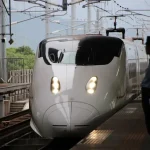
📷 Featured image by Qihang Fan on Unsplash.