On this page
- Why Japanese Greetings Go Deeper Than Words
- The Core Greetings Travelers Actually Need
- How the Bow Works — and When to Use It
- Time-Based Greetings: Morning, Afternoon, and Night
- Situational Greetings: Entering Shops, Leaving Restaurants, and More
- Formal vs. Casual: Reading the Room
- Greetings at Temples and Shrines
- 2026 Budget Reality: Language Learning Resources in JPY
- Frequently Asked Questions
Japan welcomed a record number of foreign visitors in 2025, and in 2026 the crowds are not slowing down. With overtourism measures in place at many major sites — including timed entry at some Kyoto shrines and crowd-control barriers around popular streets in Tokyo — the pressure on visitors to be culturally aware has never been higher. Japanese locals notice Respectful behavior immediately, and nothing signals genuine effort more clearly than a well-placed greeting. This goes well beyond saying “konnichiwa” to every person you pass. Japanese greetings carry layers of meaning, social hierarchy, physical gesture, and timing that most travel guides barely scratch the surface of.
Why Japanese Greetings Go Deeper Than Words
In Japan, language and social harmony — known as wa (和) — are inseparable. Every greeting you use signals not just friendliness, but your understanding of your relationship to the person you are addressing. Are they above you in status? Below? Are you meeting for the first time or parting for the last time today? Is this a formal business setting or a casual izakaya at 10pm? The greeting shifts each time.
This is not about perfection. No Japanese person expects a foreign traveler to speak flawless Japanese. What they do notice and genuinely appreciate is the attempt — the moment you show that you understand there is a system, and you are trying to respect it. That alone creates warmth in an interaction that a confident “hey!” never would.
Japanese also communicates respect through verb endings, honorific prefixes, and levels of politeness called keigo (敬語). As a traveler, you will not master keigo in two weeks. But knowing a handful of phrases at the correct politeness level for everyday public situations will carry you far. The phrases in this guide are pitched at teineigo — polite, everyday speech. Suitable for shops, hotels, temples, strangers, and most situations a traveler encounters.

The Core Greetings Travelers Actually Need
Before getting into context and nuance, here are the greetings you will use every single day. Pronunciation guides use simple syllable breaks. Japanese vowels are consistent: a = “ah”, i = “ee”, u = “oo”, e = “eh”, o = “oh”.
Konnichiwa (こんにちは) — Hello / Good afternoon
Pronounced: kon-nee-chee-wah
The greeting most travelers already know. Technically it is an afternoon greeting, appropriate roughly from 11am to early evening. Using it as a general “hello” at any time of day is not wrong in tourist contexts — locals are forgiving — but knowing the time-specific versions (covered below) shows real awareness.
Hajimemashite (はじめまして) — Nice to meet you
Pronounced: hah-jee-meh-mash-teh
Used when meeting someone for the first time. Pair it with your name and yoroshiku onegaishimasu (よろしくお願いします) — pronounced yo-ro-shee-koo oh-neh-guy-shee-mahss — which roughly means “I am in your care” or “please treat me well.” Together they form the standard self-introduction sequence used everywhere from business meetings to homestays.
Sumimasen (すみません) — Excuse me / Sorry
Pronounced: soo-mee-mah-sen
Possibly the single most useful word in this entire guide. Use it to get someone’s attention, to apologize for bumping into someone, to call a server over in a restaurant, or to ask someone to repeat themselves. It is polite without being overly formal, and Japanese people use it constantly.
Arigatou gozaimasu (ありがとうございます) — Thank you (polite)
Pronounced: ah-ree-gah-toh go-zah-ee-mahss
The full polite form. For casual situations between friends or people your own age, arigatou alone is fine. In shops, hotels, and any public-facing interaction, use the full version. The final u in gozaimasu is nearly silent in natural speech.
Onegaishimasu (お願いします) — Please / I request this
Pronounced: oh-neh-guy-shee-mahss
Said when ordering food, handing over a ticket, or requesting something. Point at what you want on a menu and say this — it works even without any other Japanese. It carries a respectful, humble quality that the blunt English “this one” does not.

Sayounara (さようなら) — Goodbye (formal)
Pronounced: sah-yoh-nah-rah
Interestingly, this formal farewell carries a sense of finality — as if you may not see the person again for a long time. For casual daily partings with hotel staff or shopkeepers you will see tomorrow, the softer ja ne (jah neh, casual) or mata ne (mah-tah neh, “see you again”) is more natural. Even a simple shitsurei shimasu (失礼します) — “I am being rude / excuse me for leaving” — pronounced shee-tsoo-ray shee-mahss — is used in many formal departures.
How the Bow Works — and When to Use It
Greetings in Japan are never just verbal. The bow (ojigi, お辞儀) is woven into every greeting, and understanding its basic logic will make your interactions feel natural rather than awkward.
The depth of the bow communicates the level of respect:
- A small nod (5–10 degrees): Casual acknowledgment — passing a shopkeeper, thanking someone for a small gesture. Completely appropriate for most tourist interactions.
- A 30-degree bow: Standard polite greeting when meeting someone or saying thank you sincerely. Use this when checking into a hotel, thanking a guide, or greeting someone for the first time.
- A 45-degree bow: Deep respect — greeting an elder, expressing serious gratitude, or apologizing genuinely. You will rarely need to initiate this as a tourist, but if someone bows this deeply to you, a 30-degree bow in return is respectful.

A few practical rules:
- Keep your hands at your sides (men) or lightly clasped in front (women) when bowing formally.
- Do not stare at the person while bowing. Eyes naturally go downward.
- If a Japanese person extends a hand for a handshake (more common in 2026 with international business travelers), a handshake plus a slight nod is perfectly fine.
- The bow-loop — where both parties keep bowing in response to each other — is real. A warm smile and a final small nod usually ends it gracefully.
Bowing while walking briskly past a shopkeeper who says irasshaimase (the welcome call — more on that below) is not expected of tourists. A simple nod or small return smile is enough.
Time-Based Greetings: Morning, Afternoon, and Night
Japanese has three distinct greetings based on the time of day, and using the right one at the right time is one of the easiest ways to impress people.
Ohayou gozaimasu (おはようございます) — Good morning
Pronounced: oh-hah-yoh go-zah-ee-mahss
Used until around 10–11am. The casual version, ohayou, is used among friends and family. At your hotel, with staff, or with anyone you do not know personally, use the full form. There is something genuinely pleasant about stepping out of a ryokan at 7am, the smell of tatami and green tea in the air, and greeting the innkeeper with a proper ohayou gozaimasu — the smile you get back is completely different from a generic nod.
Konnichiwa (こんにちは) — Good afternoon
Already covered above. Roughly 11am to around 5–6pm.
Konbanwa (こんばんは) — Good evening
Pronounced: kon-bahn-wah
Used from early evening onward. Hotels, restaurants, walking through a neighborhood after dark — konbanwa is the natural greeting. Note that the endings of konnichiwa and konbanwa are spelled with ha in hiragana but pronounced as wa — a quirk of historical Japanese spelling.

Situational Greetings: Entering Shops, Leaving Restaurants, and More
Beyond the basics, a handful of situational phrases will come up repeatedly in daily travel. These are the moments that catch most visitors off guard.
Irasshaimase (いらっしゃいませ) — Welcome (said by staff)
Pronounced: ee-rah-shy-mah-seh
You will hear this the moment you walk into almost any shop, restaurant, or establishment in Japan. It is a formal welcome said by staff — you do not need to respond to it. Many travelers panic and try to reply. A small nod is completely fine. The staff member is not starting a conversation; they are performing a ritual welcome.
Itadakimasu (いただきます) — Before eating
Pronounced: ee-tah-dah-kee-mahss
Said before a meal, with hands briefly pressed together. It translates roughly as “I humbly receive” and acknowledges the food, the people who prepared it, and the living things that became the meal. Saying this before eating — even at a convenience store counter — is noticed and appreciated.
Gochisousama deshita (ごちそうさまでした) — After eating
Pronounced: go-chee-soh-sah-mah desh-tah
Said when you finish eating, directed at the restaurant or whoever cooked. It means “that was a feast.” In casual settings, gochisousama alone is common. Saying this as you leave a restaurant — even a small ramen counter — visibly delights staff. It is one of the highest-impact phrases in this entire guide relative to its difficulty.
Ojamashimasu (お邪魔します) — When entering someone’s home
Pronounced: oh-jah-mah shee-mahss
Translates as “I am intruding” or “sorry for disturbing you.” Said when stepping inside a Japanese home or private space. If you are staying with a host family, joining a cooking class in a private kitchen, or visiting any private residence, this phrase is expected. Remove your shoes in the entryway (genkan) before or immediately after saying it.
Formal vs. Casual: Reading the Room
One thing that catches travelers off guard is that the same concept in Japanese can sound either perfectly respectful or surprisingly rude depending on the form used. The phrases in this guide are pitched at the safe middle ground — polite without being stiff. But understanding when to relax is useful too.

Situations where formal language is clearly expected:
- Hotel check-in and check-out
- Traditional ryokan interactions
- Meetings with tour guides or instructors
- Any interaction with an elder
- Temples and shrines (addressed in detail below)
Situations where casual language is acceptable — or even more natural:
- With children
- At very casual izakayas where the owner is young and the atmosphere is relaxed
- With someone who has explicitly switched to casual speech with you
- Among a group of travelers your own age who speak some Japanese
A practical rule: if in doubt, use the polite form. You will never cause offense by being too polite in Japan. The reverse is not always true.
One phrase to know at formal versus casual level: “Are you okay?” or “How are you?” In formal contexts, ogenki desu ka (お元気ですか) — pronounced oh-gen-kee dess-kah — is the correct form. You would typically only use this with someone you have met before. In Japan, unlike in some Western cultures, this question is not used as a casual filler greeting with strangers. Asking a shopkeeper ogenki desu ka can come across as unexpectedly personal.
Greetings at Temples and Shrines
Sacred sites in Japan operate by their own set of ritual behaviors, and greetings here are less verbal and more physical — though a few spoken phrases matter.
At Shinto shrines, the standard approach to the main hall (honden) follows a clear sequence: bow twice, clap twice, hold your hands together in silent prayer or wish, then bow once more. This is known as nirei nihakushu ichirei (二礼二拍手一礼). No specific phrase is required, but your intent — silent and sincere — is the greeting itself. Speaking aloud during prayer at shrines is generally done quietly if at all.

At Buddhist temples, the approach is quieter. There is no clapping. Hands are pressed together in gassho (合掌) — the prayer gesture — and a bow is offered. Some temples have specific rituals, such as lighting incense (senko) and wafting the smoke over yourself for health. Watch what other visitors do and follow.
When passing through a torii gate at a shrine, it is respectful to bow slightly before and after passing through. Walk to the side of the path rather than down the center — the center is considered the path of the kami (deity). Many visitors in 2026 still walk straight down the center of the path at major sites like Fushimi Inari. Moving to the side, bowing at the torii, is a visible act of respect that marks you as an informed visitor.
The phrase oharaishimashita (お祓いしました) — sometimes said quietly after receiving a purification — is not expected of tourists, but knowing it exists shows the depth of ritual language in sacred contexts.
2026 Budget Reality: Language Learning Resources in JPY
Learning greetings before you arrive is far more effective than trying to absorb them mid-trip. Here is what the main options cost in Japan in 2026.
Free and Low-Cost Options
- Duolingo Japanese (free / ¥3,200 per month for Plus): Good for hiragana and basic phrase recognition. Not deep enough for cultural context alone, but useful for pronunciation drills.
- NHK World “Easy Japanese” (free online): NHK’s free language course covers practical travel phrases with cultural explanations. Updated regularly and reliable for 2026 usage.
- YouTube channels (free): Channels focused on Japanese for travelers have exploded in quality since 2023. Look for channels that include native speaker recordings, not just text.

Mid-Range Options
- Printed phrasebook (¥800–¥1,500 at airport bookshops or Amazon Japan): Still useful for quick in-pocket reference. Kodansha and Lonely Planet editions are widely available.
- Pimsleur Japanese (approximately ¥5,500–¥11,000 per month): Audio-based, excellent for pronunciation. Covers formal greetings well.
Comfortable / Immersive Options
- Private Japanese tutor via iTalki (¥3,000–¥8,000 per hour): Even two 1-hour sessions focused purely on travel greetings and etiquette phrases will transform your confidence.
- In-Japan cultural experience classes (¥4,000–¥12,000 for a half-day session): Some cultural centers in Tokyo and Kyoto offer short language and etiquette workshops for tourists. Prices have increased roughly 15% since 2024 in line with general tourism pricing trends.
Frequently Asked Questions
Do I really need to learn Japanese greetings if I only speak English?
English signage and translation apps are widely available in major Japanese cities in 2026, so you will not be lost. But learning even five basic greetings changes how locals respond to you. It signals respect, reduces friction in daily interactions, and often results in warmer, more helpful service. The effort is small; the return is significant.
Is it rude to mispronounce Japanese words?
Not at all. Japanese people are generally patient and appreciative when foreigners attempt their language. The key is to try — a mispronounced arigatou gozaimasu with a sincere bow lands far better than silence or a finger-point. Consistent honest effort matters far more than perfect pronunciation.
Should I bow every time I greet someone in Japan?
In most tourist interactions, a small nod or head bow is appropriate and expected. A full deep bow is reserved for formal situations, expressions of deep gratitude, or serious apologies. Over-bowing enthusiastically at every shopkeeper can read as theatrical rather than respectful. A calm, natural nod is almost always the right call.
What is the correct way to greet staff at a hotel or ryokan?
A polite ohayou gozaimasu in the morning and konnichiwa or konbanwa at other times, paired with a 15–30 degree bow, is the standard. At a traditional ryokan especially, staff interact with considerable formality. Matching that register — even imperfectly — is appreciated. Adding yoroshiku onegaishimasu at check-in adds a genuinely warm, polite touch.
Have any Japanese greeting customs changed in 2026 compared to before the pandemic?
Post-pandemic Japan has become slightly more accepting of non-contact greetings, and handshakes with foreign visitors are more common in business contexts than they were in 2019. However, the bow remains the default. Mask-wearing during greetings has largely faded in tourist areas, though it persists in some formal settings and among older generations.
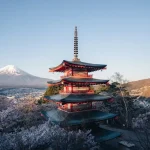
📷 Featured image by Damian Hutter on Unsplash.