On this page
- Why Kanazawa’s Chaya Districts Matter in 2026
- Higashi Chaya: Walking the Lattice Streets
- Kazuemachi: The Quiet River District
- Nishi Chaya: The Local Corner
- Seeing Geisha Without Being “That Tourist”
- Where to Eat and Drink
- Getting There and Around in 2026
- Day Trip or Overnight?
- 2026 Budget Reality
- Frequently Asked Questions
💰 Click here to see Japan Budget Breakdown
💰 Prices updated: October, 2026. Budget figures are estimates — always verify before travel.
Exchange Rate: $1 USD = ¥157.00
Daily Budget (per person)
Shoestring: ¥8,000 – ¥15,000 ($50.96 – $95.54)
Mid-range: ¥18,000 – ¥35,000 ($114.65 – $222.93)
Comfortable: ¥45,000 – ¥80,000 ($286.62 – $509.55)
Accommodation (per night)
Hostel/guesthouse: ¥2,500 – ¥6,000 ($15.92 – $38.22)
Mid-range hotel: ¥10,000 – ¥20,000 ($63.69 – $127.39)
Food (per meal)
Budget meal: ¥800.00 ($5.10)
Mid-range meal: ¥2,500.00 ($15.92)
Upscale meal: ¥20,000.00 ($127.39)
Transport
Single metro/bus trip: ¥250.00 ($1.59)
Monthly transport pass: ¥30,000.00 ($191.08)
Many visitors in 2026 arrive in Kanazawa expecting a quiet geisha town and find tour groups crowding the main lane of Higashi Chaya by 10 am. The districts are still worth the trip, but timing and route make the difference. Here is how to see all three of Kanazawa’s teahouse districts, and how to do it without the midday crush.
Why Kanazawa’s Chaya Districts Matter in 2026
Kanazawa has three surviving chaya districts: Higashi, Nishi and Kazuemachi. A chaya is a teahouse where geisha entertained guests with music, dance and conversation. The Kaga domain, which ruled the area, set these districts up in 1820 to keep entertainment in controlled zones. Because Kanazawa escaped wartime bombing, the wooden streets survived largely intact.
Kyoto’s Gion now struggles with overtourism and restrictions on private alleys. Kanazawa is calmer and more walkable, and the districts sit within about 15 minutes of each other. You can visit all three in a single day without a rushed schedule.
Higashi Chaya: Walking the Lattice Streets
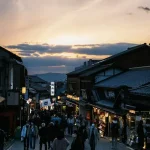
Higashi Chaya is the largest and best known district, a preserved Important Preservation District for Groups of Traditional Buildings. The main street is lined with dark wooden lattices, called kimusuko, and the stone paving is uneven underfoot. Chaya buildings have a distinctive two-storey design with a taller upper floor, built for hosting banquets.
Two buildings are worth paying to enter:
- Shima: an original teahouse from 1820 with the shamisen and drums still in the second-floor salon. Entry is about 500 yen.
- Kaikaro: a larger, more lavish teahouse with gold-leaf walls and red lacquered stairs. Entry is about 700 yen, with matcha and a sweet available in the tea room.
Kanazawa produces nearly all of Japan’s gold leaf, and you will see it everywhere. At Hakuza, a gold leaf shop on the main street, the soft-serve ice cream comes wrapped in a full sheet of gold, around 1,000 yen. It tastes of vanilla and nothing else, but the shimmer in the afternoon light is the point.
Kazuemachi: The Quiet River District
Kazuemachi sits along the Asano River, about ten minutes’ walk from Higashi Chaya across the Asanogawa Ohashi bridge. It is smaller, quieter and far less commercial. There are few souvenir shops. Instead you get willow trees, dark lattice fronts and a stone path running beside the water.
This is the best district for an evening stroll. As dusk falls, paper lanterns come on and the sound of a distant shamisen sometimes drifts from an upper window. Many of these buildings are still working teahouses that do not accept walk-in guests, so you view them from the street. That is part of why the area feels authentic.
Nishi Chaya: The Local Corner
Nishi Chaya is the smallest of the three and the one most visitors skip. It lies near the Sai River, a short walk from the Kenrokuen area. The streets are shorter, and the atmosphere is more residential. Locals walk dogs and carry shopping bags past old teahouses.
The Nishi Chaya Shiryokan is a small museum inside a former teahouse that explains the history of the district. Entry is cheap, usually around 100 yen. It is a good stop for understanding how the chaya system worked, and it is rarely busy.
Seeing Geisha Without Being “That Tourist”
Kanazawa has working geisha, but you are unlikely to see them by accident. They work in the evening, travel by taxi or on foot between private venues, and appear mostly in the early evening. Seeing one in the lane around 5:30 to 6:30 pm is possible, but treat it as luck, not a plan.
If you want a guaranteed experience, look at these options:
- Ozashiki banquets: private dinners with geisha performing dance and playing games with guests. Expect roughly 15,000 to 30,000 yen per person through a hotel or tour operator.
- Performance events: occasional public shows or demonstration programmes. Check the Kanazawa tourism office for 2026 schedules.
- Daytime teahouse visits: you can see the rooms without seeing geisha, which suits most budgets.
Basic manners: do not follow geisha, do not block their path, and always ask before taking a photograph. These are residential streets, so avoid photographing doorways and private homes.
Where to Eat and Drink
Kaga cuisine is the local style, built around seafood from the Sea of Japan and refined techniques from the old samurai court. Several places near the chaya districts are worth planning around:
- Omicho Market: about 15 minutes from Higashi Chaya by bus. Go for kaisendon, a rice bowl topped with raw seafood, usually 2,500 to 4,000 yen. Snow crab season runs from November to December.
- Jibuni: a duck and wheat-gluten stew, usually 1,800 to 2,500 yen at lunch.
- Kanazawa curry: thick, dark curry with a cutlet and shredded cabbage, around 1,000 to 1,400 yen. It is fast and heavy.
- Teahouse sweets: a matcha with a wagashi, around 900 to 1,200 yen, served in older buildings along the main lane.
Getting There and Around in 2026
The Hokuriku Shinkansen now runs to Tsuruga, an extension that opened in March 2024. From Tokyo, the Kagayaki reaches Kanazawa in about 2 hours 30 minutes, with a one-way fare of roughly 14,000 to 15,000 yen. From Kyoto and Osaka, the Thunderbird limited express no longer runs straight through. You now transfer at Tsuruga, and the trip takes around 2 hours 45 minutes to 3 hours. The planned Shinkansen link from Tsuruga to Osaka is still decades away, so plan around the transfer.
Once in Kanazawa, the Kanazawa Loop Bus and local Hokutetsu buses cost 200 yen per ride, and a one-day pass runs around 600 yen. Buses from the station to Higashi Chaya take about 15 minutes. Taxis cost around 1,200 to 1,500 yen. Walking between districts is practical, and Kazuemachi and Higashi Chaya are a 10 minute stroll apart.
Day Trip or Overnight?
From Tokyo, a day trip is possible but tight. You would spend five hours on trains and have about five hours in the city. That is enough for Higashi Chaya, Omicho Market and Kenrokuen, but not for the quiet evening atmosphere that gives the districts their charm.
I recommend one night. Staying overnight lets you see Higashi Chaya at dawn, visit Kazuemachi at dusk, and eat a proper Kaga dinner. If you only have a day, start with the morning Shinkansen, do Higashi Chaya first, and take the last evening train out around 8 pm.
2026 Budget Reality
Typical costs for one full day focused on the chaya districts, excluding accommodation:
- Budget (about 4,000 to 6,000 yen): bus pass, entry to Shima, curry lunch, free walking in all three districts, a convenience store dinner.
- Mid-range (about 8,000 to 12,000 yen): entry to Shima and Kaikaro, matcha and sweets, gold leaf ice cream, kaisendon lunch, a sit-down dinner of Kaga cuisine.
- Comfortable (about 25,000 to 45,000 yen): all of the above plus an ozashiki evening with geisha, or a high-end kaiseki dinner.
Business hotels near Kanazawa Station run from about 8,000 to 14,000 yen per night. Traditional ryokan close to the districts start around 20,000 yen per person with meals. Demand rises during autumn foliage and the Golden Week holidays, so book early.
Frequently Asked Questions
Can you see real geisha in Higashi Chaya?
Yes, but sightings are rare and unplanned. Geisha work mostly in the evening, travelling between private teahouses closed to the public. Your best chances are around 5:30 to 6:30 pm near Kazuemachi or Higashi Chaya. For a guaranteed encounter, book an ozashiki banquet or an organised evening experience.
How long do you need in Higashi Chaya?
Plan 1.5 to 2 hours for Higashi Chaya itself. That covers walking the main street, visiting Shima and Kaikaro, and stopping for tea or gold leaf ice cream. Add another 1 to 2 hours if you also want to see Kazuemachi and the riverside path, which sit about ten minutes away.
Is Higashi Chaya free to enter?
Walking the streets is free and open at all times, though most shops close around 5 pm. Individual teahouses charge entry. Shima costs about 500 yen and Kaikaro about 700 yen. If you add matcha and sweets inside, expect to pay roughly 1,000 yen more.
Which Kanazawa chaya district is best?
Higashi Chaya is the largest and best for first-time visitors, with open teahouses and shops. Kazuemachi is more atmospheric and quiet, ideal for evening walks. Nishi Chaya is the smallest and most local. If you only have time for one, choose Higashi Chaya, and add Kazuemachi if you can.
Can I photograph geisha in Kanazawa?
Ask first, and accept a no. Geisha are working professionals, not street performers. Never block their path, follow them, or use flash. Residents also live in these districts, so avoid photographing doorways and private homes. The streetscape itself is free to photograph and beautiful enough on its own.
📷 Featured image by Cem Ersozlu on Unsplash.