On this page
- What Gion Actually Is
- Gion’s Neighborhoods Within a Neighborhood
- The Unmissable Sights and Walks
- Where to Eat and Drink in Gion
- Spotting Maiko and Geiko in 2026
- Gion at Night
- Shopping in Gion
- Getting To and Around Gion
- Best Time to Visit Gion
- Where to Stay Near Gion
- Practical Tips for Gion in 2026
- Budget Breakdown: Daily Costs in Gion
- Frequently Asked Questions
💰 Click here to see Japan Budget Breakdown
💰 Prices updated: October, 2026. Budget figures are estimates — always verify before travel.
Exchange Rate: $1 USD = ¥157.00
Daily Budget (per person)
Shoestring: ¥8,000 – ¥15,000 ($50.96 – $95.54)
Mid-range: ¥18,000 – ¥35,000 ($114.65 – $222.93)
Comfortable: ¥45,000 – ¥80,000 ($286.62 – $509.55)
Accommodation (per night)
Hostel/guesthouse: ¥2,500 – ¥6,000 ($15.92 – $38.22)
Mid-range hotel: ¥10,000 – ¥20,000 ($63.69 – $127.39)
Food (per meal)
Budget meal: ¥800.00 ($5.10)
Mid-range meal: ¥2,500.00 ($15.92)
Upscale meal: ¥20,000.00 ($127.39)
Transport
Single metro/bus trip: ¥250.00 ($1.59)
Monthly transport pass: ¥30,000.00 ($191.08)
Gion is the neighborhood that appears on more Kyoto Travel boards than anywhere else — and in 2026, it’s also the most regulated. New photography restrictions introduced in late 2024 and expanded in 2025 mean that visiting without doing your homework first can result in actual fines. Beyond the rules, the district has also quietly become one of Kyoto’s most compelling nightlife areas, something that gets lost in the flood of geisha-focused content. This guide covers all of it: the walks, the food, the bars, the shopping, and the practical reality of being here in 2026.
What Gion Actually Is
Gion sits on the eastern bank of the Kamo River, pressing up against the forested hills of Higashiyama. It is Kyoto’s most famous hanamachi — a flower town, the traditional term for a geisha district. But calling it only that undersells it dramatically. Gion is also a dense residential neighbourhood, a serious food destination, a bar district that runs late into the night, and a warren of machiya townhouses that have stood for centuries.
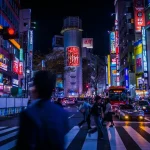
The atmosphere changes by the hour. At 7am, the stone-paved lanes of Ishibei-koji are almost entirely silent, the smell of damp moss mixing with cedar from old wooden facades. By midday, the tourist pressure is real — Hanamikoji fills fast. But by 9pm, a different Gion emerges: lanterns glow amber above iron-latticed teahouse windows, and the narrow streets around Gion Shinbashi belong almost entirely to people who actually live and work here.
In 2026, Gion has leaned into its identity as a serious cultural precinct rather than just a backdrop for photographs. That shift has come with friction, but also with genuine rewards for travelers who arrive prepared.
Gion’s Neighborhoods Within a Neighborhood
Gion is not one homogeneous district. It divides into distinct pockets, each with its own character.
Hanamikoji
This is the iconic main street — the one with the preserved ochaya (teahouses) running south from Shijo-dori. Hanamikoji is where the photogenic Gion imagery comes from, and where the crowds concentrate. The southern half is the most preserved and the most patrolled. If you want the classic lantern-lit lane experience, this is it — come early morning or after 8pm to actually enjoy it.
Gion Shinbashi (Shirakawa)
North of Shijo-dori along the Shirakawa canal, this area is smaller, quieter, and arguably more beautiful than Hanamikoji. Weeping willows trail into the water, stone bridges connect the banks, and the machiya here have been maintained with obsessive care. It’s listed as an Important Preservation District for Groups of Historic Buildings, which gives it a layer of legal protection Hanamikoji doesn’t fully have. This is the area to walk after dinner.

Miyagawacho
South of Gion proper, running parallel to the Kamo River between Shijo and Gojo streets, Miyagawacho is a working hanamachi that most tourists walk straight past. It has its own geiko and maiko community, its own ochaya, and a cluster of excellent restaurants and small bars that cater far more to locals than to tour groups. Prices here tend to be lower, the atmosphere less performative, and the food considerably better.
The Unmissable Sights and Walks
Gion’s best experiences are pedestrian ones. These are the specific routes and spots worth your time.
Ishibei-koji Lane
This private stone-paved alley running south off Furumonzen-dori is consistently described as the most beautiful lane in Kyoto — which means it is also frequently overlooked because people assume it’s inaccessible. It isn’t. It’s a public path. The inns and restaurants that line it are high-end, but walking through costs nothing. Go before 8am.
Yasaka Shrine
At the eastern end of Shijo-dori, Yasaka Shrine anchors Gion both geographically and culturally. The main hall is freely accessible at all hours. The lantern-lit approach from Shijo at dusk is one of Kyoto’s most atmospheric short walks — the smell of incense drifts out from the hall, and the stone lanterns along the path cast long shadows across the gravel.
Ninenzaka and Sannenzaka
Technically just south of Gion in the Higashiyama district, these two connected stone-paved slopes lead up toward Kiyomizudera and are best visited as an extension of a Gion walk. Come before 9am and the slopes are quiet enough to hear your own footsteps. By 10am, they’re at capacity.
Chion-in and Shoren-in
Both temples are walkable from Gion’s northern edge. Chion-in’s sanmon gate is the largest wooden gate in Japan. Shoren-in’s camphor trees — some over 800 years old — create a canopy over the entrance path that is genuinely arresting on a rainy afternoon, branches dripping, the air thick and green.
Where to Eat and Drink in Gion
Gion is an exceptional eating district, but the best options are not always the most visible ones.
Nishiki Market (10 minutes on foot)
Kyoto’s covered market on Nishiki-koji runs east to west through central Kyoto and is easily combined with a Gion visit. It’s dense with vendors selling pickled vegetables, fresh tofu, grilled skewers, and tamagoyaki (rolled omelette). Arrive before 11am to move freely. Many stalls close by 5pm.

Eating in Miyagawacho
The side streets of Miyagawacho hold some of the best-value restaurants in this part of Kyoto. Look for small counter-seat places serving obanzai — Kyoto’s style of small vegetable and tofu dishes served in a rotating set. Prices at these spots tend to run ¥1,500–¥3,000 for a full set meal, well below what you’d pay on Hanamikoji itself.
Pontocho Alley
On the western bank of the Kamo River, a short walk from Gion across Shijo bridge, Pontocho is a single narrow alley running north to south, packed with restaurants from casual yakitori counters to kaiseki-level dining rooms. In summer, restaurants extend wooden decks (yuka) over the river — eating here with the Kamo River below and Higashiyama in the distance is one of Kyoto’s great sensory experiences. Budget at least ¥4,000–¥8,000 per person for a mid-range riverside dinner.
Gion Fukuzumi and Surrounding Izakayas
The blocks immediately around Gion-Shijo Station hold a cluster of standing bars and izakayas that open from around 5pm. These are working-person spots — small, loud, frequently cash-only, and very good. A beer and a few skewers will cost ¥800–¥1,500.
Spotting Maiko and Geiko in 2026
Let’s be direct: seeing a maiko or geiko on the streets of Gion has become significantly harder than it was five years ago, and the etiquette rules are now enforced with teeth.
Since late 2024, Hanamikoji’s southern section has had designated photography-free zones marked with clear signage in Japanese, English, Chinese, and Korean. Photographing geiko or maiko on the street without consent is prohibited, and in 2025 the Gion district association began issuing spot fines of ¥10,000 for violations. This is not performative — enforcement teams operate during peak hours, particularly between 5pm and 9pm.
Geiko and maiko are most likely to be seen in transit between 5:30pm and 7pm, moving between teahouses on foot. They do not stop for photos, they do not pose, and calling out to them or blocking their path is considered seriously disrespectful. Miyagawacho has similar but slightly less enforced norms — the same basic etiquette applies.

The most reliable way to see a maiko performance in 2026 is to book a legitimate cultural experience: several okiya (geisha houses) and cultural centers offer ticketed ozashiki-style performances, typically ¥15,000–¥25,000 per person. The Gion Hatanaka inn runs some of the most respected programs. Book 2–3 months ahead for peak season slots.
Gion at Night
After 8pm, Gion transforms into something most daytime visitors never see. The tour groups are gone. The streets that were impassable at noon are quiet enough to hear the clack of wooden geta sandals on stone.
The Shirakawa canal area in particular becomes exceptional at night — lanterns reflect in the still water, the willow branches are lit from below, and the teahouses glow warmly from within. Walking this loop after dinner, from the Tatsumi Bridge north along the canal and back around through Shinbashi-dori, takes about 25 minutes and is one of Kyoto’s finest free experiences.
For actual nightlife, Gion’s bar options divide into two registers. The high-end whisky and cocktail bars — several of which require reservations and have strict dress codes — are concentrated in the blocks between Hanamikoji and the Shirakawa. These are serious, quiet, dimly lit spaces where conversation is the point and a drink costs ¥2,000–¥4,000.
The louder, more accessible drinking scene runs along the streets immediately south of Shijo-dori and into Pontocho. This is where you’ll find craft beer taps, casual cocktail bars, and the occasional live music venue running until 1am or 2am on weekends. Gion is not a clubbing district — it closes relatively early by Tokyo standards — but the nightlife that exists here is distinctly Kyoto: refined, intentional, and very good at what it does.
Shopping in Gion
The commercial character of Gion leans heavily toward craft and quality. Mass-market souvenir shops exist but are easy to avoid.
Furumonzen-dori and Shinmonzen-dori, running east from the Kamo River, are Kyoto’s antique streets. Dealers sell everything from Meiji-era woodblock prints to tansu chests to lacquerware. Prices are real — you can spend ¥3,000 on a small ceramic piece or ¥300,000 on a signed scroll — and bargaining is not the norm, but polite conversation often is.
For contemporary crafts, the cluster of small shops along Ninen-zaka stocks Kyoto-made textiles, indigo-dyed goods, and ceramic work from local artisans. Prices are honest and the work is genuinely local.
Specific things worth seeking out in Gion’s shops: kyo-yuzen fabric items, kyo-nishiki woven textiles, Kyoto-style pickles (tsukemono) packed for travel, and hand-painted folding fans. Several shops on the Hanamikoji approach stock these without the markup of the main tourist strips.
Getting To and Around Gion
Gion sits at a convenient intersection of Kyoto’s public transport network.
- By subway and Keihan train: Gion-Shijo Station on the Keihan Main Line drops you directly at the western edge of the district. From Kyoto Station, take the subway Karasuma Line north to Karasuma-Oike, transfer to the Tozai Line east, and alight at Higashiyama Station — a 10-minute walk into Gion from the north.
- By bus: Kyoto City Bus routes 100 and 206 stop near Gion. In 2026, the city’s IC card tap system for buses is fully integrated with both Suica and ICOCA — load either card before you arrive. Single bus rides cost ¥230.
- On foot from central Kyoto: From Kawaramachi (central shopping area), Gion is a 10-minute walk east across the Shijo Bridge. From Kyoto Station, it’s about 25 minutes on foot — manageable but most people use transport.
- By taxi: MK Taxi and Kyoto Taxi both operate app-based booking in English. A taxi from Kyoto Station to Gion runs approximately ¥1,200–¥1,600 depending on traffic.
- Cycling: Gion’s main sightseeing lanes prohibit cycling, and this is enforced. Lock your bike at designated racks on Shijo-dori and walk in.
The Japan Rail Pass does not cover the Keihan Line. If you’re using a JR Pass (note: 2026 pass prices remain elevated following the 2023 restructuring), the most practical JR-adjacent approach is a bus from Kyoto Station.
Best Time to Visit Gion
Gion operates year-round and has a distinct personality in every season — but timing matters significantly for both crowds and experience quality.
Gion Matsuri (July)
Japan’s most famous festival transforms the surrounding streets throughout July, with the main Yamaboko Junko processions on July 17 and 24. The evenings of July 14–16 and 21–23 bring Yoiyama — the pre-festival street parties where vendor stalls line Shijo-dori and the old town fills with yukata-clad locals. This is extraordinary to experience and absolutely mobbed. Book accommodation in Gion for Gion Matsuri at least four months in advance.
Autumn (mid-October to late November)
Kyoto’s peak season for a reason: the maples in Maruyama Park and along the Higashiyama slopes turn rust and amber. Gion looks its most cinematic. Crowds are heavy but more distributed than sakura season. Shoulder weeks in mid-October can still offer reasonable breathing room.
Spring (late March to mid-April)
Sakura season brings Kyoto to capacity. Maruyama Park’s famous weeping cherry tree draws enormous crowds. The walks between Gion and Kiyomizudera are genuinely beautiful but heavily trafficked. If you’re here for sakura, go to Maruyama Park at night when the tree is lit — the pink blossoms glowing against a black sky, the air still cool, the crowd thinned to those who know to come late.
Winter (December to February)
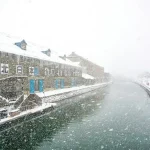
The least-visited season, and arguably the most atmospheric for Gion specifically. Cold air, minimal crowds, the occasional dusting of snow on stone lanterns and temple roofs. Accommodation prices drop noticeably. The Shirakawa canal in light snow is one of Kyoto’s genuinely extraordinary sights.
Where to Stay Near Gion
Accommodation in and around Gion runs the full range, though options fill quickly in peak seasons.
Budget (¥4,000–¥9,000/night)
Guesthouse Soi and similar small guesthouses in the Miyagawacho and Gojo area offer clean, basic accommodation with the advantage of local neighbourhood access. Dormitory beds in well-reviewed Higashiyama hostels run ¥4,000–¥6,000. Private rooms in budget guesthouses average ¥7,000–¥9,000.
Mid-Range (¥12,000–¥30,000/night)
Machiya (traditional townhouse) rentals have become an increasingly popular option, offered through licensed operators in the Gion and Miyagawacho area. A private machiya sleeping 2–4 people runs ¥18,000–¥35,000 per night in mid-range condition. Several small boutique hotels have also opened in the Higashiyama area in 2024–2025, offering Western-style comfort with Japanese design sensibility.
Luxury (¥50,000+/night)
The ryokan options near Gion — including properties on Ishibei-koji and within Higashiyama — represent some of the finest traditional accommodation in Japan. Expect kaiseki dinner, private baths, tatami rooms, and staff who anticipate needs before they’re voiced. Gion Hatanaka and Tawaraya (a short distance west) are benchmark properties at this tier. Book 3–6 months ahead for autumn and sakura season.
Practical Tips for Gion in 2026
- Photography fines are real: ¥10,000 spot fines apply in restricted zones on Hanamikoji. The zones are clearly marked. Don’t test them.
- Private alleys: Several lanes in Gion are technically private property. Signs will tell you. Ishibei-koji is public; some shorter lanes branching off it are not.
- Noise: Gion is a residential area. Talking loudly, playing music, and gathering in large groups on residential streets is actively discouraged and increasingly signposted.
- Cash: Many of the best small restaurants and bars in Gion remain cash-only in 2026. Carry at least ¥10,000 in notes when you go out in the evening.
- Water: Kyoto tap water is safe to drink. Convenience stores (7-Eleven and Lawson both have branches near Gion-Shijo Station) sell bottles from ¥100.
- Language: English is workable at tourist-facing businesses. At local izakayas and smaller restaurants, a translation app (Google Translate’s camera function handles menus well in 2026) is genuinely useful.
- Tipping: Not a practice in Japan. Do not tip. It creates confusion and mild embarrassment for the recipient.
Budget Breakdown: Daily Costs in Gion
These figures cover a full day based in and around Gion, including accommodation, food, transport, and entry fees where applicable.
Budget Traveler (¥8,000–¥14,000/day)
- Accommodation: ¥5,000–¥7,000 (hostel or basic guesthouse)
- Food: ¥2,000–¥3,500 (Nishiki Market snacks, obanzai set at local spot, convenience store supplementing)
- Transport: ¥500–¥700 (bus day pass ¥700 as of 2026)
- Sightseeing: ¥0–¥1,500 (most Gion walks and Yasaka Shrine are free; Chion-in main hall ¥500)
Mid-Range Traveler (¥20,000–¥40,000/day)
- Accommodation: ¥15,000–¥25,000 (machiya or boutique hotel)
- Food: ¥5,000–¥10,000 (lunch at a quality restaurant, Pontocho dinner)
- Transport: ¥700–¥1,500 (bus pass plus occasional taxi)
- Extras: ¥2,000–¥5,000 (craft shopping, bar drinks, entry fees)
Comfortable/Luxury Traveler (¥80,000–¥200,000+/day)
- Accommodation: ¥50,000–¥150,000 (premium ryokan with kaiseki dinner included)
- Food beyond ryokan: ¥10,000–¥30,000 (high-end kaiseki lunch, whisky bar)
- Cultural experience: ¥15,000–¥25,000 (ozashiki maiko performance)
- Transport and miscellaneous: ¥3,000–¥8,000
Frequently Asked Questions
Is Gion safe to visit at night?
Yes. Gion is extremely safe by any international measure — Kyoto’s crime rate is very low. The main practical concern at night is noise etiquette rather than personal safety. Stick to well-lit streets if you’re unfamiliar with the area and be aware that some narrower residential lanes are not public pathways.
Can tourists enter the teahouses on Hanamikoji?
Not without an introduction in the traditional sense. The ochaya on Hanamikoji operate on a referral system and do not accept walk-in guests. However, several cultural organizations and licensed tour operators offer arranged ozashiki experiences that provide legitimate access. These require advance booking and cost ¥15,000–¥25,000 per person in 2026.
How long do you need to spend in Gion?
A half-day covers the main sights. A full day allows you to explore Miyagawacho, walk the Ninenzaka–Sannenzaka slope, visit a temple or two, eat well, and return after dark for the evening atmosphere — which is genuinely different from the daytime experience. Two days with Gion as a base is ideal for connecting it to Higashiyama and Fushimi Inari.
What are the photography rules in Gion in 2026?
Designated no-photography zones exist on the southern stretch of Hanamikoji-dori and several adjoining streets, marked by clear multilingual signage. Photographing geiko or maiko without consent anywhere in Gion is prohibited and subject to a ¥10,000 spot fine. General street photography in non-restricted areas remains permitted.
Is Gion walkable from Kyoto Station?
It is walkable — approximately 25–30 minutes on foot heading northeast. Most travelers prefer the bus (routes 100 or 206 from Kyoto Station, ¥230) or the subway-Tozai Line combination to Higashiyama Station. Walking back to the station after a long day of sightseeing is tiring; transit is the practical choice for the return leg.
📷 Featured image by Hamza ERBAY on Unsplash.