On this page
- Walking Nara in 2026: What’s Changed and Why It Matters
- Before You Start: Preparation That Makes a Difference
- The Nara Park Loop: Where Every Walk Begins
- Todai-ji and the Temple Quarter: Walking the Grand Approach
- Kasuga Taisha and the Ancient Forest: Nara’s Most Atmospheric Walk
- Naramachi: The Merchant Quarter Where the Walk Gets Personal
- The Southern Circuit: Shin-Yakushi-ji and the Quieter Nara
- Walk Logistics: Distances, Timing, and Practical Details
- Budget Breakdown: What a Walking Day in Nara Costs
- Frequently Asked Questions
💰 Click here to see Japan Budget Breakdown
💰 Prices updated: October, 2026. Budget figures are estimates — always verify before travel.
Exchange Rate: $1 USD = ¥157.00
Daily Budget (per person)
Shoestring: ¥8,000 – ¥15,000 ($50.96 – $95.54)
Mid-range: ¥18,000 – ¥35,000 ($114.65 – $222.93)
Comfortable: ¥45,000 – ¥80,000 ($286.62 – $509.55)
Accommodation (per night)
Hostel/guesthouse: ¥2,500 – ¥6,000 ($15.92 – $38.22)
Mid-range hotel: ¥10,000 – ¥20,000 ($63.69 – $127.39)
Food (per meal)
Budget meal: ¥800.00 ($5.10)
Mid-range meal: ¥2,500.00 ($15.92)
Upscale meal: ¥20,000.00 ($127.39)
Transport
Single metro/bus trip: ¥250.00 ($1.59)
Monthly transport pass: ¥30,000.00 ($191.08)
Walking Nara in 2026: What’s Changed and Why It Matters
Nara has always rewarded slow Travel, but 2026 has made walking the city not just pleasant — it’s now practically essential. Following the introduction of Nara Prefecture’s new crowd management zones in late 2025, several key paths through Nara Park now have timed pedestrian flow recommendations during peak hours (9:00–14:00), and the area immediately in front of Todai-ji’s Great South Gate has a designated one-way foot traffic system on weekends and public holidays. If you showed up by tour bus in 2024 and felt swept along by the crowd, the new layout actually works in a solo walker’s favor. The pace is more deliberate, the sightlines are clearer, and the deer — all 1,200-plus of them — have not gotten any less chaotic. This guide maps a complete walking day in Nara, from the moment you step off the train to the last lantern-lit lane in Naramachi at dusk.
Before You Start: Preparation That Makes a Difference
Nara’s core walking circuit covers roughly 8–10 kilometres depending on which detours you take. That’s not a punishing distance, but the combination of stone paths, temple steps, forest trails, and Naramachi’s slightly uneven paving stones means footwear matters more than it does in a city like Tokyo. Wear shoes you’ve already broken in. Sandals are fine for the flat park sections but will create problems on the forest paths behind Kasuga Taisha.
- IC Card: Load your Suica or Pasmo with at least ¥3,000 for the day. Most Nara temple entry gates now accept IC cards directly at the turnstile, which was rolled out progressively in 2025–2026 and removes the need to handle cash at every gate.
- Deer crackers (shika senbei): Sold from vendors throughout the park for ¥200 per bundle. Hold them flat, distribute quickly, and never lift them above your head — that signals to deer within a 20-metre radius that food is available.
- Water: Tap water in Nara is safe to drink. Refill stations were added to three park locations in 2025: near Sarusawa Pond, at the Nara Park Information Center, and beside Nigatsu-do on Todai-ji’s eastern hill.
- Entry fees: Budget for Todai-ji Great Buddha Hall (¥800 adults in 2026), Kasuga Taisha Inner Sanctuary (¥500), and Nara National Museum if you plan to visit (¥700 general admission, though special exhibitions cost more).
- Timing: Most sites open at 7:30 or 8:00 and close between 17:00 and 17:30. Nigatsu-do is accessible until later and is the recommended sunset spot.

The Nara Park Loop: Where Every Walk Begins
Start at Kintetsu Nara Station, which puts you closer to the park than JR Nara Station by about 700 metres. Walk east along Noborioji Street — the broad, gently sloping road lined with souvenir shops and a handful of decent coffee spots — and within eight minutes you’ll feel the city dissolve into open green space as Nara Park announces itself.
The first thing most people notice is the smell: a faint but persistent mix of grass, deer, and something vaguely wild that you don’t get in Japan’s other temple cities. By 8:00 on a clear morning, the park’s open meadow catches low amber light across the grass while deer stand in loose groups, some still lying down. It’s quieter than you’d expect for one of Japan’s most visited sites.
Walk through the park’s central meadow area toward Sarusawa Pond — a small, perfectly composed pond whose surface reflects the pagoda of Kofuku-ji on clear mornings. This is one of the most photographed views in Nara and one of the least crowded before 9:00. Follow the path north from Sarusawa toward Kofuku-ji’s five-story pagoda, which you can view from the outside. The temple complex is free to walk through; the Kofuku-ji National Treasure Museum (¥900) is worth the entry if Fujiwara-era Buddhist sculpture interests you, but it’s not essential on a walking-focused day.
Continue east on the broad pedestrian path that leads toward the Nara National Museum — you’ll pass it on your left. Keep going. The path widens, deer density increases, and ahead you’ll see the first of many stone lanterns that line the route toward Todai-ji. This is the spine of the classic loop, and it’s as good as everyone says.
Todai-ji and the Temple Quarter: Walking the Grand Approach
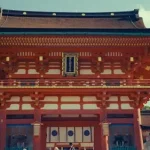
The approach to Todai-ji’s Great South Gate (Nandaimon) is one of those rare pieces of Japanese architecture that genuinely stops people mid-stride. The gate is 25 metres tall, rebuilt in 1199, and flanked by two wooden guardian figures — the Nio statues — that stand over 8 metres each. Even if you’ve seen photographs, the scale doesn’t register until you’re standing underneath the gate looking up at the bracketing system above you.

Pass through the gate and walk the straight stone path toward the Great Buddha Hall (Daibutsuden). The entry fee (¥800) gets you into the largest wooden building in the world — a fact that still feels improbable once you’re inside. The Great Buddha itself, Birushana Butsu, sits at 15 metres and has the quality of making you recalibrate your sense of scale. After you exit the main hall, follow the path east and uphill.
Most visitors turn back at this point. Don’t. The path continuing east climbs through cedar-shaded steps to Nigatsu-do Hall, a wooden structure perched on a hillside with a broad veranda overlooking the entire Nara basin. In the late afternoon, the city and its distant mountains catch the light in a way that’s hard to photograph well but impossible to forget. This is the best unobstructed view in Nara, and it’s free.
Beside Nigatsu-do, the smaller Sangatsu-do (Hokke-do) is often skipped and often worth the ¥600 entry for its dense collection of eighth-century dry-lacquer statues, including the towering Fukukensaku Kannon with its distinctive third eye.
Kasuga Taisha and the Ancient Forest: Nara’s Most Atmospheric Walk
From Nigatsu-do, descend and follow the signs southeast toward Kasuga Taisha. This walk takes you through the outer section of Kasugayama Primeval Forest — a patch of old-growth woodland that has been protected from logging and development since the eighth century because it is considered sacred ground. The trees are enormous by Japanese standards, the undergrowth is thick, and the path narrows to a lane flanked by hundreds of stone lanterns covered in moss. On a slightly overcast day, the diffused green light filtering through the canopy gives this stretch an atmosphere unlike anywhere else in Japan.
The stone lanterns — more than 2,000 of them — are donated by worshippers and line every approach path to the shrine. They are lit twice a year during the Mantoro Lantern Festival (February and mid-August), when all 3,000 lanterns and bronze lanterns inside the shrine are illuminated simultaneously. If your 2026 trip overlaps with either date, this is worth planning around.
Kasuga Taisha’s outer precincts are free to enter. The Inner Sanctuary (Nainaiden) entry (¥500) takes you into the corridor of hanging bronze lanterns surrounding the main shrine buildings, their lacquered vermilion surface catching what light filters through. The combination of the dim lantern-lit interior and the smell of cedar and incense makes this one of the most sensory-rich spaces on the entire Nara walking circuit.
After the shrine, backtrack slightly and take the forest path west, which loops back toward the park along a quieter trail with significantly fewer people than the main approach roads.
Naramachi: The Merchant Quarter Where the Walk Gets Personal
South of Sarusawa Pond, the tourist infrastructure of Nara Park gives way to Naramachi — a grid of preserved Edo and Meiji-era machiya townhouses that operated as merchant homes and warehouses during Nara’s commercial peak. Walking here feels genuinely different from the temple circuit. The streets are narrow, some barely wide enough for two people, and the buildings are compact with characteristic latticed facades and white-plastered warehouse walls.
The area has no single main attraction — the experience is cumulative. You’ll pass small family-run galleries, a handful of traditional craft workshops where you can watch Japanese inkstone (suzuri) being made, and several atmospheric cafes occupying converted machiya interiors. Koshi-no-Ie, a free-entry restored merchant townhouse on Ganrin-in-cho street, shows the full depth of a traditional Nara machiya — from the narrow front entrance to the surprisingly deep rear garden.
For food and snacks in Naramachi:
- Naramachi Shotengai — the covered shopping street running through the quarter has several lunch spots serving kakinoha-zushi (persimmon leaf-wrapped sushi), Nara’s most distinctive local food. Look for small counter-seat shops rather than the tourist-facing ones with English banners.
- Mellow Café (near Gango-ji Temple) — a machiya conversion with good coffee and a courtyard that’s usually quiet on weekday mornings.
- Gango-ji Temple — directly inside Naramachi, this is one of Japan’s oldest Buddhist temples and has a small but beautifully maintained gravel courtyard. Entry ¥400.
The Southern Circuit: Shin-Yakushi-ji and the Quieter Nara
Most walking tours of Nara end in Naramachi. If you have energy remaining — and the afternoon light is good — the southern extension toward Shin-Yakushi-ji Temple rewards walkers willing to go slightly off the standard route. The temple sits about 1.2 kilometres southeast of Kasuga Taisha in a residential neighborhood that most visitors never reach.
Shin-Yakushi-ji was built in 747 CE and retains its original main hall — one of the few Nara-period structures in the city still standing in its original location. The main image, Yakushi Nyorai, is flanked by twelve clay guardian figures (Juni Shinsho) that are among the finest eighth-century clay sculptures in Japan. Entry is ¥600.

The walk to Shin-Yakushi-ji takes you through quiet residential streets where locals go about ordinary life — a useful counterweight to the more theatrical grandeur of Todai-ji and Kasuga Taisha. There are a couple of small cafes and a bakery on the approach street that do brisk business with the neighborhood crowd rather than tourists.
From Shin-Yakushi-ji, you can complete the circuit back toward Kintetsu Nara Station via the southern edge of the park, passing Ukimi-do Pavilion on Sagi-ike Pond — a small hexagonal structure on the water that appears on nearly every Nara Prefecture tourism poster and is genuinely pretty in person, especially in the late afternoon when the reflections settle.
Walk Logistics: Distances, Timing, and Practical Details
Below is a realistic time estimate for the full walking circuit described in this guide:
- Kintetsu Nara Station → Sarusawa Pond → Kofuku-ji: 15 minutes walking, 20 minutes exploring
- Kofuku-ji → Todai-ji Great South Gate → Daibutsuden: 20 minutes walking, 45 minutes inside
- Daibutsuden → Nigatsu-do → Sangatsu-do: 15 minutes walking, 30 minutes
- Nigatsu-do → Kasuga Taisha (via forest path): 25 minutes walking, 40 minutes at the shrine
- Kasuga Taisha → Naramachi (via park loop): 20 minutes walking, 45–90 minutes in Naramachi
- Optional: Naramachi → Shin-Yakushi-ji → Ukimi-do → station: 45 minutes walking, 30 minutes at temple
Total: approximately 5–7 hours for the full circuit, depending on pace and how long you spend at each site.
Public toilets are available at: Sarusawa Pond (beside the tourist information office), the Nara National Museum entrance, Todai-ji near Nandaimon, Kasuga Taisha outer precincts, and in Naramachi near Gango-ji. All have been upgraded to Western-style facilities as part of Nara’s 2025 tourism infrastructure improvement program.
In summer (June–September), temperatures in Nara regularly reach 34–36°C by midday. Start your walk no later than 7:30 if you’re visiting in July or August, and plan to rest indoors between 12:00 and 14:00. Winter walks (December–February) are cold (2–7°C) but clear, and the park crowds thin dramatically — some of the best walking conditions of the year.
Budget Breakdown: What a Walking Day in Nara Costs
These are 2026 prices reflecting current entry fees and typical spending patterns.
Budget Tier (¥3,000–¥5,000 per person)
- Skip museum interiors, focus on free temple grounds and Naramachi
- Lunch from Naramachi Shotengai: ¥800–¥1,200
- Shika senbei (deer crackers): ¥200 x2
- Train from Kyoto (Kintetsu Limited Express): ¥1,130 one way
- One paid entry (e.g., Todai-ji only): ¥800
- Snacks and drinks: ¥600
Mid-Range Tier (¥6,000–¥10,000 per person)
- Todai-ji (¥800) + Kasuga Taisha Inner Sanctuary (¥500) + Gango-ji (¥400) + Shin-Yakushi-ji (¥600)
- Sit-down lunch in Naramachi: ¥1,500–¥2,000
- Kintetsu Limited Express round trip: ¥2,260
- Coffee and snacks: ¥800–¥1,200
- Nara National Museum general admission: ¥700

Comfortable Tier (¥12,000–¥18,000 per person)
- All of the above, plus a special exhibition at Nara National Museum
- Dinner at a kaiseki or tofu cuisine restaurant in Naramachi: ¥5,000–¥8,000
- Optional: hiring a licensed English-speaking Nara walk guide (available through the Nara Tourism Bureau website for ¥4,000–¥6,000 for a 3-hour guided tour, bookable in advance)
Frequently Asked Questions
How long does a walking tour of Nara take?
A focused walk covering Nara Park, Todai-ji, Kasuga Taisha, and Naramachi takes around 5 hours at a comfortable pace. Adding Shin-Yakushi-ji and the southern circuit extends that to a full 7-hour day. Most visitors can do a satisfying half-day version in 3–4 hours if they skip the outer temples.
Is Nara easy to explore on foot without a guide?
Yes. The main walking circuit between Kintetsu Nara Station, Todai-ji, and Kasuga Taisha is extremely well-signposted in English, with brown directional markers throughout the park. Naramachi is less clearly signed but compact enough that getting slightly lost is part of the experience rather than a problem.
Are the deer in Nara safe to approach while walking?
Generally yes, but they are wild animals. Deer will head-butt and push if they smell food or are approached while eating. Keep food in a closed bag, bow to deer who bow at you (they’ve learned this gets crackers), and do not approach deer with young fawns. Children under about 10 should stay close to adults in high-density deer zones near Todai-ji.
What is the best time of year to walk Nara?
Late October to mid-November for autumn foliage in the park and Kasugayama forest. Late March to early April for cherry blossoms around Sarusawa Pond and the park meadow. Winter (January–February) is cold but uncrowded and offers clear air and dramatic light. Avoid Golden Week (late April–early May) and the peak of summer (July–August midday heat).
Can I use a Japan Rail Pass to reach Nara from Kyoto or Osaka?
Partly. The JR Yamatoji Line from Osaka connects to JR Nara Station and is covered by the Japan Rail Pass (updated 2026 pricing: from ¥50,000 for 7 days). However, Kintetsu Nara Station — which is closer to the park — is on the private Kintetsu Line and is not covered by the JR Pass. The Kintetsu Limited Express from Kyoto costs ¥1,130 one way and takes about 35 minutes, making it the faster and more convenient option for most visitors regardless of pass status.
📷 Featured image by Martin Makaryan on Unsplash.