On this page
- Miyajima Island: The Classic That Still Delivers
- Onomichi: Hill Temples, Cat Alley, and the Shimanami Kaidō
- Kurashiki: Canal Streets and Japan’s Best Western Art Museum
- Iwakuni: A Feudal Bridge and a Very Unusual Snake
- Ōkunoshima: The Island Where Rabbits Outnumber People
- Tomonoura: The Fishing Port That Inspired Hayao Miyazaki
- Using Hiroshima as a Shinkansen Launch Pad West and East
- Planning the Logistics: What to Know Before You Go
- What These Day Trips Cost: A 2026 Budget Reality
- Frequently Asked Questions
💰 Click here to see Japan Budget Breakdown
💰 Prices updated: October, 2026. Budget figures are estimates — always verify before travel.
Exchange Rate: $1 USD = ¥157.00
Daily Budget (per person)
Shoestring: ¥8,000 – ¥15,000 ($50.96 – $95.54)
Mid-range: ¥18,000 – ¥35,000 ($114.65 – $222.93)
Comfortable: ¥45,000 – ¥80,000 ($286.62 – $509.55)
Accommodation (per night)
Hostel/guesthouse: ¥2,500 – ¥6,000 ($15.92 – $38.22)
Mid-range hotel: ¥10,000 – ¥20,000 ($63.69 – $127.39)
Food (per meal)
Budget meal: ¥800.00 ($5.10)
Mid-range meal: ¥2,500.00 ($15.92)
Upscale meal: ¥20,000.00 ($127.39)
Transport
Single metro/bus trip: ¥250.00 ($1.59)
Monthly transport pass: ¥30,000.00 ($191.08)
Hiroshima in 2026 is genuinely excellent — but it’s also crowded in a way that catches first-time visitors off guard. The Peace Memorial Park draws millions of visitors a year, and during spring and autumn peak seasons, the area around the A-Bomb Dome can feel more like a theme park queue than a moment of reflection. The good news: Hiroshima sits at the geographic center of one of Japan’s most overlooked travel regions, with some of the country’s best day trips radiating outward in every direction. The seven destinations below are all reachable within two hours, most far less, and several see a fraction of the foot traffic they deserve.
Miyajima Island: The Classic That Still Delivers
Every Hiroshima guidebook leads with Miyajima, and there’s a reason it survives the hype. The O-torii gate of Itsukushima Shrine — a 16-metre vermilion arch rising from Hiroshima Bay — is one of those sights that genuinely stops you in your tracks, especially at high tide when it appears to float above the water. At low tide, you can walk out and touch the barnacle-crusted pillars yourself. Both experiences are worth having.
The island’s resident deer wander freely through the shrine precinct, occasionally stealing maps and snacks from unsuspecting visitors. They’re smaller than you expect and completely unbothered by people. What most visitors miss entirely is the hike up Mt. Misen (535 metres). The ropeway gets you most of the way, but the final 30-minute scramble to the summit is steep, rocky, and rewards you with views across the Seto Inland Sea on clear days that are genuinely hard to describe. You can see dozens of islands stretching toward Shikoku.
Getting there from Hiroshima takes about 30 minutes — tram to Miyajimaguchi (around 20 minutes), then a 10-minute JR ferry crossing. The JR Pass covers the ferry. Arrive before 9am or after 4pm. The mid-day crowds between October and April peak season are significant.
Onomichi: Hill Temples, Cat Alley, and the Shimanami Kaidō
Onomichi is about 80 kilometres east of Hiroshima and takes roughly 45 minutes by Shinkansen (transfer at Fukuyama) or just over an hour by express train. It’s the kind of town that photographers find and refuse to leave. The hillside is threaded with a steep walking path — the Temple Walk — linking 25 temples across the slope, passing stone lanterns, moss-covered steps, and a narrow lane known informally as Cat Alley where stray cats have been fed and photographed for decades. On a quiet weekday morning, the only sounds up there are temple bells and your own footsteps on stone.
The bigger draw for active travelers is the Shimanami Kaidō, Japan’s most famous cycling route, which begins in Onomichi and hops across six islands via bridges to Imabari in Shikoku — 70 kilometres total. You don’t need to do the full route; renting a bike from the GIANT store near Onomichi Station and cycling to Mukaishima Island (a 5-minute ferry hop) and back is a satisfying half-day in itself. Rental rates start around ¥3,500–¥5,000 for a full day depending on bike type, with higher-end e-bikes available since 2025 for around ¥6,500.
Kurashiki: Canal Streets and Japan’s Best Western Art Museum
Kurashiki is about 1 hour 15 minutes from Hiroshima by Shinkansen (change at Fukuyama or Shin-Kurashiki). The Bikan historical district is a well-preserved Edo-period merchant quarter built along a willow-lined canal, with whitewashed kura (storehouse) buildings converted into cafes, craft shops, and small museums. It’s compact — you can walk the whole canal district in 45 minutes — but it repays a slower pace.
The Ohara Museum of Art is the real reason serious travelers make this journey. It’s Japan’s first museum of Western art, opened in 1930, and its permanent collection includes works by El Greco, Monet, Matisse, and Gauguin housed in a neoclassical building that feels completely incongruous in rural Okayama Prefecture — in the best possible way. Adjacent annexes cover Japanese modern art and Mingei folk crafts. Entry is ¥2,000 for adults in 2026. It’s typically much quieter than comparable museums in Tokyo or Osaka.
Iwakuni: A Feudal Bridge and a Very Unusual Snake
Iwakuni is just 40 minutes from Hiroshima by JR train — one of the shortest day trips on this list and one of the most underrated. The centerpiece is Kintai Bridge, a five-arched wooden bridge spanning the Nishiki River, built in 1673 and reconstructed to its original design after a flood in 1950. It’s an engineering oddity: the arches interlock without nails using a traditional Japanese joinery technique, and walking across it — the deck rises and falls steeply with each arch — feels unlike any bridge crossing you’ve done before. Entry to cross the bridge is ¥310.

Up the cable car from the bridge sits Iwakuni Castle, small but perfectly positioned above the valley. The town is also home to a population of albino snakes considered sacred in local belief, and you can see them at a small serpentarium near the bridge. It sounds like a roadside attraction — it kind of is — but it’s genuinely strange and memorable. The snakes are a rare natural genetic mutation specific to this region, protected as a national treasure.
Ōkunoshima: The Island Where Rabbits Outnumber People
Ōkunoshima is a small island in the Seto Inland Sea, about 2 hours from Hiroshima with a train to Tadanoumi (around 1.5 hours) followed by a 15-minute ferry. Hundreds of feral rabbits — no predators, no hunting, decades of breeding — have taken over the island completely. They meet you at the ferry dock. They surround you on the paths. They climb onto your lap if you sit still long enough. The sensation of being swarmed by friendly rabbits on a forested island while the Inland Sea glitters below is genuinely surreal in a way that photos cannot capture.
The darker history is real and shouldn’t be skipped: the island housed a secret chemical weapons factory during WWII, and the ruins of the facility — gas storage tanks, power stations, generator rooms — still stand, half-swallowed by vegetation. The small Poison Gas Museum documents this history with unusual directness. It’s a strange, layered destination where something very dark happened in a place that is now extremely soft and fluffy. Bring rabbit pellets from Tadanoumi Station (¥200 per bag) — the island’s own supply runs out fast on weekends.
Tomonoura: The Fishing Port That Inspired Hayao Miyazaki
Tomonoura is a small harbor town near Fukuyama, about 1 hour from Hiroshima by Shinkansen then 30 minutes by bus from Fukuyama Station. It’s genuinely one of the most beautiful coastal towns in western Japan, and the fact that relatively few international travelers reach it is a minor mystery. The harbor is ringed by traditional wooden buildings, small shrines, stone seawalls, and rusting fishing boats. At dawn or dusk, the light across the water turns the whole scene amber.
The Miyazaki connection is real: the director spent time here while developing Ponyo on the Cliff by the Sea (2008), and elements of the town’s geography are clearly visible in the film. You can identify the harbor entrance, the hillside shrine, and the style of the wooden buildings. Local signage now acknowledges this without being overbearing about it. The town also produces homeishu, a medicinal herbal liqueur with centuries of local history — you can taste it at small producers around the harbor for a few hundred yen a glass.
Using Hiroshima as a Shinkansen Launch Pad West and East
One day trip option that few travelers consider: using Hiroshima’s central Shinkansen position to take a one-way journey, exploring a city en route to your next destination rather than returning to Hiroshima at the end of the day.
Hiroshima to Kyoto takes about 1 hour 15 minutes on the Nozomi Shinkansen. Hiroshima to Osaka (Shin-Osaka) is about 1 hour. Both cities are easily reachable for a long day visit, but the smarter move in 2026 is to build this into your itinerary as a one-way leg: arrive in Hiroshima from Tokyo or Osaka, spend a day or two, then use the day trip to Kyoto or Osaka as a bridge into your next destination rather than backtracking. This is particularly effective if you’re using the JR Pass, which covers the Shinkansen on those routes.
In 2026, the JR Pass has been restructured again — the 7-day pass costs ¥50,000 for adults, the 14-day is ¥80,000. It’s worth running the numbers on your specific route before purchasing; for travelers doing Hiroshima plus Miyajima plus a Shinkansen leg or two, it usually pays off. The pass is now exclusively digital, purchased through the JR app or authorized overseas vendors — there are no more physical pass exchanges at stations.
Planning the Logistics: What to Know Before You Go
Almost all of these day trips work best with an IC card — Suica or Icoca are accepted across the entire Hiroshima, Okayama, and Yamaguchi region. Top up at any station. The trams inside Hiroshima itself use a flat ¥220 fare, payable by IC card. For destinations covered by the JR Pass, the pass handles everything; for smaller local ferries (Ōkunoshima, Miyajima), carry some cash as a backup since card acceptance can vary.
A few logistics that catch people out in 2026:
- Ōkunoshima ferry: Ferries run roughly every 30 minutes but timetables shift seasonally. Check the Tadanoumi Port timetable before traveling. Last ferry back to the mainland is typically around 6pm.
- Tomonoura bus: Bus frequency from Fukuyama Station is limited — around 2 per hour during the day. Taxis from Fukuyama are about ¥3,500–¥4,500 one way.
- Miyajima tides: The Hiroshima Tourist Association website publishes daily tide charts. Check them before going — high tide creates the floating torii effect; low tide lets you walk to it. Both are worth seeing but plan which you prioritize.
- Onomichi cycling: Reserve e-bikes in advance on weekends from April to November. Walk-up availability is unreliable during peak season.
If you’re attempting two day trips in a single day (Iwakuni in the morning plus Miyajima in the afternoon, for example), it’s doable but rushed. Most of these destinations deserve three to four unhurried hours minimum. One day trip per day is the right pace for most travelers.
What These Day Trips Cost: A 2026 Budget Reality
Prices below assume you’re departing from central Hiroshima and reflect 2026 costs for transport, entry fees, and a simple lunch.
Budget Tier (under ¥5,000 per day trip)
- Iwakuni: JR train ¥1,080 return (or covered by JR Pass), Kintai Bridge crossing ¥310, cable car ¥550 return, castle entry ¥270. Total around ¥3,000–¥3,500 including a simple lunch.
- Miyajima: Tram + ferry ¥900–¥1,100 return, ¥300 visitor tax, ropeway ¥2,000 return. Can stay under ¥5,000 if you pack your own food.
Mid-Range Tier (¥5,000–¥12,000 per day trip)
- Ōkunoshima: Train to Tadanoumi ¥2,640 return, ferry ¥480 return, museum ¥100, lunch and rabbit food ¥1,500–¥2,500. Total around ¥5,000–¥7,000.
- Onomichi: Express train ¥2,200–¥2,900 return, bike rental ¥3,500–¥5,000, lunch ¥1,200–¥2,000. Total ¥7,000–¥10,000.
- Tomonoura: Shinkansen to Fukuyama + bus ¥3,500–¥4,500 return, minimal entry fees, lunch ¥1,500. Total ¥6,000–¥8,000.
Comfortable Tier (¥12,000–¥20,000 per day trip)
- Kurashiki: Shinkansen return ¥9,000–¥11,000, Ohara Museum ¥2,000, lunch at a proper restaurant ¥2,000–¥3,000. Total ¥13,000–¥16,000 without JR Pass.
- Kyoto or Osaka via Shinkansen: ¥18,000–¥22,000 return Shinkansen, significantly reduced with JR Pass. Budget ¥3,000–¥5,000 for food and entry fees in either city on top.
Frequently Asked Questions
What is the easiest day trip from Hiroshima for first-time visitors?
Miyajima is the most straightforward — it’s 30 minutes from central Hiroshima, well-signposted in English, and can be done in half a day. Iwakuni is arguably even simpler for a short trip: 40 minutes by JR train, one main sight, and easy navigation. Both work well even for travelers uncomfortable with complex logistics.
Is a JR Pass worth buying for day trips from Hiroshima?
It depends on your full itinerary. If you’re covering Hiroshima plus Kyoto, Osaka, or Tokyo by Shinkansen, the 7-day pass at ¥50,000 usually pays off. For day trips only, the pass rarely saves money unless you’re doing Kurashiki and Onomichi plus Miyajima ferry in the same week.
Can I visit Ōkunoshima (Rabbit Island) in one day from Hiroshima?
Yes, comfortably. The journey each way is about 2 hours, and spending 3–4 hours on the island gives you plenty of time with the rabbits and the WWII museum. Leave Hiroshima by 8am and you’ll be back before evening. Weekdays are much less crowded than weekends, especially during school holidays.
Is Tomonoura worth the extra travel effort compared to closer day trips?
For travelers who like quiet, atmospheric towns rather than famous landmarks, yes absolutely. Tomonoura sees far fewer tourists than Miyajima or Onomichi, the harbor is genuinely beautiful, and the Ghibli connection adds an extra layer of interest. The journey is slightly more complex (Shinkansen plus bus) but not difficult.
What’s the best season for day trips from Hiroshima?
Spring (late March to early May) and autumn (October to mid-November) offer the best weather and scenery, but also the most crowds at Miyajima and Onomichi. Summer (July–August) is hot and humid — good for Shimanami Kaidō cycling in the early morning only. Winter day trips to Iwakuni and Tomonoura are peaceful and crowd-free, with crisp clear skies that make coastal views especially sharp.
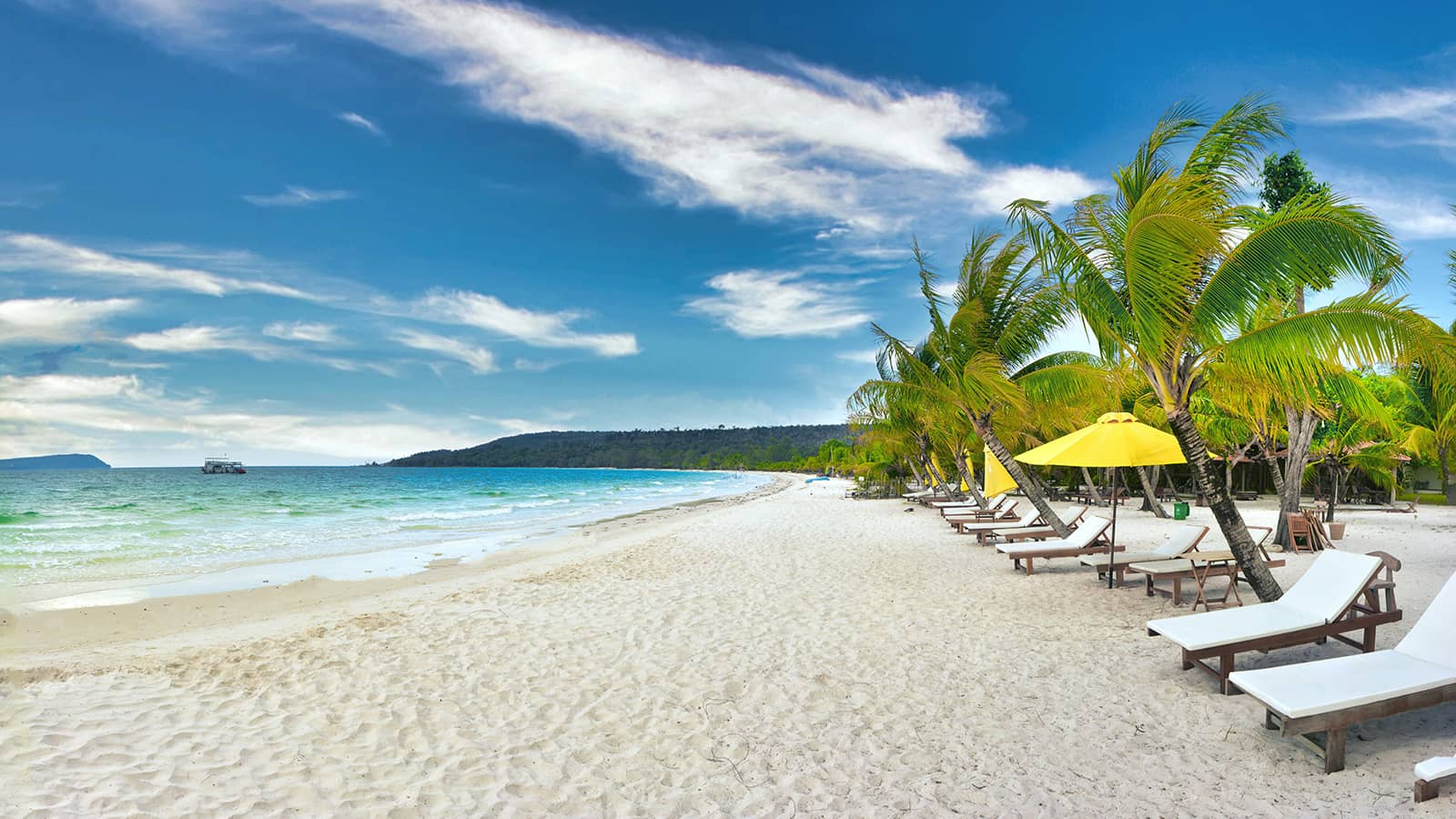
📷 Featured image by Muhammad Irfan on Unsplash.