On this page
- What August 2026 Means for Festival Crowds
- Obon: Understanding the Spirit Behind the Season
- Regional Obon Highlights Worth Planning Around
- The Fireworks Festival Calendar: Timing, Scale, and Access
- Awa Odori and Bon Odori: Dancing in the Streets
- 2026 Budget Reality: What August Festivals Actually Cost
- Practical Logistics: Booking, Transport, and Survival Tips
- Frequently Asked Questions
What August 2026 Means for Festival Crowds
August in Japan has always been intense. But in 2026, with international tourism continuing at record levels and the weak yen still drawing visitors from across the globe, the pressure on popular festival cities — Kyoto, Tokushima, Nagaoka, Aomori — is higher than ever. Accommodation in these cities during peak festival weekends routinely sells out three to six months in advance. JR trains on certain corridors run at full capacity for days at a stretch. None of this means you should skip August. It means you need to understand what you are walking into and plan accordingly. The festivals themselves remain some of the most genuinely moving cultural experiences Japan offers — the kind that stay with you long after the crowds have gone home.
Obon: Understanding the Spirit Behind the Season
Obon is not a single event. It is a Buddhist observance, practiced across the entire country, in which families welcome back the spirits of their ancestors for a brief annual visit. The core dates in most of Japan fall around August 13 to 16, though some regions follow a slightly different lunar calendar. During this period, many Japanese people return to their hometowns. This is why transport is so overwhelmed — it is not just tourists filling the trains. It is the entire country moving at once.
The rituals matter here. On the first evening, families light small fires called mukaebi at the entrance to their homes to guide spirits in. On the final evening, okuribi — sending-off fires — mark the spirits’ return. In Kyoto, this sending-off takes its most spectacular form: the Gozan no Okuribi, commonly called Daimonji, held on August 16 each year. Five bonfires are lit on the mountains surrounding the city, each forming a character or symbol visible from below. The largest burns the kanji for dai (large) on Daimonji-yama. Standing in the warm night air, the smell of summer grass and incense drifting through the streets, watching flames trace that enormous character against a black sky — it is one of those moments that no photograph quite captures.
Obon is also when bon odori dancing takes place in neighborhoods across the country. These are not tourist performances. They are community events, often held in local parks or shrine grounds, where anyone can join the circle of dancers moving slowly around a central wooden stage. The music is repetitive and hypnotic — taiko drums, flute, and sometimes recorded folk songs specific to the region.
Regional Obon Highlights Worth Planning Around
Different parts of Japan express Obon in strikingly different ways. If you have flexibility in your itinerary, these regional variations are worth choosing between deliberately rather than defaulting to Kyoto.
- Kyoto — Gozan no Okuribi (August 16): The mountain bonfires are visible from many points in the city. Higher ground and the banks of the Kamo River offer good sightlines. The event is free to observe but the crowds on this single evening are genuinely enormous.
- Nagasaki — Shoro Nagashi (August 15): Families float elaborate boat-shaped lanterns down the river to carry ancestors’ spirits away. The boats are decorated with colored paper and lit from within. It is quieter, more intimate, and far less attended by international visitors than events in Kyoto or Tokyo.
- Nishimonai Bon Odori, Akita (mid-August): Considered one of Japan’s three great bon odori festivals. Dancers wear full black robes and sedge hats or cloth that covers their faces entirely, giving the procession an otherworldly, haunting quality. The Akita region in mid-August is also considerably cooler than central Honshu.
- Toro Nagashi (various locations): Paper lanterns set afloat on rivers and bays on August 15 or 16, representing spirits returning to the other world. Many cities hold their own version — Hiroshima’s is especially well-known, held on the Motoyasu River near the Peace Memorial.
The Fireworks Festival Calendar: Timing, Scale, and Access
Japan’s hanabi (fireworks) season peaks in August, and the scale of the major displays is difficult to overstate. Japanese fireworks are technically precise and choreographed with music — these are not random bursts but carefully sequenced artistic programs lasting 60 to 90 minutes or longer.
The three names that appear on every serious list are Nagaoka Fireworks (Niigata Prefecture, August 2–3), Tsuchiura All Japan Fireworks Competition (Ibaraki Prefecture, late October, though August has smaller qualifying events), and Sumida River Fireworks (Tokyo, last Saturday of July — technically just before August). For pure August spectacle, Nagaoka is the benchmark. Held over two evenings on the Shinano River, it draws over a million visitors across both nights. The Phoenix sequence — a wide, slow spread of golden stars that fills the entire horizon — is launched each night as a tribute to the city’s wartime destruction and rebuilding. Watching it from the riverbank, the sound arrives a half-second after the light, a deep concussive thud you feel in your chest.
Other August displays worth considering:
- Noshiro Nebuta Fireworks, Akita — combines fireworks with the Nebuta float festival, early August
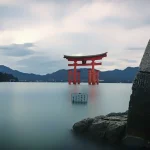
- Miyajima Water Fireworks, Hiroshima Prefecture — launched from the sea near the famous floating torii gate, mid-August
- Lake Suwa Fireworks, Nagano — one of Japan’s largest single-night displays, early August, with the lake surface reflecting the color
For fireworks festivals, paid viewing areas (有料観覧席) exist at most major events and are strongly recommended. Prices typically range from ¥2,000 to ¥5,000 per seat. They go on sale months in advance and are sold through event-specific websites, convenience store ticket terminals (Lawson, 7-Eleven), or official tourism boards. Unreserved free areas fill from mid-afternoon onward.
Awa Odori and Bon Odori: Dancing in the Streets
The Awa Odori in Tokushima City (Shikoku) runs from August 12 to 15 and is Japan’s largest dance festival, drawing over a million attendees over four evenings. The style is distinct: dancers perform in troupes called ren, moving with a specific bent-knee, arms-raised posture that looks deceptively simple until you try it. The accompanying music — a fast, repeating melody played on shamisen, taiko, flute, and hand bells — is infectious in a way that makes standing still feel almost rude.
The streets of central Tokushima become performance stages. Professional and semi-professional ren have costumes, choreography, and a precision that draws gasps. Amateur groups weave between them. There are designated paid viewing stands (around ¥2,000–¥4,000) that offer a clear sightline, but wandering the side streets — where smaller troupes practice and neighborhood groups dance without an audience — gives a more honest picture of what this festival actually is to the people who live it.
The famous saying attached to Awa Odori translates roughly as: “The dancing fool and the watching fool are both fools, so if you’re going to be a fool, you might as well dance.” Visitors are genuinely invited to join specific open participation groups — look for the niwaka ren at festival grounds, where volunteers teach the basic steps.
2026 Budget Reality: What August Festivals Actually Cost
August is Japan’s most expensive domestic travel month. The combination of Obon travel demand and peak summer pricing means you should budget meaningfully higher than you would for spring or autumn.
Accommodation (per room, per night)
- Budget (capsule hotel, guesthouse dorm): ¥3,500–¥6,000 — limited availability near major events; book months ahead
- Mid-range (business hotel, simple ryokan): ¥12,000–¥22,000 — expect the higher end during festival peak dates
- Comfortable (mid-tier hotel, quality ryokan): ¥25,000–¥55,000 — ryokan prices in festival cities spike sharply in August
Festival Viewing and Entry
- Most bon odori and neighborhood events: Free
- Paid fireworks viewing seats: ¥2,000–¥5,000
- Awa Odori grandstand seats: ¥2,000–¥4,000
- Gozan no Okuribi (Daimonji): Free to observe from public spaces
Daily Spending
- Budget traveler: ¥6,000–¥9,000 per day (convenience store meals, local transport, free events)
- Mid-range: ¥15,000–¥25,000 per day (restaurant meals, paid viewing areas, day trips)
- Comfortable: ¥35,000+ per day (ryokan dining included, reserved seats, private tours)
Transport costs depend heavily on your base city and itinerary. The Japan Rail Pass remains an option for visitors covering multiple regions in August, but do the arithmetic against point-to-point Shinkansen fares for your specific route before purchasing — it is not always the cheaper choice.
Practical Logistics: Booking, Transport, and Survival Tips
August in Japan means heat. Tokyo and Osaka regularly hit 35°C or above, with high humidity. Festival days that involve standing outdoors for hours are a genuine physical challenge. Hydration, sun protection, and knowing where to find shade are not optional considerations.
Booking Timeline
- 6 months out: Lock in accommodation for festival peak dates (August 12–16 especially). This is not an exaggeration.
- 3–4 months out: Purchase reserved Shinkansen seats if traveling during Obon (August 10–18 roughly). Unreserved carriages on popular routes will be standing-room throughout this period.
- 2–3 months out: Buy paid fireworks and festival viewing seats through official channels or convenience store terminals.
- 1 month out: Check local event schedules for any timing changes — Japanese festivals occasionally shift dates due to weather or infrastructure.
Practical Tips
- Carry a small folding fan (sensu) and a hand towel. Every local does.
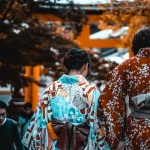
- Wear yukata (casual summer kimono) if you want — it is appropriate and welcomed at most outdoor festivals, not seen as costume tourism at a community level.
- Festival food stalls (yatai) are part of the experience but get expensive. Budget ¥1,000–¥2,500 for a casual stall dinner of yakisoba, takoyaki, and kakigori (shaved ice).
- Download offline maps before traveling to smaller festival cities where English signage is limited.
- On fireworks nights, leave early or leave very late. The 20-minute window after a major display ends is the most congested you will ever experience on Japanese public transport.
Frequently Asked Questions
When exactly is Obon 2026?
The main Obon period in most of Japan runs from August 13 to 16, 2026. Some regions observe it in July based on the lunar calendar. The week surrounding these dates — roughly August 10 to 18 — sees the heaviest domestic travel of the year, with transport and accommodation prices reflecting that demand.
Can tourists participate in Obon and bon odori, or is it just for Japanese people?
Bon odori dancing at public parks and shrine grounds is open to anyone who shows up. Community events actively welcome participation — just follow what the people around you are doing. Obon’s more private family rituals (grave visits, home altar ceremonies) are family affairs, but public-facing events have no restrictions on attendance.
Which August festival in Japan is best for first-time visitors?
Awa Odori in Tokushima offers the most immersive single experience — music, dance, street energy, and genuine community involvement all in one place. For visitors based in central Japan, Nagaoka’s fireworks or Kyoto’s Gozan no Okuribi on August 16 are easier to combine with existing itineraries without requiring a separate regional trip.
How far ahead do I need to book for August festivals in Japan?
For accommodation during festival peak dates, six months is the safe minimum. Three to four months is cutting it close but may still work for mid-range business hotels in larger cities. Paid viewing seats for major fireworks and Awa Odori grandstands often sell out within hours of going on sale, so monitor official channels closely.
Is August a good time to visit Japan despite the heat?
The heat is real and should not be dismissed — 35°C with high humidity is physically demanding. But August offers cultural experiences unavailable any other time of year. Managing it means starting early, resting midday in air conditioning, and planning outdoor activities for evening hours when most festivals actually take place anyway. Many visitors find the trade-off very much worthwhile.
Explore more
Beat the Heat: Your Guide to Staying Cool in Japan This July 2026
Experience Japan’s Iconic Summer Festivals in July 2026
Your Guide to Enjoying Japan’s Early Summer Flavors in June 2026
📷 Featured image by Jezael Melgoza on Unsplash.