On this page
- Japan’s Currency and Why Cash Still Runs the Show
- IC Cards in 2026 — Welcome Suica, PASMO Passport, and Mobile Options
- Using ATMs in Japan — The Konbini Method
- Credit Cards — Where They Work and Where They Don’t
- The No-Tipping Rule — and What to Do Instead
- Tax-Free Shopping — How to Claim Your 10% Back
- 2026 Budget Reality — What Things Actually Cost
- Common Money Mistakes to Avoid
- Frequently Asked Questions
💰 Click here to see Japan Budget Breakdown
💰 Prices updated: October, 2026. Budget figures are estimates — always verify before travel.
Exchange Rate: $1 USD = ¥157.00
Daily Budget (per person)
Shoestring: ¥8,000 – ¥15,000 ($50.96 – $95.54)
Mid-range: ¥18,000 – ¥35,000 ($114.65 – $222.93)
Comfortable: ¥45,000 – ¥80,000 ($286.62 – $509.55)
Accommodation (per night)
Hostel/guesthouse: ¥2,500 – ¥6,000 ($15.92 – $38.22)
Mid-range hotel: ¥10,000 – ¥20,000 ($63.69 – $127.39)
Food (per meal)
Budget meal: ¥800.00 ($5.10)
Mid-range meal: ¥2,500.00 ($15.92)
Upscale meal: ¥20,000.00 ($127.39)
Transport
Single metro/bus trip: ¥250.00 ($1.59)
Monthly transport pass: ¥30,000.00 ($191.08)
One of the most common complaints from first-time visitors in 2026 is arriving in Japan with the assumption that contactless payments work everywhere — only to find a cash-only ramen counter at 11pm with no ATM in sight. Japan has made genuine progress toward cashless payments since 2024, but the gap between big-city convenience and local reality is still very real. Getting your money setup right before you land saves stress and, often, actual money.
Japan’s Currency and Why Cash Still Runs the Show
Japan’s official currency is the Japanese Yen (JPY). Coins come in denominations of 1, 5, 10, 50, 100, and 500 yen. Banknotes run in 1,000, 5,000, and 10,000 yen denominations — you’ll rarely, if ever, encounter the 2,000 yen note in circulation.
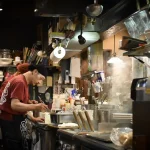
Despite a genuine acceleration in cashless adoption since 2024 — particularly QR code payments like PayPay spreading to smaller businesses — cash remains essential for a large number of everyday transactions. Think: the tiny tonkotsu shop where the chef doubles as the cashier, the cedar-scented Shinto shrine selling hand-painted ema plaques at a wooden counter, or the local bus winding through a mountain village with a coin slot at the front door. None of these take Visa.
Situations where you will almost certainly need cash:
- Independent restaurants, ramen shops, and izakayas — especially outside the major tourist corridors
- Temples and shrines — entrance fees, omamori (charms), and offering boxes are cash-only
- Rural businesses — any town outside a major city has lower card acceptance
- Some ryokan — traditional inns often prefer or require cash at check-out
- Vending machines — many still only accept coins and 1,000 yen notes
- Local buses in smaller towns — IC cards help here, but not everywhere
A practical starting point: carry between 20,000 JPY and 50,000 JPY for a few days of spending, then replenish at ATMs as needed. You don’t need to arrive with a wallet full of yen — you just need a reliable way to get more.
IC Cards in 2026 — Welcome Suica, PASMO Passport, and Mobile Options
IC cards are rechargeable smart cards that tap in and out of train gates, bus doors, and payment terminals at convenience stores, vending machines, and coin lockers. They eliminate the need to buy individual tickets for every journey. All ten major IC card systems across Japan — Suica, PASMO, ICOCA, TOICA, and others — are fully interoperable, so a card bought in Tokyo works on Kyoto trains, Osaka subways, and Hiroshima buses.
The ongoing global semiconductor shortage that started around 2022–2023 curtailed sales of standard physical Suica and PASMO cards to tourists. In 2026, your main options are:
Welcome Suica
Issued by JR East, available at Narita Airport (Terminals 1, 2/3) and Haneda Airport Terminal 3, plus major Tokyo stations like Shinjuku and Tokyo Station. It starts from 1,000 JPY (all stored value, no 500 JPY deposit). The catch: it’s valid for 28 days from purchase, and any remaining balance is non-refundable. Plan your timing accordingly. Official details at jreast.co.jp/multi/en/welcomesuica/welcomesuica.html.
PASMO Passport
Issued by the PASMO Council. Available at the same airports via the Keikyu Tourist Information Center and Keisei counters. Starts from 1,500 JPY (with 1,000 JPY stored value). Also valid for 28 days with a non-refundable balance. Details at pasmo.co.jp/en/pasmo_passport/.
Mobile IC Cards (the 2026 first choice)
If your phone supports it, this is the cleanest option. iPhone 8 or later and Apple Watch Series 3 or later can add Suica or PASMO directly in the Wallet app — no physical card, no deposit, no expiry on your balance. Android users with FeliCa-compatible devices can use the Suica or PASMO app, or add directly via Google Wallet. Top up using a linked credit card without touching a ticket machine.
One important caveat: non-Japanese Visa cards have historically caused issues when topping up Mobile Suica inside the app. Mastercard and American Express tend to work more reliably. If your only card is a Visa debit, test this before your first train journey or keep some cash to top up at a station machine.
To top up a physical IC card: use any station ticket machine (English menu available), hand it to a konbini cashier with cash and say “charge kudasai,” or use the app if you have a mobile card.
Using ATMs in Japan — The Konbini Method
Bank ATMs in Japan often reject foreign cards. Post office ATMs (Japan Post Bank) and convenience store ATMs are a different story — they reliably accept international Visa, Mastercard, Amex, Plus, Cirrus, Maestro, and UnionPay cards.
The three main networks to know:
- Seven Bank ATMs — inside every 7-Eleven, open 24/7
- Lawson Bank ATMs — inside every Lawson, also 24/7
- E-net ATMs — inside FamilyMart stores
Seven Bank ATMs are the gold standard for international travelers. The English interface is clear, and the machines accept the widest range of foreign cards. The fee is approximately 110 JPY for withdrawals up to 10,000 JPY and 220 JPY for larger amounts. Your home bank may add its own fee on top of this — check before you travel.
Standard withdrawal limits run between 100,000 JPY and 200,000 JPY per transaction. Most people find withdrawing 20,000–30,000 JPY at a time keeps things manageable without carrying excessive cash.
Step-by-step at a Seven Bank ATM: select English → insert card → choose Withdrawal → enter your 4-digit PIN → choose amount → confirm → collect cash, card, and receipt.
Credit Cards — Where They Work and Where They Don’t
Credit card acceptance in Japan has genuinely expanded since 2024. NFC contactless payments via Apple Pay, Google Pay, and tap-to-pay cards linked to Visa, Mastercard, or Amex are now supported at a much wider range of terminals in 2026. Look for the contactless symbol at checkout.
Reliable card acceptance in 2026:
- Major hotels and chain hotels
- Department stores (depato)
- Electronics retailers (Yodobashi, Bic Camera)
- Larger supermarkets and drug stores
- Most JR ticket windows and Shinkansen ticket machines
- Many mid-range chain restaurants
Still frequently cash-only:
- Small independent restaurants and cafes
- Guesthouses and budget hostels
- Traditional ryokan
- Street food vendors
- Most temples and shrines
Visa and Mastercard have the widest acceptance. JCB, Amex, and Diners are accepted at larger establishments. For the card itself, use one with no foreign transaction fees — that 1.5–3% per transaction adds up quickly over two weeks of spending. Cards like the Wise card, Revolut, or travel-focused bank cards from your home country are worth looking into before departure.
The No-Tipping Rule — and What to Do Instead
Japan does not have a tipping culture. Full stop. At restaurants, hotels, taxis, and guided tours, tipping is not expected. Leaving cash on the table or handing extra money to a taxi driver can cause genuine confusion and occasionally mild offense — the implication can be that the service was somehow lacking, or that you’re making a charitable gesture to someone who doesn’t need it.
Some upscale hotels and restaurants add a service charge of 10–15% to your bill. This is clearly listed on the menu or invoice — it’s a standard part of their pricing, not a tip.
If someone genuinely goes out of their way for you — a ryokan owner who drives you to the station, a guide who spent three hours finding a specific temple — a small, wrapped gift (omiyage) from your home country is a far more culturally appropriate way to say thank you than handing them a 1,000 yen note. A sincere “arigatou gozaimashita” goes a long way on its own.
Tax-Free Shopping — How to Claim Your 10% Back
Japan’s consumption tax is 10%. As a non-resident visiting Japan for less than six months, you’re eligible to buy certain goods tax-free at participating stores. The savings are real, especially on electronics, cosmetics, and clothing.
Look for shops displaying the “Tax-Free” logo or a “Japan. Tax-Free Shop” sticker. The minimum spend at a single store on the same day is 5,000 JPY excluding tax — this applies to both general goods (clothing, electronics, bags) and consumable goods (food, cosmetics, medicine, alcohol).
Key rule for consumable goods: they must be sealed in a tamper-proof bag at the store and cannot be opened until you leave Japan. Customs officials at the airport may check.
The process in 2026 is fully electronic — no physical slips stapled into your passport anymore. Present your original passport (photocopies not accepted) at the tax-free counter, the store links the purchase to your passport digitally, and you pay the tax-exempt price on the spot. At departure, customs may scan your passport and cross-check records. The official portal for tax-free shopping is tax-free.jp/en/.
2026 Budget Reality — What Things Actually Cost
Here’s what realistic daily spending looks like across different travel styles in Japan in 2026. These figures assume you’re moving between cities and mixing transport, meals, and activities.
Budget Traveler — 8,000–12,000 JPY per day
- Hostel dorm bed: 3,000–4,500 JPY
- Convenience store meals (2–3 per day): 1,500–2,500 JPY
- City transport via IC card: 500–1,000 JPY
- Free or low-cost sightseeing (parks, shrines, free museum days)
Mid-Range Traveler — 20,000–35,000 JPY per day
- Business hotel or guesthouse: 9,000–15,000 JPY
- Sit-down meals (ramen lunch, izakaya dinner): 2,500–5,000 JPY
- Transport including occasional Shinkansen legs: 3,000–7,000 JPY
- Museums, shrines, day trips: 2,000–4,000 JPY
Comfortable Traveler — 50,000–80,000 JPY per day
- Mid-tier hotel or ryokan (with meals): 25,000–45,000 JPY
- Restaurant meals including sake or craft beer: 6,000–12,000 JPY
- Shinkansen travel, taxis, and guided experiences: 8,000–15,000 JPY
A single Shinkansen journey — say, Tokyo to Kyoto — costs approximately 13,870 JPY one way at the standard fare in 2026. A bowl of ramen at a local counter shop runs 900–1,500 JPY. A night bus (highway bus) between cities can cost as little as 3,000–5,000 JPY if you book ahead through Willer Express or JR Bus. Convenience store onigiri hover around 150–200 JPY each — and the warmth and satisfying crunch of a freshly made chicken mayo onigiri from a 7-Eleven at 7am, standing outside a train station, is genuinely one of Japan’s underrated travel experiences.
Common Money Mistakes to Avoid
- Assuming everywhere takes cards. It doesn’t. Always have at least 10,000–15,000 JPY in cash when heading somewhere unfamiliar.
- Exchanging currency at the airport. Airport exchange rates are poor. Use a konbini ATM on arrival instead.
- Forgetting your PIN. IC card top-ups and ATM withdrawals both require a 4-digit PIN. Cards with chip-and-sign only can cause problems at some machines — confirm your PIN with your bank before leaving home.
- Leaving a tip. Already covered — but it bears repeating because the instinct is strong for travelers from tipping cultures.
- Opening sealed tax-free consumable goods before departure. You agreed not to as a condition of the tax exemption. Customs can cancel the exemption and charge you the tax at the airport.
- Letting a Welcome Suica expire with balance. The 28-day clock starts on purchase. If you’re on a longer trip, time your purchase accordingly or use a mobile IC card with no expiry.
- Underestimating transport costs without a Japan Rail Pass. If you’re doing Tokyo–Kyoto–Osaka–Hiroshima in one trip, the JR Pass can save significant money. Run the numbers on the JR Pass calculator before you buy — it’s not always worth it for shorter itineraries.
Frequently Asked Questions
Do I need to bring Japanese yen from home before arriving in Japan?
Not necessarily. Seven Bank ATMs inside 7-Eleven stores at Narita and Haneda airports accept most international cards and operate 24/7. You can withdraw yen immediately after landing. Exchange rates at konbini ATMs are generally better than airport currency exchange counters, so withdrawing on arrival is the smarter move for most travelers.
Can I use Google Pay or Apple Pay instead of cash in Japan?
In larger cities and chain stores, yes — NFC contactless payments are widely supported in 2026. However, many local restaurants, shrines, rural shops, and smaller businesses remain cash-only. Mobile payments are a useful supplement, not a replacement for cash. Always carry a backup of physical yen for situations where digital payments fail.
Is the Japan Rail Pass worth buying for a 2026 trip?
It depends entirely on your itinerary. For a route covering Tokyo, Kyoto, Osaka, and Hiroshima within 7–14 days, a JR Pass frequently pays for itself. For a trip focused mostly on Tokyo or Osaka alone, it likely won’t. Use the JR Pass fare calculator at japanrailpass.net before purchasing and factor in your specific planned journeys.
What’s the easiest way to add money to a Suica card in Japan?
The three main options are: any station ticket machine (English menu available, takes cash and some cards), a konbini cashier (hand over your card and cash, say “charge kudasai”), or — for Mobile Suica — directly through the app using a linked credit card. Ticket machines are the most universally reliable option if you’re unsure about card compatibility with the app.
Do Japanese hotels and restaurants charge a service fee automatically?
Some upscale hotels and high-end restaurants add a service charge of 10–15%, clearly stated on the bill or menu. This is standard and not a tip. Standard restaurants, ramen shops, izakayas, and mid-range hotels do not add any service charge. You pay the listed price, and no additional gratuity is expected or appropriate in any context.
📷 Featured image by Jelleke Vanooteghem on Unsplash.