On this page
- Visa and Entry: What You Actually Need Before You Land
- The First 72 Hours: Admin Tasks That Can’t Wait
- Finding a Place to Sleep Beyond Night One
- Getting Connected: SIM Cards, Pocket Wi-Fi, and Fixed Internet
- Banking and Money: How to Pay for Everything Without Bleeding Fees
- Health Insurance and Medical Access
- 2026 Budget Reality: What One Month Actually Costs
- Tax Residency and the 183-Day Rule
- Frequently Asked Questions
Japan’s Digital nomad scene grew significantly after the government expanded its visa pathways in 2024 and 2025, but 2026 has brought new complications alongside new opportunities. Overtourism fees in major cities, stricter short-term rental enforcement, and revised Japan Rail Pass pricing have made the first month harder to navigate than any blog post from two years ago will tell you. This checklist is built around what actually works right now — for someone arriving with a laptop, a plan, and 30 days to figure out if Japan is where they want to be long-term.
Visa and Entry: What You Actually Need Before You Land
Most people arriving in Japan for the first time as digital nomads enter on a standard tourist visa or visa-free entry, which allows stays of 90 days (for most EU and many other passport holders) or 90 days on a single entry (for US citizens). Australians get 90 days. That is enough to run your first month without stress, but it is not a long-term solution.
Japan’s Designated Activities Visa for Digital Nomads, introduced in 2024 and refined throughout 2025, is now the most relevant pathway for remote workers. In 2026, the key requirements are:
- Proof of employment or client contracts with a company based outside Japan
- Minimum income of approximately JPY 1,000,000 per month (roughly USD 6,600 at 2026 exchange rates — verify current rates before applying)
- Private health insurance covering your entire stay in Japan
- A clean criminal record certificate
- Processing time: typically 4–6 weeks from a Japanese embassy or consulate in your home country
The Designated Activities Visa grants a 6-month stay, renewable once for a total of 12 months. It does not allow you to take on Japanese clients or local employment. Your income must come entirely from abroad.
If you are arriving on visa-free entry or a tourist visa for your first exploratory month, that is completely legal — as long as you are not working for Japanese companies or generating Japanese-source income. Remote work for your overseas employer is a grey area that Japanese immigration has not aggressively enforced, but the legal position remains technically ambiguous under tourist entry. The Designated Activities Visa removes that ambiguity entirely.
The First 72 Hours: Admin Tasks That Can’t Wait
Your first three days in Japan involve more bureaucracy than sightseeing, and that is fine. Getting these tasks done early prevents compounding problems later.
Register Your Address
If you are staying in Japan for more than 90 days, you are legally required to register your address at your local ward office (shiyakusho or kuyakusho) within 14 days of arrival. This applies to Designated Activities Visa holders. Registration gives you a Residence Card (zairyu card), which you receive at the airport on arrival if entering on a long-stay visa. Even if you are on a tourist entry for your exploratory month, understanding this process is worth doing early so it does not catch you off guard.
Get a Physical Address
Many services in Japan — including bank accounts, phone contracts, and health insurance — require a verifiable Japanese address. If you are in a hotel or hostel for your first week, you cannot use that address for official registration. This is one of the strongest practical arguments for booking at least your first two weeks in a monthly-rate apartment or guesthouse that issues a proper address certificate.
Sort Out Cash and a Transit Card
Within your first day, load a Suica or PASMO IC card at any major train station. In 2026, both cards work across virtually every transit system in Japan and are accepted as payment at convenience stores, vending machines, and many restaurants. You can now load them via Apple Pay or Google Pay without a Japanese bank account, which is the fastest option for new arrivals.
Finding a Place to Sleep Beyond Night One
This is where 2026 has diverged most sharply from earlier advice. Airbnb supply in major Japanese cities dropped significantly after stricter short-term rental enforcement took effect in 2025. Many listings that existed in 2023 are simply gone.
Your realistic monthly accommodation options, roughly in order of ease of access for foreign nomads:
- Monthly serviced apartments: The most practical choice. Companies like Sakura House, Weekly Mansion, and Oak House offer furnished rooms with month-to-month contracts that require minimal documentation. No guarantor needed. Prices range from JPY 60,000 to JPY 150,000 per month depending on city and room size.
- Share houses: Cheaper than serviced apartments, more social, and widely available in Tokyo, Osaka, and Fukuoka. Expect JPY 50,000–JPY 90,000 per month including utilities in most cases.
- Licensed monthly Airbnb stays: Still exist but supply is thin. If you find one, verify it has a proper minpaku license number in the listing — unlicensed stays can result in you being asked to leave without notice.
- Standard Japanese apartments: Require a guarantor, often a Japanese resident, plus a deposit of 2–3 months’ rent, key money, and agency fees. Difficult for your first month but worth pursuing if you plan to stay 6–12 months.
Getting Connected: SIM Cards, Pocket Wi-Fi, and Fixed Internet
Japan’s mobile infrastructure is excellent, and in 2026 you have more options than ever for staying online.
For your first month, a data SIM from IIJmio, Rakuten Mobile, or LINEMO is the most cost-effective route. Rakuten Mobile in particular offers unlimited data plans from around JPY 3,278 per month and has expanded its network coverage significantly since 2024. These SIMs work in most smartphones and can often be purchased online before arrival with delivery to your accommodation.
One practical note: standard tourist SIMs sold at airports are data-only and do not include a Japanese phone number. For your first month on a tourist visa, this is usually fine. However, a Japanese phone number is required for many services — including some bank accounts and certain two-factor authentication systems. If you need a calling number, IIJmio and Rakuten Mobile both offer voice SIMs, though these require a Japanese address for registration.
If your accommodation does not include Wi-Fi (most serviced apartments do), a pocket Wi-Fi device from Softbank or au is a reasonable bridge while you get settled.
Banking and Money: How to Pay for Everything Without Bleeding Fees
Opening a Japanese bank account as a foreign national in your first month is harder than it used to be. Japan Post Bank and 7-Bank (operated through 7-Eleven ATMs) remain the most accessible for new arrivals, but both require a residential address and, in most cases, a residence card — meaning tourist-entry visitors are effectively locked out of local bank accounts.
For your first month, the practical approach is a combination of:
- Wise (formerly TransferWise): Widely used by nomads in Japan in 2026. The Wise card allows you to withdraw from Japanese ATMs at near mid-market exchange rates with low fees. 7-Eleven and Japan Post ATMs accept it reliably. Withdraw larger amounts less frequently to minimise per-transaction fees.
- Revolut: Also works at Japanese ATMs, though ATM fees apply above monthly free allowances. Useful as a backup card.
- Cash: Japan remains more cash-dependent than most developed countries. Carry JPY 10,000–JPY 20,000 at all times for situations where cards are not accepted — and they will come up more than you expect, especially at smaller restaurants and local shops.
If you are on the Designated Activities Visa and staying beyond 90 days, opening a Rakuten Bank account online is possible with a residence card and Japanese address, and it connects to Rakuten’s broader payment ecosystem including Rakuten Pay, which is widely accepted.
Health Insurance and Medical Access
This section matters more than most nomad guides suggest. Japan’s healthcare quality is high, but costs for uninsured foreigners can be significant.
If you entered on the Designated Activities Visa, private health insurance was a condition of your visa — so you should already have this sorted. Confirm your policy covers outpatient visits, not just emergencies. SafetyWing’s Nomad Insurance and WorldNomads are both used by Japan-based nomads in 2026, though coverage depth varies.
If you are staying beyond 3 months and register as a resident, you become eligible to join the National Health Insurance (Kokumin Kenko Hoken) system. Premiums are income-based but are typically JPY 15,000–JPY 35,000 per month for a single person in their first year. This covers 70% of most medical costs at any participating clinic or hospital. Enrolling gives you access to Japan’s full healthcare network and is generally far better value than private international insurance for long stays.
Walk-in clinics in Tokyo, Osaka, and Fukuoka increasingly have English-speaking staff or interpretation services in 2026. The Japan Healthcare Info Line (0570-056-099) provides phone support in multiple languages.
2026 Budget Reality: What One Month Actually Costs
These figures reflect 2026 prices across Japan’s main nomad cities. All costs are monthly unless otherwise noted.
Tokyo
- Budget: JPY 180,000–JPY 220,000 (share house, cooking most meals, basic transport)
- Mid-range: JPY 280,000–JPY 350,000 (serviced studio, mix of eating in and out, occasional travel)
- Comfortable: JPY 400,000–JPY 550,000 (private furnished apartment, eating out regularly, day trips)
Osaka
- Budget: JPY 160,000–JPY 195,000
- Mid-range: JPY 240,000–JPY 310,000
- Comfortable: JPY 360,000–JPY 470,000
Kyoto
- Budget: JPY 170,000–JPY 210,000
- Mid-range: JPY 260,000–JPY 330,000
- Comfortable: JPY 380,000–JPY 500,000
Fukuoka
- Budget: JPY 140,000–JPY 175,000
- Mid-range: JPY 210,000–JPY 275,000
- Comfortable: JPY 310,000–JPY 420,000
Fukuoka consistently comes in as the most affordable of Japan’s main nomad cities, with the added advantage of being a short ferry ride or flight from South Korea and directly connected to the Shinkansen network. The Nishi-Kyushu Shinkansen extension completed in 2025 has also made the broader Kyushu region significantly more accessible from Fukuoka as a base.
Food costs deserve specific mention. Eating at convenience stores and standing ramen counters — where the steam from a bowl of tonkotsu hits you the moment the door slides open and the broth genuinely costs JPY 800 — keeps daily food costs under JPY 2,000 without much effort. Cooking in your apartment drops that further. The cost of food in Japan is genuinely lower than most Western European or Australian cities at the equivalent quality level.
Tax Residency and the 183-Day Rule
This is the section most nomad guides skip, and it is the one that creates the biggest problems for people who stay in Japan longer than planned.
Under Japanese tax law, you become a tax resident of Japan if you have a registered domicile in Japan or if you have resided in Japan for 1 year or more. The commonly cited “183-day rule” applies to Japan’s tax treaties with specific countries — it is not a universal Japanese domestic rule. The actual threshold under Japan’s domestic law is lower than many people assume.
What this means practically:
- If you stay in Japan for less than 1 year and do not establish a permanent domicile, you are generally treated as a non-permanent resident for tax purposes. In this status, you are only taxed on Japan-source income and remittances from abroad — not on foreign income that stays offshore.
- If you cross the 1-year threshold and have a registered address, you become a permanent resident for tax purposes and Japan’s tax authority (the NTA) can tax your worldwide income.
- Your home country’s tax rules still apply regardless of what Japan does. Most nomads on the Designated Activities Visa remain tax residents of their home country and file there as usual, since their income source has not changed.
The honest advice here: if you are planning to stay in Japan for 6–12 months, consult a tax professional who understands both Japanese tax law and your home country’s rules before you go, not after. The cost of a consultation (typically JPY 30,000–JPY 60,000 for a qualified bilingual accountant in Tokyo) is minor compared to the cost of getting it wrong.
Frequently Asked Questions
Can I legally work remotely from Japan on a tourist visa?
Japanese law does not explicitly permit remote work for foreign employers on a tourist or visa-free entry, but it does not explicitly prohibit it either. The government’s official position is that the Designated Activities Visa is the correct pathway for remote workers. Enforcement against tourist-entry remote workers has been rare, but the legal risk is real, particularly for longer stays.
How long does it take to get the Designated Activities Digital Nomad Visa?
Processing times at Japanese embassies and consulates average 4–6 weeks in 2026, though some applicants in less-busy consular districts report approvals in 2–3 weeks. Submit your application at least 8 weeks before your intended departure date to allow for delays or requests for additional documentation.
Do I need to speak Japanese to manage daily life in Japan as a nomad?
For daily logistics in Tokyo, Osaka, and Fukuoka, English signage and translation apps (Google Translate’s camera mode is highly effective) cover most situations. Medical appointments, lease agreements, and ward office registration are harder without Japanese and may require a bilingual friend or paid interpreter service. Learning basic Japanese phrases before arrival makes a genuine practical difference.
Is Japan Rail Pass worth buying for a digital nomad staying one month?
For a nomad based in one city with occasional intercity travel, usually not. Japan Rail Pass pricing increased again in 2025, and the 7-day pass now costs around JPY 50,000. If your travel is concentrated — say, a Tokyo base with one Kyoto trip — individual Shinkansen tickets are typically more cost-effective. The pass makes financial sense only if you are doing multiple long-distance journeys in a short window.
What is the cheapest Japanese city to base yourself in for the first month?
Fukuoka offers the lowest overall cost of living among Japan’s major cities with reliable international connectivity, strong transport links, and a growing community of international remote workers. Rental costs are roughly 20–30% lower than Tokyo at equivalent quality levels, food costs are lower, and the city is compact enough that daily transport costs are minimal compared to Tokyo or Osaka.
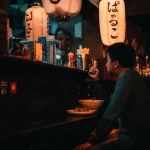
📷 Featured image by Shot by Cerqueira on Unsplash.