On this page
- Visa and Legal Framework for Working in Tokyo vs. Osaka
- Accommodation Costs — What Your Monthly Budget Actually Gets You
- Internet Infrastructure and Connectivity Compared
- Tax Residency, the 183-Day Rule, and What It Means in Practice
- Health Insurance Options for Long-Stay Nomads
- 2026 Budget Reality — Full Cost-of-Living Breakdown
- The Intangible Factors — Pace, Culture, and Burnout Risk
- Frequently Asked Questions
Japan’s Digital nomad visa — officially the Designated Activities visa for remote workers — has been running long enough that the honeymoon period is over. In 2026, applicants have real data, real rejection stories, and real rent bills to learn from. The question most serious nomads are now asking isn’t “Can I work from Japan?” but “Should I base myself in Tokyo or Osaka?” Both cities have strong cases. This article gives you the specific numbers and practical differences to make a real decision, not a romanticised one.
Visa and Legal Framework for Working in Tokyo vs. Osaka
The visa itself doesn’t change based on which city you choose — Japan’s Designated Activities visa for digital nomads is a national program. But how you experience the administrative process differs significantly between the two cities.
As of 2026, the Designated Activities (Remote Work) visa requires you to demonstrate:
- A confirmed employment contract or client contracts with a company based outside Japan
- Minimum annual income of approximately JPY 10,000,000 (around USD 65,000 at 2026 rates) — this threshold was revised upward in late 2025
- Valid health insurance coverage from your home country or an internationally recognised private insurer
- A clean criminal record and valid passport with at least six months remaining
Processing times through the Tokyo Regional Immigration Services Bureau currently run around four to six weeks for standard applications. The Osaka Immigration Bureau — serving the Kansai region — has historically had shorter wait times, often three to four weeks, partly because application volumes are lower. If you are applying from outside Japan, both routes go through a Japanese embassy in your home country first, so the in-country difference only matters for extensions.
The visa is currently issued for up to six months, with one extension permitted for another six months — giving a maximum continuous stay of one year. After that, you must exit Japan. There is no pathway to permanent residency through this visa category.
One practical note: registering your address at your local ward office (区役所, kuyakusho) is mandatory once you stay beyond 90 days, regardless of city. In Tokyo, the ward office for popular nomad areas like Shinjuku or Shibuya can be crowded on weekday mornings. Osaka’s ward offices in Namba or Umeda are generally less congested and staff in central wards increasingly have English-language support materials available.
Accommodation Costs — What Your Monthly Budget Actually Gets You
This is where the Tokyo vs. Osaka decision often gets made. Rental prices in both cities rose in 2025 and into 2026, driven partly by a weaker yen attracting foreign investment into Japanese property. But the gap between the two cities remains meaningful.
Tokyo
- Furnished studio, central wards (Shinjuku, Shibuya, Minato): JPY 150,000–220,000 per month
- Furnished studio, mid-distance wards (Suginami, Nerima, Koto): JPY 100,000–145,000 per month
- Share house with private room: JPY 60,000–90,000 per month (utilities often included)
- Monthly mansion (serviced apartment): JPY 180,000–300,000 per month
Osaka
- Furnished studio, central areas (Namba, Shinsaibashi, Umeda): JPY 100,000–160,000 per month
- Furnished studio, inner residential (Tennoji, Fukushima, Noda): JPY 75,000–110,000 per month
- Share house with private room: JPY 50,000–75,000 per month
- Monthly mansion: JPY 130,000–220,000 per month
The honest summary: for comparable space in a comparable central location, Osaka runs roughly 20–30% cheaper than Tokyo. That difference compounds quickly over six to twelve months. A nomad on a tight budget saving JPY 50,000 per month on rent keeps JPY 300,000 extra over a six-month stay — roughly six weeks of food and transport.
Both cities have a genuine shortage of foreigner-friendly landlords willing to rent short-term without a Japanese guarantor. Platforms like Sakura House, Borderless House, and various monthly mansion operators have expanded inventory in both cities, but demand still exceeds supply in prime areas. Booking accommodation before arriving in Japan — not after — is the only reliable strategy in 2026.
Internet Infrastructure and Connectivity Compared
Japan’s broadband infrastructure is consistently ranked among the fastest in the world, and 2026 has seen further rollout of 10 Gbps fibre connections in both cities. For remote workers, the distinction between Tokyo and Osaka is less about raw speed and more about the type of accommodation you’re in.
Shared house and monthly mansion operators in both cities typically include Wi-Fi in the monthly fee. Speeds vary. Budget share houses may have 50–100 Mbps shared across multiple residents — acceptable for video calls, frustrating for large file uploads. Mid-range serviced apartments increasingly advertise dedicated gigabit connections per unit, which has become close to standard in the JPY 150,000+ tier.
If you need your own connection, NTT Docomo, SoftBank, and au all offer home fibre plans. Setup typically takes two to three weeks after application, which matters if you’re on a tight schedule. Pocket Wi-Fi rental (from providers like IIJmio or TRAVEL Japan Wi-Fi) bridges the gap for the first month but has data caps that make it unsuitable as a permanent solution for video-heavy work.
Mobile 5G coverage in central Tokyo and central Osaka is effectively identical — both cities have mature, dense coverage from all three major carriers. If you frequently work from locations outside your apartment — libraries, parks, transit — Japan’s 5G network makes this genuinely practical in a way it isn’t in many other countries.
One real difference: Tokyo’s co-working infrastructure is more extensive simply because the market is larger. Osaka has solid options but fewer of them. For nomads who need occasional formal meeting space or a private booth for client calls, Tokyo offers more variety.
Tax Residency, the 183-Day Rule, and What It Means in Practice
This section matters more than most nomads initially appreciate. Japan’s tax residency rules are strict, and ignorance is not a defence.
Under Japanese tax law, if you spend 183 days or more in Japan within a calendar year, you may be considered a tax resident. This is not automatic — it depends on your registration status, whether you have an address registered with a ward office, and whether you have other strong ties to Japan. However, once classified as a tax resident, Japan taxes your worldwide income, not just income earned in Japan.
This is the scenario that catches nomads off guard. A Designated Activities visa holder who arrives in February, registers their address, and stays through August is potentially crossing the 183-day threshold within a single calendar year. Japanese income tax rates range from 5% on the lowest bracket to 45% on income above JPY 40,000,000, plus a 10% local inhabitant tax layered on top.
The practical responses to this risk fall into three categories:
- Stay under 183 days in a single calendar year — enter late in the year, leave before you cross the threshold, return after January 1. Many nomads structure their Japan stays around this deliberately.
- Do not register a residential address — if you stay under 90 days total, you are not required to register. Beyond 90 days, registration is legally required, which creates a tension with tax residency rules that you need qualified advice on.
- Consult a Japanese tax professional before arriving — not after. Several firms in Tokyo and Osaka now specifically handle expatriate and digital nomad tax situations in English. The cost of a consultation (typically JPY 20,000–50,000) is far less than an unexpected tax bill.
This rule applies identically in Tokyo and Osaka — it’s national law. But it’s included here because it is the single most financially significant factor for long-stay nomads and it is consistently under-discussed in nomad community forums.
Health Insurance Options for Long-Stay Nomads
Japan’s national health insurance (国民健康保険, Kokumin Kenko Hoken) covers residents who register at their local ward office. Once registered, you are typically enrolled automatically and receive a health insurance card. Premiums are income-based and calculated by each municipality. For a single person earning the equivalent of JPY 5,000,000 annually, monthly premiums typically range from JPY 25,000–40,000 depending on the ward.
The catch: national health insurance enrollment is linked to address registration, which is linked to your stay length and the tax residency question above. Many nomads on six-month stays opt for private international health insurance instead — this satisfies the Designated Activities visa requirement and avoids enrolling in the national system.
Private international plans with Japan coverage from providers like Cigna Global, Allianz Care, or AXA typically run JPY 25,000–60,000 per month for a healthy adult under 40, depending on coverage level and home country. These plans generally cover hospitalisation, outpatient care, and emergency evacuation but may have exclusions for pre-existing conditions.
Japan’s healthcare system itself is excellent in both Tokyo and Osaka. Major hospitals in both cities have international departments with English-speaking staff. For routine care — a GP visit, minor prescriptions — the out-of-pocket cost even without insurance is relatively low by Western standards. A standard clinic consultation runs around JPY 3,000–5,000 without insurance, and many common medications are inexpensive.
2026 Budget Reality — Full Cost-of-Living Breakdown
Figures below are monthly estimates for a single digital nomad living comfortably but not extravagantly. These reflect 2026 pricing in both cities.
Tokyo (Mid-Central Location)
- Accommodation (furnished studio): JPY 150,000–180,000
- Food (mix of cooking and eating out): JPY 50,000–70,000
- Transport (IC card, no car): JPY 10,000–20,000
- Mobile + internet: JPY 5,000–8,000
- Health insurance (private international): JPY 30,000–45,000
- Miscellaneous (entertainment, gym, household): JPY 20,000–35,000
- Total estimate: JPY 265,000–358,000 per month
Osaka (Mid-Central Location)
- Accommodation (furnished studio): JPY 100,000–130,000
- Food (mix of cooking and eating out): JPY 40,000–60,000
- Transport (IC card, no car): JPY 8,000–15,000
- Mobile + internet: JPY 5,000–8,000
- Health insurance (private international): JPY 30,000–45,000
- Miscellaneous: JPY 15,000–30,000
- Total estimate: JPY 198,000–288,000 per month
The gap across a full year is significant: a nomad in Osaka at mid-range spending saves roughly JPY 600,000–800,000 compared to an equivalent lifestyle in Tokyo. That’s a real number — roughly four to five months of food costs, or a business-class flight home.
Food deserves a specific mention. Osaka has a reputation for being Japan’s food capital, and the street food and casual restaurant culture genuinely keeps food costs lower without sacrificing quality. A satisfying bowl of udon at a standing counter near the Namba area costs around JPY 400–600 — the kind of everyday option that makes a meaningful difference when you’re eating three meals a day in the city for six months.
The Intangible Factors — Pace, Culture, and Burnout Risk
Tokyo operates at a relentless pace. The morning commute rush on the Yamanote Line — the press of bodies, the silence held under visible tension, the sheer scale of the machine — is efficient but it’s not restful. For nomads who already feel the pressure of managing clients across time zones and maintaining productivity away from a traditional office, Tokyo can amplify that stress rather than offset it. The city rewards ambition and punishes slowness, and that energy seeps into your workday whether you want it to or not.
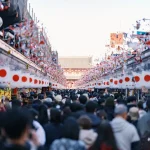
Osaka has a different character. The locals are famously warmer and more direct — the cultural concept of nori (going with the flow, being a bit silly, not taking yourself too seriously) is genuinely present in daily interactions. A walk through the Tenjinbashisuji covered shopping street on a weekday afternoon, with the sound of vendors calling out and the smell of fresh takoyaki drifting from a street cart, feels fundamentally different from an equivalent walk in Tokyo. It’s not slower in a lazy sense — it’s a different relationship with public space. For nomads who need some psychological breathing room to do their best work, Osaka often wins on lived experience.
That said, Tokyo’s international community is larger and more established. If professional networking, finding other English-speaking nomads to collaborate with, or accessing international events and conferences matters to your work, Tokyo’s scale is genuinely hard to replicate. Osaka’s international scene has grown since 2024 — partly due to the 2025 World Expo’s lasting infrastructure — but it remains smaller in absolute terms.
The honest answer for most nomads: if your income is strong and networking is central to your work, Tokyo justifies the premium. If you want to stretch your budget, avoid burnout, and still live in a world-class city with excellent food and transit, Osaka makes a compelling case that the numbers back up.
Frequently Asked Questions
Can I apply for Japan’s digital nomad visa from either Tokyo or Osaka?
The Designated Activities (Remote Work) visa is applied for through your nearest Japanese embassy before you arrive. Once in Japan, extensions are processed at your regional immigration bureau — Tokyo for the Kanto region, Osaka for Kansai. The visa terms and requirements are identical regardless of which city you plan to live in.
Is Osaka significantly cheaper than Tokyo for a digital nomad in 2026?
Yes. Comparable furnished accommodation in central Osaka runs roughly 20–30% less than central Tokyo. Total monthly living costs for a comfortable mid-range lifestyle are approximately JPY 198,000–288,000 in Osaka versus JPY 265,000–358,000 in Tokyo. Over six months, the saving is meaningful — often JPY 400,000–600,000 or more.
Does the 183-day tax residency rule apply differently in Tokyo versus Osaka?
No — it’s national law, identical in both cities. If you spend 183 or more days in Japan in a calendar year and have registered an address, you risk being classified as a tax resident subject to Japanese tax on worldwide income. The city you choose has no bearing on this. Consult a Japanese tax professional before your stay exceeds 90 days.
Which city is better for English-language support when dealing with bureaucracy?
Tokyo has more English-language government support overall, but Osaka’s major ward offices in central areas have improved significantly since 2025, partly as a legacy of the World Expo. For immigration-related matters, both cities’ immigration bureaus have English assistance available. Tokyo generally has more English-speaking private legal and accounting professionals specialising in expat issues.
Can I travel between Tokyo and Osaka during my stay without affecting my visa?
Yes. Domestic travel within Japan has no impact on your Designated Activities visa status. The Tokyo–Osaka Shinkansen journey takes about two hours and forty minutes on the Nozomi service. Many nomads base themselves in one city but take regular trips to the other. What matters for visa and tax purposes is your total days in Japan, not which city you sleep in.
📷 Featured image by Darren Ahmed Arceo on Unsplash.