On this page
- What the Bow Actually Means in Japanese Culture
- The Four Main Bow Angles and When to Use Each
- Who Bows First — Reading Social Hierarchy
- Common Bowing Mistakes Tourists Make
- Bowing in Specific Situations You Will Encounter
- When a Handshake Replaces — or Combines With — a Bow
- What Japanese People Actually Think When You Bow
- Frequently Asked Questions
Japan’s surge in international tourism since 2024 has created one unexpected side effect: a wave of well-meaning travelers bowing awkwardly, bobbing their heads randomly, or — worse — thrusting out a handshake at exactly the wrong moment. The bow, known as ojigi (お辞儀), is not a simple greeting swap for a handshake or a wave. It carries layers of social meaning that, once you understand them, make everyday interactions in Japan feel far less intimidating and far more rewarding.
What the Bow Actually Means in Japanese Culture
Japanese society is built around a concept called wa (和) — harmony. Social interactions are designed to preserve the dignity of everyone involved, avoid confrontation, and acknowledge the relationship between two people clearly and honestly. The bow is the physical expression of all of that at once.
When a Japanese person bows to you, they are not just saying hello. Depending on context, they may be expressing gratitude, apologizing, showing respect, acknowledging your status, or signaling the end of an interaction. The depth of the bow, the duration, the eye contact (or lack of it), and even the placement of hands all carry meaning.
The word ojigi combines o (an honorific prefix) with jigi, meaning posture or bearing. The bow is, quite literally, an act of physical humility — you lower yourself before another person. The deeper you go, the more respect or sincerity you are expressing. This is why a passing nod to a stranger and a deep 90-degree bow to a senior colleague are both technically “bowing” but mean entirely different things.
Understanding this cultural foundation stops you from treating the bow as a quirky local custom to mimic. It is a genuine communication system. Once you approach it that way, you will naturally start reading situations more clearly.
The Four Main Bow Angles and When to Use Each

There is no single “correct” bow. The angle you use signals the social weight of the moment. Here is how the four most common depths break down in practice.
15 Degrees — The Casual Nod
This is a small tilt of the head and slight forward lean. You use it when passing an acquaintance on the street, acknowledging a shop worker who says thank you, or responding to someone who bows to you in passing. Think of it as the Japanese equivalent of a polite nod. It is informal and quick. For travelers, this is your most-used bow — you will do it dozens of times a day without even thinking about it after a few days.
30 Degrees — The Standard Respectful Bow
This is the workhorse of Japanese bowing. Your upper body bends to roughly 30 degrees, hands rest flat against your thighs (for men, palms down; for women, hands clasped in front), and you hold it for one to two seconds. Use this when greeting a hotel receptionist, thanking someone who helped you on the train, meeting someone for the first time in a casual setting, or entering and leaving a restaurant. If you only learn one bow angle as a traveler, make it this one.
45 Degrees — The Sincere and Formal Bow
A 45-degree bow is a meaningful gesture. You are communicating deep gratitude, a sincere apology, or genuine respect for someone of significantly higher status. Hotel staff in Japan’s high-end ryokan will bow this deeply when welcoming you. If someone goes far out of their way to help you — retrieving your lost wallet, translating an entire conversation on your behalf — a 45-degree bow is an appropriate response.
90 Degrees — The Deepest Bow
This is reserved for profound apology, the deepest possible respect, or very formal ceremonial situations. You will rarely need to perform this as a traveler. If you ever see a Japanese person bow this deeply, something significant is happening — either a very serious apology is being offered or a moment of exceptional reverence is taking place. Responding with a 30-degree bow is perfectly appropriate from your side.
Who Bows First — Reading Social Hierarchy
Japan has a deeply layered social hierarchy based on age, professional rank, and social role. This hierarchy directly determines who initiates a bow and who responds. Getting this right is not about memorizing a rulebook — it is about observing a few key principles.
The lower-status person bows first and bows deeper. A junior employee bows before a senior one. A student bows before a teacher. In a commercial setting, the person providing the service bows more deeply — which is why every convenience store worker and department store elevator attendant bows deeply to customers. In Japan, the customer is considered of higher social status in a service context, which is a significant part of why customer service in Japan feels so different from almost everywhere else.
As a foreign traveler, you exist somewhat outside this hierarchy, which actually takes some pressure off. Japanese people do not expect you to perfectly calculate who outranks whom. What they do notice is whether you acknowledge the bow at all. Ignoring a bow entirely is the one misstep to genuinely avoid.

Age matters enormously. If you are speaking with an older Japanese person in a non-commercial setting — say, an elderly neighbor who gives you directions — bow first and slightly deeper than you expect them to bow. This is a basic show of respect for seniority that will be warmly appreciated.
Group settings can get complicated, with people occasionally trapped in a loop of reciprocal bowing. If you find yourself in this situation, a final 15-degree nod with a small smile signals a natural close to the exchange.
Common Bowing Mistakes Tourists Make
Most bowing mistakes by travelers fall into a handful of predictable patterns. Knowing them in advance saves you the low-grade awkwardness of realizing mid-trip that you have been doing something off.
Bowing while maintaining eye contact. In Western culture, eye contact during a greeting signals confidence and sincerity. In Japan, looking directly at someone while bowing reads as slightly aggressive or overly dominant. During a bow of 30 degrees or more, your eyes naturally move toward the floor. This is correct and respectful — not evasive.
Bowing with your hands clasped in front (prayer-style). This is a Western interpretation of a Japanese bow that does not reflect actual practice. Hands go flat on thighs or, for a more formal female bow, clasped low in front of the body. Prayer-clasped hands during a bow belongs to a Thai wai, not a Japanese ojigi.
Bowing while wearing a backpack. Not a catastrophic error, but removing or adjusting a large backpack before bowing shows awareness and care. A bow while wearing a massive travel pack looks physically awkward and reduces the sincerity of the gesture.
Over-bowing in casual situations. Travelers sometimes get so enthusiastic about bowing that they bow deeply to every single passing interaction — the konbini cashier scanning your onigiri, the person who holds a door. A 15-degree nod is genuinely sufficient for rapid exchanges. Performing a theatrical 45-degree bow for every minor interaction can actually make the moment feel strange and draws more attention to itself.

Bowing and extending a hand simultaneously. More on hybrid greetings shortly, but initiating both at once forces the other person into an awkward split-second decision. Choose one, read what they offer, and respond accordingly.
Bowing in Specific Situations You Will Encounter
The bow shows up differently across different settings. Here is how to handle the scenarios you are most likely to face as a traveler in 2026 Japan.
Entering and Leaving Shops
When you walk into a shop or restaurant, you will often hear irasshaimase (welcome) called out. This does not require a bow from you — a 15-degree nod of acknowledgment is perfectly appropriate. When you leave after making a purchase, staff will often bow. Return a 15-degree nod or a 30-degree bow depending on how much they helped you.
At Temples and Shrines
Bowing is built into formal temple and shrine visits. At a Shinto shrine, the standard practice at the main hall is two bows, two claps, one bow — a specific ritual sequence called ni-rei ni-hakushu ichi-rei. The bows here are full 90-degree bows. At Buddhist temples, the etiquette varies slightly — hands are kept together (gassho) rather than clapped, and bowing is typically a single respectful gesture before the altar. These are acts of worship, not tourist performance, so approach them with real quiet and intention.
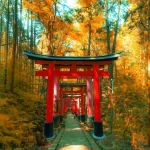
When passing through a torii gate at a shrine, many Japanese people give a brief bow before entering. Following this practice is a respectful acknowledgment that you are entering sacred space.
Business and Formal Meetings

If you find yourself in any formal business context — a scheduled meeting, a formal introduction, receiving a business card — bow etiquette tightens considerably. Greet with a 30-degree bow at minimum. When receiving a business card (meishi), accept it with both hands and bow slightly as you take it. Do not immediately shove it in your pocket — hold it, look at it briefly, and place it carefully on the table in front of you or in a card holder. The bow and the meishi exchange work together as one package of respect.
Passing Strangers and Train Stations
Japan’s train stations can feel overwhelming, but the social rhythm is clear. If someone helps you navigate the ticket machines or gives you directions and then goes on their way, a 30-degree bow with a sincere arigatou gozaimasu (ありがとうございます — thank you very much) is the right response.
When a Handshake Replaces — or Combines With — a Bow
Japan’s relationship with handshakes has shifted meaningfully since the post-pandemic period. As of 2026, the handshake is widely understood and accepted in Japan, particularly in business contexts that regularly involve international partners, tourism, and creative industries. However, it remains a borrowed gesture rather than a native one.
The most important rule: let the Japanese person lead. If they extend a hand, shake it. If they bow, bow back. If they do both — extending a hand while beginning a bow — mirror the action as naturally as you can. This hybrid greeting has become genuinely common in urban Japan, particularly in Tokyo, Osaka, and Kyoto’s international tourism zones.
Avoid the temptation to immediately push a handshake on a Japanese person who has bowed to you. Some people, particularly older generations and those outside major cities, remain genuinely uncomfortable with physical contact from strangers, including handshakes. Reading the situation takes a few seconds but prevents an awkward moment for both of you.

One increasingly common scenario in 2026: meeting your Airbnb host or a tour guide who has significant experience with international visitors. These interactions often blend naturally into a handshake-bow combination that feels relaxed and genuine rather than stiff. Follow their cue and you will be fine.
What Japanese People Actually Think When You Bow
Here is something that surprises many travelers: Japanese people are generally not silently judging your technique. The social pressure you might feel about getting ojigi exactly right is mostly self-imposed. What Japanese people actually notice — and genuinely appreciate — is effort and sincerity.
A foreign traveler who makes a conscious attempt to bow, even imperfectly, signals awareness and respect. That signal is received warmly and almost universally. Japanese people are accustomed to international visitors not knowing every nuance of bowing etiquette, and they rarely expect perfection.
What they do notice is indifference. Walking into a shop, receiving help, and responding with nothing — no bow, no nod, no verbal acknowledgment — registers as coldness or arrogance, even when none is intended. The simple act of meeting eye contact briefly, giving a small nod, and saying arigatou covers the baseline of respectful acknowledgment in almost every situation.
Deep respect within Japanese culture also comes from reading the room rather than performing memorized rules. If you watch, observe, and respond to what the other person does, you are already practicing the underlying principle of wa that makes bowing meaningful in the first place.
Japanese people who interact with tourists daily in 2026 — hotel staff, tour guides, transport workers — have become exceptionally skilled at meeting travelers where they are culturally. This does not mean you can ignore etiquette entirely, but it does mean that approaching every bow with genuine attention rather than nervous anxiety will serve you far better than rigidly drilling technique.

Frequently Asked Questions
Do I have to bow in Japan as a foreign tourist?
You are not required to bow, and Japanese people do not expect technical perfection from visitors. That said, making a genuine effort to bow in appropriate situations — entering a shop, thanking someone for help, leaving a ryokan — signals real cultural awareness. Even a small nod goes a long way and will noticeably improve your daily interactions across Japan.
How do I respond when a Japanese person bows to me?
Always acknowledge the bow — ignoring it entirely is the one clear misstep. For most everyday situations, a 15-to-30-degree bow in return is appropriate. You do not need to match the exact depth of what you receive. A warm response bow combined with a brief arigatou gozaimasu covers the vast majority of situations you will encounter as a traveler in Japan.
Should I bow or shake hands in a Japanese business meeting in 2026?
In 2026, most Japanese business contexts involving international visitors have become comfortable with both. Open with a 30-degree bow when you are first introduced. If your Japanese counterpart extends a hand, accept the handshake naturally. Do not initiate a handshake before reading their cue. Receiving and acknowledging a business card with a slight bow remains important regardless of whether a handshake also occurs.